Mar 07, 2026
Ethan
Agarwal
Ethan Agarwal is a public office candidate. Previously, he was the Founder, CEO Aaptiv – pioneer in audio based fitness content with $100M revenue and 1M+ paying customers. He is the Co-Founder, CEO, The Coterie – fintech for private fund GPs and LPs, offering end-to-end investment solutions.
One Line Life Lessons from Ethan


Episode Highlights
- 00:07-00:46: Ethan Agarwal introduces himself, sharing key aspects of his identity: an immigrant, father, son, brother, builder, and helper.
- 01:04-01:26: Ethan announces his decision to run for Congress in California’s 17th District as a Democrat, challenging the incumbent in the primary. He feels this is critical for California and the country.
- 02:33-03:11: Ethan emphasizes the importance of listening to the district’s residents to understand their needs and improve their lives. He highlights his familiarity with the area but his new perspective as a potential representative.
- 03:37-04:43: Ethan discusses the challenges he faces, including being a newcomer in politics and the need to gain name recognition. He also stresses the significant responsibility of representing 750,000 people, including children and those in poverty.
- 05:18-06:35: Ethan highlights that the 17th District is majority immigrant, with a significant Indian and Asian population, as well as Hispanic residents. He aims to renew the district’s energy and address issues like job opportunities, housing, and education.
- 07:05-08:15: Ethan expresses excitement about the potential of the 17th District, which is home to major companies like Apple and Nvidia. He believes the district is not fully leveraging its resources and has fallen behind other global cities.
- 08:46-10:02: Ethan shares a past failure where he waited too long to fire an underperforming employee, realizing it was unfair to the rest of the team. He discusses the importance of maintaining a high bar of quality and supporting departing employees.
- 10:02-11:23: Ethan recounts a success story from his first company, which had zero traction for two years and faced numerous investor rejections. He describes the life-changing impact of receiving his first $250,000 investment.
- 11:53-12:36: Ethan shares how he de-stresses: winning, spending time with his children, enjoying whiskey, running, and listening to music. Accomplishing something is what generally makes him feel best.
- 12:51-13:30: Ethan recommends two podcasts: “Invest Like the Best” by Patrick O’Shaughnessy for its insightful interviews, and Bill Simmons’ sports podcast for entertainment.
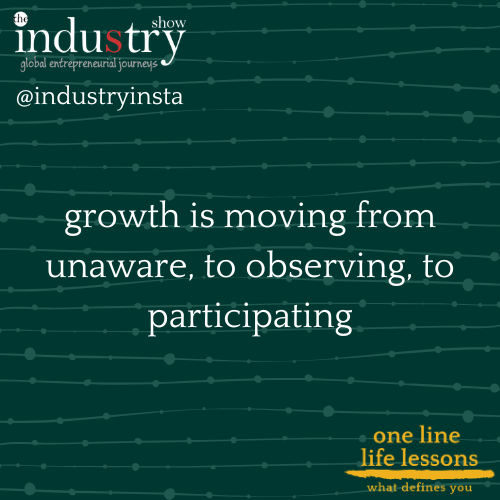
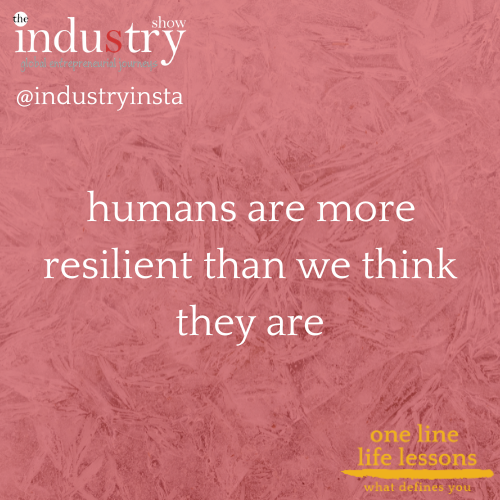
- 13:41-17:20: Ethan shares five life lessons: 1) Be part of the parade, not just watching it. 2) Lean on your strengths and hire for your weaknesses. 3) Advice is contextual and specific to one’s journey. 4) Lessons can come from anyone, regardless of age or experience. 5) Humans are more resilient than we think.
Show Transcript
Transcript - Full Episode
00:00:00 – 00:00:08 Nitin Bajaj
Hey everyone, welcome to The Industry Show. I’m your host, Nitin Bajaj, and joining me today is Ethan Agarwal. Ethan, welcome on the show.
00:00:08 – 00:00:09 Ethan Agarwal
Thank you, thank you for having me.
00:00:09 – 00:00:12 Nitin Bajaj
Great to have you here. Let’s start with who is Ethan?
00:00:13 – 00:00:25 Ethan Agarwal
Okay, good question. When I read the question, the first word that came to my mind was immigrant. I’m an immigrant. I—two times, I guess. I grew up in California, but I was born and raised in Canada. My parents are from India.
00:00:26 – 00:00:48 Ethan Agarwal
I’m a father. I have two boys. I’m a son. I’m a brother. I have two sisters. I’m an ambitious person. I am a—I like to think of myself as a builder. I’ve built things in life that I’m proud of. I’m a curious person, and I like to think—I like to think that I’m a helper and that I help other people. So all of those things together.
00:00:49 – 00:00:50 Nitin Bajaj
Just a few hats.
00:00:50 – 00:00:51 Ethan Agarwal
A few hats.
00:00:52 – 00:01:03 Nitin Bajaj
Well, you’ve built companies, you’ve run and grown them, and in the process you’ve raised quite a bit of capital for them. What do you have to now?
00:01:04 – 00:01:38 Ethan Agarwal
So I have decided to do something completely different, which is that I’m going to run for Congress in California’s 17th District. I’m going to run as a Democrat. There is a current incumbent—there’s a current incumbent, his name is Ro Khanna. He’s a four-term congressman. And I’ve decided to challenge him in the primary. So I’ve never done politics before, but this is something that I feel is critical for California and for the country, and I think it’s the right time for me to make this decision and for me to challenge him.
00:01:39 – 00:01:55 Nitin Bajaj
Love that. You mentioned you’re a curious person, and I love people who allow their curiosity to drive them, to take those ambitions, and make change. That truly impacts us on a day-to-day. So congratulations and kudos to you.
00:01:55 – 00:02:02 Ethan Agarwal
Thank you. It’s a big swing, and who knows if it’s going to work, but I’m curious. So I’m scratching an itch is what I’m doing.
00:02:02 – 00:02:06 Nitin Bajaj
And, you know, if we don’t go for those big swings, then what’s the point?
00:02:06 – 00:02:14 Ethan Agarwal
Everything great at some point was small, and everything significant at some point was a little bit crazy. So that’s the mentality I like to work with.
00:02:15 – 00:02:33 Nitin Bajaj
Love that. And to bring that to something as institutional as the Congress and you know, I wouldn’t call it politics, but just something that impacts the day-to-day for several thousand, several million people bringing that through a curiosity-led initiative.
00:02:33 – 00:02:33 Ethan Agarwal
Yeah.
00:02:34 – 00:02:35 Nitin Bajaj
I just love the sound of that.
00:02:35 – 00:03:00 Ethan Agarwal
I have ideas of what will make the district better, but a lot of it is just talking to people in the district and hearing from them, “What do you need to make your lives better?” And there is—even though we have a million tools to share conversation these days, I find that just sitting down with someone one-on-one and saying, “Hey, what’s up? Like, tell me about your life and how things can get better,” that is generally the best philosophy. So I’m excited to learn from people.
00:03:00 – 00:03:16 Ethan Agarwal
I know that districts exceedingly well. I grew up in Los Gatos, and I’ve been to Fremont, I don’t know, a thousand times. Milpita, Sunnyvale, Cupertino—I know that area extremely well, but never as a representative of that district. And so I’m curious about what the issues are that are facing them and how I can help out.
00:03:16 – 00:03:37 Nitin Bajaj
Fascinating. So as you talk about the future, I want to talk about the challenges that it may bring, but also what would you call is the biggest of them all?
00:03:37 – 00:03:58 Ethan Agarwal
Well, look, there’s two types of challenges. One is just the political reality, which is I’m a newcomer to the political scene. Not a lot of people know my name, and unfortunately, in politics, name recognition is still a big part of it. So the political, tactical side of it is I just need to get my message out and tell people who I am and tell them my story. So that’s probably the biggest political challenge.
00:03:58 – 00:04:46 Ethan Agarwal
On the other side, running for Congress is not an insignificant task, and it’s not something that should be taken lightly. You need to make sure that you actually are the best advocate for the district and to make sure that you have ideas that can help people, because it’s a great responsibility. There’s 750,000 people in that district. Something like 20% of them are under the age of 18. There’s a lot of children. There’s a lot of poor people. There’s a lot of young people that are going to go into the job, into the workforce, and we need to make sure that we’re representing those people properly. So I see it as a great responsibility and not something to be taken lightly. And I feel confident that I can represent those people, and I feel like I have a big opportunity and a big responsibility to make sure that I do the best damn job I can do. And I think that’s, you know, that weighs on me, and I think about that a lot.
00:04:46 – 00:04:58 Nitin Bajaj
And I think it’s extremely important, as you said, you know, being a—an immigrant of immigrant parents, being able to represent what I—I don’t know the district that well, but I would imagine.
00:04:59 – 00:05:00 Ethan Agarwal
Very immigrant-heavy. Yeah.
00:05:00 – 00:05:18 Nitin Bajaj
And so to be able to have someone that relates to them and with them understands the realities of coming here as immigrants and raising children here that live and are raised in a very different environment than the parents themselves, I think that’s extremely important.
00:05:18 – 00:05:46 Ethan Agarwal
Yeah, I mean, the 17th District is majority immigrant, and you can’t say that about most districts in America. And, you know, a lot of them are Indian and Asian immigrants. There’s a 17% of the district is Hispanic as well. So there’s immigrants from all over the world that come to this district. And a lot of them are actually, you know, Congress passed the Asian Immigration Act in ’65, and so a lot of them came after that. And then now it’s their kids, and now it’s their grandkids that are growing up there.
00:05:47 – 00:06:09 Ethan Agarwal
And yeah, to your point, the life that the second or third generation is living is different than the first generation. But what we need to make sure is that the 17th District continues to be a place that new people come into. You don’t want to just have it be a place that people came 40 years ago and now people are sort of growing out of it, and then that the children are leaving the district. You want younger people coming back to the district and starting new families there.
00:06:10 – 00:06:41 Ethan Agarwal
And part of that, I think, is the job opportunities need to be available, housing needs to be available, education needs to be available. And those are some of the things that I think are lacking right now in the 17th District. So what I’m focused on is how to renew the energy of that district that 30 or 40 years ago, everyone wanted to move to Milpita or Fremont or Sunnyvale or Cupertino, and now they’re not. Now there’s schools shutting down, and people are not moving in because they can’t afford to. So I think there’s an important excitement and energy that needs to be created in the district that’s not there right now.
00:06:42 – 00:06:48 Nitin Bajaj
I think you answered my next question because you read my mind. I was going to ask you what’s the most exciting opportunity in.
00:06:48 – 00:07:47 Ethan Agarwal
Yeah, I mean, look, I—I love growth, and I love change, and I love changing—I love disrupting things. And I think anytime, you know, a general sort of philosophy of mine is adapt or die. And if you’re not changing, if you’re not growing with the times, you’re going to struggle and cease to exist. And so my concern about the 17th District is that it’s not taking advantage of the resources that it has available, which is that Apple, Nvidia, LinkedIn, Yahoo, Cadence—I mean, all these companies, world-class companies, are based in the 17th District. There’s so many jobs that are based in the 17th District that have nothing to do with tech. There’s lots of industry, small businesses that are in the 17th District, and we are not doing a good job of supporting those companies and those employers, and therefore we’re not attracting enough jobs or people to come there. So what I get excited about is when I think about really smart people having the tools that they need to succeed, having the team they need to succeed, young people being excited about getting education.
00:07:47 – 00:08:18 Ethan Agarwal
Like, that makes me excited to think that, okay, here’s a high opportunity, high potential piece of California that could become what it was 30 years ago or even better. And when you think of the most amazing places in the world now, you’re thinking of Shanghai, or you’re thinking of Dubai, or you’re thinking of Amsterdam, you know, other places. You’re not thinking of California and Silicon Valley, which is what you should be thinking of, because we’ve fallen behind. And that’s interesting and exciting to me.
00:08:18 – 00:08:21 Nitin Bajaj
And that’s a huge opportunity. And I’m glad you’re taking a shot at it.
00:08:22 – 00:08:22 Ethan Agarwal
Somebody has to.
00:08:24 – 00:08:34 Nitin Bajaj
Now, as we talk about the future, I want to take a pause and reflect and ask you to share two moments from your past. One where things did not work out as you had expected.
00:08:35 – 00:08:35 Ethan Agarwal
Yeah.
00:08:35 – 00:08:44 Nitin Bajaj
There was disappointment, failure, lessons. And another where things exceeded your expectations and became a success beyond your imagination.
00:08:45 – 00:10:01 Ethan Agarwal
Yeah. So you mentioned earlier that I started a few companies. That’s true. My very first company, the first time that I had to fire somebody was very hard for me. And it was a failure in the sense that I let this person stay on my team for much longer than they should have because I didn’t want to have that uncomfortable conversation. And in reality, it’s more the way that I was able to understand it, and actually someone explained this to me, is that at that time, I think there were 10 people in the company. The other eight people, I owe it to them that I am maintaining a high bar of quality. And it’s not fair to those eight people and their families if I’m allowing someone who is not performing well to also be on the team, because then I’m not being honest to everyone. So when I was able to process it that way, I said, okay, that makes sense to me. So I’m not as much as it is shitty and it’s hurting this one guy, it’s benefiting the other eight people. And that logically made sense to me. So I’ve had to let go of people since then, and it’s always hard, and it always sucks, but you think of it from a broader perspective, and you make sure that the people you’re letting go, you help them with future job placement, with severance, with everything else so that they’re taken care of.
00:10:02 – 00:11:27 Ethan Agarwal
A success I had is in that same company, I was—I started building it literally sitting on my couch in my living room. And at that time, I had graduated from graduate school, and I was massively in debt, both student debt but also credit card debt. I had just gotten married and, you know, was working full-time at a job in consulting at McKinsey, and I’d started to start this company. And for two years, we had zero traction, like truly zero traction. Like, I can count on two hands the number of paying customers we had for basically two years. And I did something like 120 investor meetings that all said no or just didn’t respond. And then I finally got one check of $250,000. Even telling you the story now, I’m getting goosebumps. But I remember—I remember that first check, like the first meeting where they were like, “Yes, we’re going to invest in you,” after a hundred and whatever number of no’s in two years of no progress. And today, maybe $250,000 is not a big investment, but at the time, it felt like my whole life changed. And it did in a way, because after you get that first money, a lot of other money starts following it. And I had become really good at being super tight with my budget. So $250,000 felt like a billion dollars, and I was like, “Oh my God, I know all these things I could spend money on now.” And it, you know, it turned out to be true that investment did well for those people, and I was able to attract more money. But just getting that first check felt like, you know, a life-changing experience.
00:11:27 – 00:11:28 Nitin Bajaj
That’s amazing.
00:11:28 – 00:11:28 Ethan Agarwal
Yeah.
00:11:29 – 00:11:34 Nitin Bajaj
You know, on another day, we’ll talk about how does one work at McKinsey, and is doing matching out credit cards.
00:11:35 – 00:11:49 Ethan Agarwal
It was—it was tough. It was, yeah. I was—basically, I was working like 9:00 to 11:00, and then I would come home, and 12:00 to 2:00 or so, I would do startup work, and then just did that for a couple of years. It was—yeah, it was crazy, but.
00:11:49 – 00:11:50 Nitin Bajaj
How do you de-stress?
00:11:53 – 00:12:01 Ethan Agarwal
Winning helps me de-stress. Losing is stressful. Getting things done helps me de-stress, although I don’t think that’s the question you’re asking.
00:12:01 – 00:12:14 Ethan Agarwal
I—I have two kids. I play with them a lot. And now, I will say, when they were younger, it was harder. Now they’re a little bit older, and so it’s like really fun to play with them. That’s a lot of fun.
00:12:14 – 00:12:17 Ethan Agarwal
I like whiskey. I have to drink cocktails sometimes. That helps.
00:12:19 – 00:12:27 Ethan Agarwal
I run. I—I ran when I lived in New York. I used to run along the West Side Highway a lot. Now I run here a lot. It just helps you clear your mind.
00:12:27 – 00:12:43 Ethan Agarwal
And I’m a very musical person, so I listen to a lot of music. And I’m very good at matching my mood with the right music. And yeah, nothing particularly special. But I think the first thing I said, which is winning and doing something, accomplishing something, is what generally makes me feel the best.
00:12:43 – 00:12:51 Nitin Bajaj
I can relate to that. In terms of books and podcasts, is there any that are a favorite and you would like to?
00:12:51 – 00:13:17 Ethan Agarwal
Yeah, there’s one I really like. It’s called “Invest Like the Best.” It’s run by this guy named Patrick O’Shaughnessy, who’s the host. I’ve listened to, I think, every episode. And he gets really interesting people. And I think he’s one of the best interviewers, aside from you that I’ve ever seen. He’s really, really, really good at asking both like smart questions but also fundamental questions that you’re too embarrassed to admit that you don’t know. So that’s one.
00:13:17 – 00:13:31 Ethan Agarwal
And then I also listen to Bill Simmons a lot, who runs a sports podcast. I think he’s hilarious. And like, he’s my—if I—he’s my guilty pleasure. If I don’t feel like I need to advance myself, I just want to listen to something interesting. I listen to him.
00:13:32 – 00:13:40 Nitin Bajaj
Love that. Thanks for sharing those. Onto my favorite part of the show. We call this the one-like life lesson. We can have luck for you to share your life lessons with us.
00:13:40 – 00:14:25 Ethan Agarwal
Okay. So one—this one came from my dad a long time ago. He said there’s three kinds of people in the world: those who are in the parade, those who are watching the parade, and those who don’t know that the parade happened. And I think, at least for me, my objective in life is to move in—move up those three levels for various different things. So, for example, in startups, I for a long time didn’t even know that that parade was happening. And then I was watching it, and then I decided to get into it. Politics was a parade that I’ve known has been happening for a long time. I’ve been watching it for a long time, and now I’m getting into it. There’s probably hundreds of other things in the world happening that I don’t even know about right now, but I want to learn that they’re happening and then eventually enter them. So that’s one of them.
00:14:26 – 00:15:01 Ethan Agarwal
The second one I’ve learned, and I—this one I really try to focus on, is to lean on your strengths and hire for your weaknesses. So when I started my second company, I went through this exercise where I said, “What are the things that I’m good at and not good at?” And there’s basically two options, which is either fix the things you’re shitty at or lean into the ones that you’re good at. And I realized that leaning into the ones that you’re good at is better, because even just identifying the things you’re good at is hard, but then when you find out what they are and you can do those things, and then you can hire for the ones that you’re not good at, tends to work better.
00:15:02 – 00:15:37 Ethan Agarwal
Okay. Advice is contextual. I—I taught myself this, and now I try to say it every time I give a speech or whatever, which is that someone may be listening to this and hear some things and say, “Oh, that’s interesting,” but my journey and my story is specific to me, or is it specific to you? The person listening’s journey is specific to them. And so, you know, advice doesn’t always work, and it’s going to be very, very specific to the journey that you’re on, and you can only control for so many variables. So I always try to remember that if something doesn’t turn out the way that I want it to, even if I followed someone else’s advice.
00:15:39 – 00:16:26 Ethan Agarwal
Although this may seem contrary, it’s actually not, which is that lessons can come from anywhere. I’m now midlife, I guess. I’m 40 years old. And when I was younger, I focused a lot on learning from older people. Now I’m snack in the middle, and I—I meet 22-year-olds that are brilliant and teach me things that I would never learn otherwise. And then I meet 70-year-olds that are brilliant and still teach me things. And sometimes they have no experience in a particular industry, but they have a way of thinking that’s valuable. So the way that I see my responsibility is to take in a lot of content, if you will, books, podcasts, advice, whatever, and then summarize it and then apply what’s ever relevant to me. And I try to be very open about who I take life lessons from.
00:16:27 – 00:17:21 Ethan Agarwal
And then the last—oh, and then the last one is that humans are more resilient than we think they are. In my life, I’ve had various times of difficulty. My parents had times of difficulty: economic, social, health, whatever. And, you know, because I’ve run some companies, I’ve unfortunately had to put people through difficulties. And, you know, you go to India and you see people living in serious abject poverty around the world. And so I—I try to think to myself a lot about human resilience and, like, how can we overcome anything that we’re going through. And there’s any number of people that provide advice on that topic, but I think reminding yourself that other people go through a lot more than you have—than you are, and in the history of time, people have gone through a lot more, and they’ve always succeeded. Humanity has succeeded. It helps me go through some of those more challenging times. So I think that’s five.
00:17:22 – 00:17:36 Nitin Bajaj
Nitin, thank you so much for making the time to share your journey and story, and for sharing your life lessons. Super excited about the next journey you’re on and would love to bring you back on and talk about more of your successes. I know you’re just getting started.
00:17:36 – 00:17:37 Ethan Agarwal
Great. Thank you so much for having me.
00:17:38 – 00:17:38 Nitin Bajaj
Thank you.
Subscribe!