Aug 08, 2026
Amb.
Dr. K J
Srinivasa
Ambassador Dr. Srinivasa K J IFS is the First Consul General of India in Los Angeles. He’s a medical graduate and seasoned diplomat with experience in economic diplomacy, political engagement, consular affairs, and public service delivery across 4 continents. His previous postings include Guyana, Peru, Spain, South Africa, and the U.S., along with diplomatic accreditation across the Caribbean. As India’s Chief Passport Officer, he led rollout of next-generation e-Passports.
One Line Life Lessons from Dr. K J Srinivasa



Episode Highlights
- 00:17-01:13: Dr. K J Srinivasa describes his professional transition from a medical doctor to a diplomat, currently serving as the Consul General in Los Angeles to build ties in the American Southwest.
- 02:26-03:51: Dr. K J Srinivasa details his work in public policy, specifically his role between 2010 and 2013 in digitizing and streamlining India’s passport services. This initiative, implemented with TCS, reduced corruption and improved delivery times for millions of citizens.
- 04:19-05:26: Dr. K J Srinivasa reflects on the challenges of establishing a new consulate in Los Angeles, noting the complexity of working within established procedures while engaging the large, active Indian diaspora.
- 06:40-08:22: Dr. K J Srinivasa explains the consulate’s mandate, which includes providing support services to a jurisdiction of over 1 million Indian diaspora members and promoting trade, investment, and academic partnerships in sectors like clean energy, AI, and aerospace.
- 14:38-15:14: Dr. K J Srinivasa identifies space technology and clean energy as primary areas of focus for future U.S.-India collaboration, noting India’s progress in renewable energy goals and upcoming astronaut missions.
- 15:46-17:41: Dr. K J Srinivasa shares a past professional disappointment regarding a missed lithium venture in Bolivia in 2009, contrasted with the successful implementation of the Passport Seva project, which now serves millions annually.
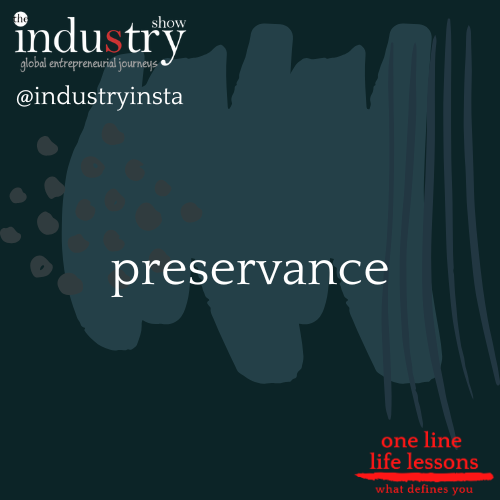
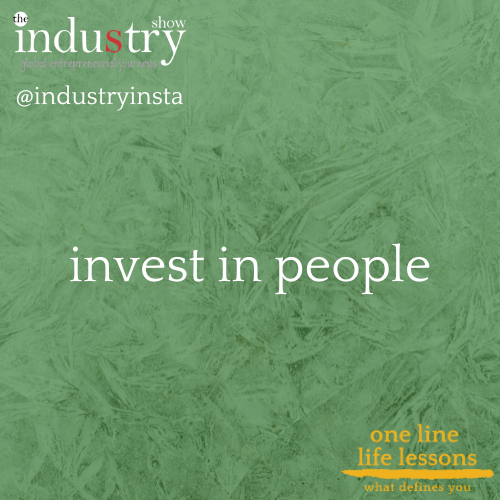
- 19:28-22:07: Dr. K J Srinivasa shares personal insights on leadership, emphasizing the importance of listening, integrity, perseverance, health, and building long-term, people-to-people relationships.
Show Transcript
Transcript - Full Episode
00:00:00 – 00:00:10 Nitin Bajaj
Hey everyone, welcome to the industry show. I’m your host, Nitin Bajaj, and joining me today is Ambassador Dr. K J Srinivasa. Dr. Srinivasa, welcome on the show.
00:00:10 – 00:00:11 Dr. K J Srinivasa
Thank you.
00:00:11 – 00:00:12 Nitin Bajaj
Great to have you here.
00:00:13 – 00:00:14 Dr. K J Srinivasa
It’s a pleasure to be with you.
00:00:14 – 00:00:16 Nitin Bajaj
Let’s start with: who is Srinivasa?
00:00:17 – 00:00:46 Dr. K J Srinivasa
You know I was a medical doctor. Transitioned to being a diplomat. I always believed that, you know, I could represent the country abroad, fly the flag with pride, but at the same time I always wanted to represent India in a policy-making space. I sincerely believe that diplomacy is something, you know, where you can represent the country, representing your nation in various spheres, in various matters.
00:00:47 – 00:01:13 Dr. K J Srinivasa
At the same time, you build bridges, meet people, interact with various cultures. So I am a person who is currently enjoying representing India. At the same time, I can say that I do practice a bit of medicine for my colleagues, but at the same time, I think I see myself in a role for bringing India’s presence into the American Southwest, opening this new consulate.
00:01:13 – 00:01:22 Dr. K J Srinivasa
This is, on one side, a very challenging perspective, but at the same time, a test of what we have acquired over two decades of my service.
00:01:23 – 00:01:53 Nitin Bajaj
True. And you’ve had quite a journey. Tell us, in maybe a minute or two, which will be extremely difficult, but give us a sense for this journey: you became a medical doctor, and then you switched gears and came into something extremely—not just competitive, but very demanding, and at the same time you’ve had many furs in the last 20 years. Give us a sense of that journey.
00:01:53 – 00:02:32 Dr. K J Srinivasa
Ah, it’s been an exciting journey, to say the least. You know, when I joined medicine, of course, my dad is an orthopedic surgeon. And, you know, in India, children normally follow what their parents want them to do. But when I opted to come into public policy space, and to be very frank with you, I was maybe the first person to write the civil services in my medical college and qualify and become a Foreign Service officer. Only after me, actually, many others wrote the exams and joined. And for me, when I joined the Foreign Service, it was all new. I was a first-generation bureaucrat.
00:02:32 – 00:02:53 Dr. K J Srinivasa
Then I got posted to Madrid, the most exciting of places, if I may say. Then I’ve served in various capacities in Peru, in Francisco as the Deputy Consul General. I have worked as the Consul General in Johannesburg. Then I was sent as the Indian High Commissioner to the Caribbean, based in Guyana, and I had concurrent accreditation to about four other countries and the CARICOM.
00:02:53 – 00:03:51 Dr. K J Srinivasa
So in between, I was given the job to handle and implement the digitization and the streamlining of India’s passport services, which I did between 2010 and 2013 as the Regional Passport Officer in Bangalore. And that was the time when we were able to completely make the process easier, online, transparent, and fast. And what you call as the Passport Seva project right now, the public-private partnership, as we call the model, between the Government of India and TCS, I can proudly say that I was part of that transformation journey. And I was able to serve the country, give the people of India service which they can all be proud of. And you can see that when people apply for a passport and you get a minute-to-minute record of what has been happening to your application, and the corruption has fallen down drastically, we are able to, you know, deliver within days or even hours.
00:03:51 – 00:04:19 Dr. K J Srinivasa
And subsequently, when I went back from the Caribbean in 2023, I was in charge of the consular affairs, the passports, visas, and the diaspora. So there I was able to, again, implement the e-passports, the chip-based passport, which has made our Indian passports tamper-free, and, you know, it has given more confidence to the world about the Indian passport. Yes, I was associated with those initiatives.
00:04:19 – 00:04:54 Dr. K J Srinivasa
But at the same time, when I came to Los Angeles to establish this newest consulate, which is the 8th consulate in the U.S., and representing India in this southwestern corner, which is well-known for so many industries and sectors, and the diaspora, of course, for us, it was a journey because, of course, establishing a new embassy or a consulate is not an easy job, more so if you are in a developed country where procedures are set in stone. And it’s such, you know, work in progress, but all in all, it’s been a satisfactory journey so far.
00:04:54 – 00:05:39 Dr. K J Srinivasa
You know, when you work for the government, yes, there are various aspects to it, but you get to work not only in the political engagement sphere, you also do the commercial sphere, you work in the cultural space. So in a day, you wear all the three hats. And of course, you interact with the diaspora, you try to promote, you know, innovation, you are in the tech space, learning more about AI, cybersecurity. You know, there’s never a dull day. And of course, the diaspora keeps you active all the time. So I think that’s something which I always admire, because the support we have got from the diaspora across the world, and the tenacity with which they have succeeded bringing India’s image to the forefront and making our job more easier.
00:05:40 – 00:05:56 Nitin Bajaj
All of these accomplishments, congratulations and kudos. I know a lot of hard work has gone into it over two decades, and I love your humility. I love how easy you are to approach and the impact you have created.
00:05:56 – 00:06:18 Nitin Bajaj
You’ve been here for a very short time, but in that time, you’ve made the presence very apparent, and you’ve really mixed in with the community. In fact, you brought the community together in a way that had not happened in the several decades. Our community has been present in the Southwest.
00:06:18 – 00:06:39 Nitin Bajaj
Give us a sense for the impact you and the team have been able to create. And I know you’re just getting started, which is the geographies that you serve and offer services to, and the size of our diaspora, and how you measure impact, and where do you believe you and the team are at this stage.
00:06:40 – 00:07:45 Dr. K J Srinivasa
You know, the consulate has its jurisdiction over Arizona, Nevada, New Mexico, and the Southern California region. So our job, basically, as I mentioned earlier, is providing support services to the diaspora: consular services, visas, passports, OCIs, your attestations, your powers of attorney, and miscellaneous services. But apart from that, many people would not know this, but we are engaged in promoting trade and investment. We are engaged in bringing together educational partnerships. We are working with various defense and aerospace companies, space companies, to work on collaborations which already exist, but to build on them. It’s not just the primes which matter. We are working in the space of advanced manufacturing. We are promoting collaboration in semiconductor space, AI, cybersecurity, healthcare, biotech, advanced manufacturing, logistics. So these are some of the priority areas, apart from, of course, entertainment and the creative industries for which Los Angeles is very well known for.
00:07:46 – 00:08:48 Dr. K J Srinivasa
At the same time, I can say that our diaspora, which I think numbers about 5.8 million in the U.S. right now, including the U.S. nationals and the Indian nationals, we, I think, we have been told that about 1 million are in my jurisdiction, 1 to 1.2 million, which is a big number. But at the same time, you know, we are very proud of them. The diaspora is active in the professional space, in the business space, entrepreneurial space, the venture capital space, and the tech space, which makes the work easy for the consulate. So we are engaging everybody. We have been able to get relationships going. We have been able to encourage people. One of the things that we are working right now, for example, is on a talent corridor where we work between the U.S. and India, and also maybe by extension to other countries. So that is where, for example, I’ve got immense support from our work here, our native ecosystems, if I may call that.
00:08:49 – 00:10:15 Dr. K J Srinivasa
U.S., of course, you know, the complementarities are phenomenal. What I have seen here, California especially, you have the leadership in clean energy, leadership in environmental sciences, AI, the venture capital, the, you know, the semiconductor space. While India, of course, brings its tremendous human resources, we get also a big market. And at the same time, we are able to provide the services which are needed for California. So the complementarities exist. We have a huge presence in many of the sectors that I mentioned. What we need to do right now is make it all streamlined. For example, collaboration in the entertainment industry. It’s highly ad hoc. I have found that with our work, we can make it more streamlined, encourage the companies to go from the U.S. to India for filming their movies. At the same time, also get technicians to work both sides, the creative talent to move both sides. It’s not just the giving of visas. Visas are the smallest thing that we can refer to, but we are able to support, say, the film festivals. We are able to support the soft power of India, promote yoga, promote Indian dance, music. You know, these are just all dovetailing into the overall structure in which we work.
00:10:15 – 00:11:25 Dr. K J Srinivasa
But what I found here is the talent that exists. And, you know, it’s all there in the universities. It is all there in the research and development labs. You have the best education ecosystem in this region, say, the Caltechs of the world, the JPLs, the SpaceXs, all are in this region. You have a tremendous opportunity where we can work together. But at the same time, there are challenges which sometimes lead to questions on whether these partnerships can really move ahead. But these are minor hiccups because India needs U.S., U.S. needs India. So it’s a complementary relationship. But at the same time, as friends, we need to engage each other, and that’s what we are doing. We work with the political leadership, we work with the commercial entrepreneurs, the investors. And at the same time, we are able to work through people who really matter in each of these sectors. So it’s a challenging task, but I feel that we should be able to achieve something which is long-lasting, bring this relationship all the more together.
00:11:26 – 00:11:38 Nitin Bajaj
Let’s double-click on the challenges. I’d love for you to share the one big challenge. I mean, there are several. This is a highly complex business you’re in. What’s the one you would like to call out?
00:11:38 – 00:11:39 Dr. K J Srinivasa
Okay.
00:11:41 – 00:12:26 Dr. K J Srinivasa
The challenge which I recognize is, thankfully, it’s a positive one. The way the technology is developing, artificial intelligence, cybersecurity, biotech, these are all galloping at such a speed that we need to catch up with them. And research is happening at blindfold. It’s like we cannot even fathom what’s happening. And by the time we get the information and we process it and we share it with our interlocutors and the way we proceed, it is lagging. You know, there’s a big time lag between the time in which it needs to be attended to and the time our people react to. So that is a challenge that we’re facing.
00:12:26 – 00:13:03 Dr. K J Srinivasa
But I, as I mentioned, it’s a positive challenge. I think we can work towards it. We can work with the resources present both in the U.S. and India, and at the same time, contribute massively to that. For example, when we did the AI summit in India in February of this year, one of the biggest things that was proposed by our Prime Minister was making AI democratic, making it accessible to everybody. But at the same time, with the goal to make it work under human control, which I believe there are subscribers to it, there are opponents to it.
00:13:03 – 00:13:37 Dr. K J Srinivasa
But we were able to work with various institutions in our jurisdiction. We had about four or five pre-AI summits. And the way U.S. thinks about AI came to the fore. But what we understood was a general consensus does exist towards what India propounded. So that is the way we can get that opinions. You know, we largely work with opinion makers. We work with people who matter. And I believe that if we work sincerely towards that goal, we’ll be able to achieve that.
00:13:38 – 00:13:45 Nitin Bajaj
I agree. Now, on the flip side of challenges come opportunities. What’s the one you’re most excited about?
00:13:45 – 00:14:05 Dr. K J Srinivasa
Again, space and clean energy. These two excite me most because, one, India has adopted clean energy, renewable energy in a huge way. I think the speed at which we are progressing, we have already achieved the Paris goals, which are supposed to be due in 2030. We have done it by 2025 itself.
00:14:05 – 00:14:35 Dr. K J Srinivasa
With the wind energy and the solar energy revolution happening in India, I think, and the latest was on the nuclear, small nuclear reactors, we have achieved criticality and success in what countries have not been able to do in the last few decades. This is going to power our small industries, our data centers, etc. So we are working on that sphere, clean energy, where California carries most of the technology, and they are good in policies on clean energy and renewable energy.
00:14:36 – 00:14:54 Dr. K J Srinivasa
Other aspect, as I mentioned, was space. Of course, Indian ISRO is in constant collaboration with NASA and JPL. We plan to launch our own astronauts in 2028. So that is something which excites me. We are working on various opportunities to make that happen.
00:14:54 – 00:15:17 Dr. K J Srinivasa
But there are things where, for example, ISRO had reached a stage where they had cut down the cost of launch of satellites, but SpaceX came and they upended the game and they are into a different league of themselves. But there we see a lot of collaboration opportunities. So we are working with various companies in that sector. So these two will be my main focus.
00:15:18 – 00:15:39 Nitin Bajaj
Very exciting. Now, as we look into the future, I like to pause and reflect. And I would love to invite you to share two moments from your past life, one where things did not work out as you had expected: disappointment, failure, lessons. And another where things exceeded your expectations and became a success beyond your imagination.
00:15:40 – 00:16:12 Dr. K J Srinivasa
Okay. One failure I can say is in 2009, when I was posted in Peru. I had jurisdiction over Bolivia. So I was invited by the then Bolivian government to explore opportunities to do a joint venture between India and Bolivia in the space of lithium. And I worked on it and visited the place. I had interactions, and I filed a report where there was a huge opportunity for India to be the first mover in that space.
00:16:12 – 00:16:36 Dr. K J Srinivasa
Unfortunately, we could not progress in the way that we could have, and the project never took off. So that was a lot of disappointment for me because I really wanted that project to come on board. But, you know, lithium 2009, not much was happening in that space. But if, just imagine, if we had taken that opportunity and we would have been the, you know, the first mover advantage.
00:16:36 – 00:17:11 Dr. K J Srinivasa
One of the things which exceeded my expectations was on the passport saver project again. You know, it took us three years to work on it, get the project on the ground. But the help and support I got from the people and the authorities in Karnataka to implement that project between 2010 and 2013, that really helped us scale the project immediately, get it certified, piloted, and it reached the public within a few months after its pilot project success.
00:17:12 – 00:17:47 Dr. K J Srinivasa
And today, I think we issue over 9 million passports a year, which, you know, I think can be scaled up, obviously. But giving a chance to the poorest of the poor, a democratic access, access where people are not asked to stand in the line or, you know, be harassed by middlemen, that is something which I believe is our true contribution to India’s transformational journey. So I think this project especially exceeded my expectations in the positive way.
00:17:47 – 00:17:48 Nitin Bajaj
Congratulations again.
00:17:48 – 00:17:49 Dr. K J Srinivasa
Thank you.
00:17:49 – 00:17:50 Nitin Bajaj
Those are massive numbers.
00:17:50 – 00:17:50 Dr. K J Srinivasa
Yes.
00:17:51 – 00:18:02 Nitin Bajaj
And to be able to do that, I mean, yeah, while you were in it, I’m sure three years felt like a lifetime. But in the scheme of things, three years is a very short time to build up an entire infrastructure.
00:18:02 – 00:18:04 Dr. K J Srinivasa
The whole ecosystem, actually. Yeah.
00:18:04 – 00:18:05 Nitin Bajaj
That’s amazing.
00:18:05 – 00:18:05 Dr. K J Srinivasa
Thank you.
00:18:06 – 00:18:21 Nitin Bajaj
Now, onto a slightly different tone. What do you do to de-stress? You’re constantly on, right? You’re literally in a 24/7 setup. What do you do to kind of de-stress and just zone out?
00:18:21 – 00:18:35 Dr. K J Srinivasa
God has been kind. I do a bit of meditation. I do a lot of, you know, relaxation, breathing exercises, the pranayama, as they call it. Indian yoga and pranayama are the real stress busters.
00:18:35 – 00:18:48 Dr. K J Srinivasa
At the same time, I enjoy my reading. So I, you know, do my reading and at the same time, keep myself engaged in a bit of, you know, sports. So I think that’s what de-stresses me.
00:18:48 – 00:19:04 Dr. K J Srinivasa
But I actually enjoy more being in the company of the people. So I think that itself is a stress buster. When you meet new people, new cultures, new ideas, that itself keeps you rejuvenated and at the same time, makes you feel not so tired.
00:19:04 – 00:19:19 Dr. K J Srinivasa
You always get that adrenaline rush, feel that you can do this, you can do that. And sometimes I feel that people keep you motivated with all the projects they get you and the proposals they tell you and interesting stuff.
00:19:19 – 00:19:21 Nitin Bajaj
I agree. You feed off of people’s energy.
00:19:22 – 00:19:22 Dr. K J Srinivasa
Yes.
00:19:24 – 00:19:27 Nitin Bajaj
Now, is there a book or a podcast that’s a favorite that you’d like to share?
00:19:28 – 00:19:44 Dr. K J Srinivasa
Ah, for me, a book, I think it would be the Bhagvadgita mainly because that’s what I read when I, you know, in the mornings, I do my two chapters, one chapter if it’s possible because I spend about half an hour in the morning just planning for my day.
00:19:44 – 00:19:57 Dr. K J Srinivasa
But as they say, Bhagvadgita is something which gives you not only the wisdom and the philosophy of India, but it also gives you practical lessons in life. I think that would be my book recommendation.
00:19:58 – 00:20:07 Nitin Bajaj
I agree. Now, onto my favorite part of the show. We call this the one-line life lessons. I would love for you to share a few of your life lessons with us.
00:20:08 – 00:20:24 Dr. K J Srinivasa
Okay. Maybe I will begin with listen more. That’s something which has stood me in good stead. When you listen to people, you understand their perspective and you understand what could be a proper response. If you are impatient, it won’t work for you.
00:20:25 – 00:20:37 Dr. K J Srinivasa
Number two, work with morality and integrity because those are the watchwords which, of course, our ancient philosophers spoke about. But once you have that, nobody can pull you down.
00:20:39 – 00:21:09 Dr. K J Srinivasa
The third lesson would be perseverance. People, you know, nowadays, the kids, the young, you know, the youth of today, the Gen Z, nothing against them, but, you know, I feel that they lack that perseverance. They lack that patience. You know, patience will help you achieve more. So if you persevere, even if you lose a few times, it doesn’t matter. You have to persevere with your goal and keep yourself ready for the next attempt.
00:21:11 – 00:21:23 Dr. K J Srinivasa
Number four, be healthy. Adopt healthy habits and keep yourself fit because if you don’t have a fit body and a fit mind, you really can’t achieve much.
00:21:23 – 00:22:06 Dr. K J Srinivasa
And one thing I always mention is invest in relationships. These are your, what do you call, long-term investments until and unless you build that network, that relationship with somebody. You know, even in diplomacy, one thing I learned from my first mentors was that invest in people-to-people relationship because diplomacy is not just signing of MOUs and talking, you know, the complex language until and unless you build a trust factor, until and unless the other side believes in you and you don’t have that, you know, heart-to-heart connect, you really can’t prosper, you really can’t succeed.
00:22:07 – 00:22:18 Nitin Bajaj
True. Dr. K J Srinivasa, this has been a pleasure. Thank you again so much for making the time, for sharing your journey, your life lessons, but for most importantly, being you.
00:22:19 – 00:22:36 Nitin Bajaj
I have had the pleasure of getting to know you over the past year or so, and it’s been an absolute pleasure to watch how you conduct yourself, how you truly are invested in our people, in our community, and making this world a better place. Thank you so much.
00:22:36 – 00:22:40 Dr. K J Srinivasa
Thank you. It’s a pleasure being at the industry show. Thank you.
Subscribe!