Nov 21, 2026
Ani
Sanyal
Ani Sanyal is the Co-founder, CEO of Kolkata Chai Co – organic tea sourced from India’s hilltops, reclaiming the narrative around masala chai. Previously he was a CEO of Green Room Creative.
One Line Life Lessons from Ani



Episode Highlights
- 00:09-00:37: Ani Sanyal introduces himself as a son, brother, entrepreneur, leader, and constant learner, with a current mission to introduce authentic chai to the Western world and beyond.
- 00:55-01:40: Ani Sanyal explains the why behind Kolkata Chai, which stems from his and his brother’s experience of bridging Western values with a deep connection to Kolkata, India.
- 02:21-03:49: Ani Sanyal describes the company’s scale, noting over 2 million cups served, a top 10 Amazon chai product, and revenue in the seven figures, with a goal of reaching eight figures.
- 03:49-04:38: Ani Sanyal explains the importance of reclaiming chai from the “chai tea” label, describing it as a way to restore the culture and heritage behind the drink.
- 04:52-05:45: Ani Sanyal identifies the biggest challenge as balancing limited resources and capital, and explaining proven cultural habits to investors who speak a different investing language.
- 05:55-06:32: Ani Sanyal is excited about distributing Kolkata Chai nationally through grocery stores, new cafés, and food service partners, building on its strong base in New York City.
- 06:40-07:37: Ani Sanyal recalls a past failure, when his independent record label, which he ran from age 16 to 26, collapsed and left him feeling he had lost his identity.
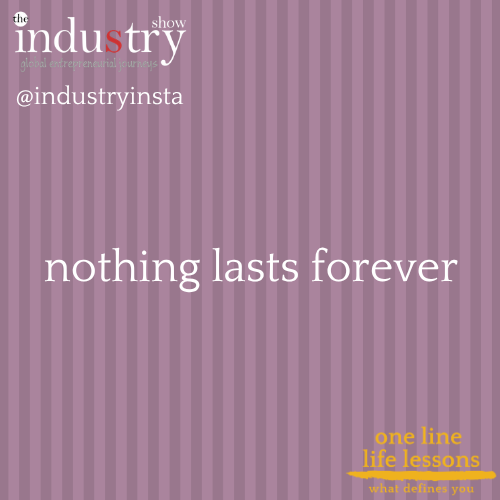
- 07:45-08:04: Ani Sanyal shares two lessons from that experience: nothing is as good or as bad as it seems, and nothing lasts forever.
- 08:25-09:07: Ani Sanyal describes success beyond his expectations, starting Kolkata Chai with $45K in savings, opening a café months before COVID, and building close partnerships with Hasan Minhaj and Chef Vikas Khanna.
- 09:28-10:17: Ani Sanyal shares that his fun comes from consuming art and culture, including visiting museums, reading 20 to 30 books a year, and seeking out Henri Matisse paintings.
- 10:31-11:12: Ani Sanyal recommends “The Tanning of America” by Steve Stout, which explains how American culture shifted toward culture created by people of color.
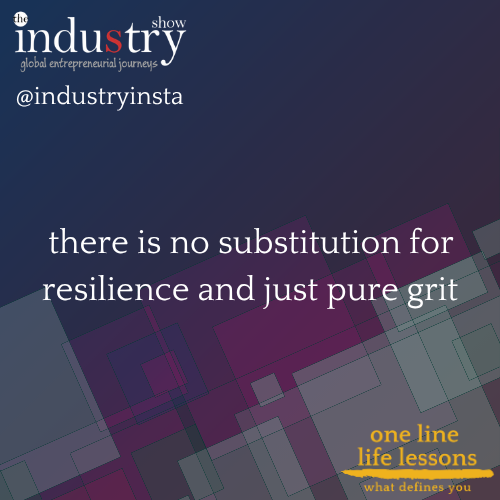
- 11:34-12:39: Ani Sanyal shares life lessons, including being careful about whose advice to follow, treating culture as a competitive advantage, and building resilience and grit.
- 12:39-12:43: Ani Sanyal closes his lessons by encouraging people to build the things they wish existed in the world.
Show Transcript
Transcript - Full Episode
00:00:00 – 00:00:09 Nitin Bajaj
Hey everyone, welcome to The INDUStry Show. I’m your host, Nitin Bajaj, and joining me today is Aniruddha Sanyal. Ani, welcome on the show.
00:00:09 – 00:00:11 Ani Sanyal
How are you? Thanks for having me.
00:00:11 – 00:00:14 Nitin Bajaj
Great to have you here. Let’s start with who is Ani?
00:00:15 – 00:00:36 Ani Sanyal
Who is Ani? Wow. I think ultimately I’m a son, I’m a brother, an entrepreneur, a leader, and someone who I think is constantly curious. And right now I’m on a mission to introduce authentic chai to the Western world and beyond. And I think that’s, that’s all-consuming. But yeah, I’m a combination of all those things.
00:00:37 – 00:00:55 Nitin Bajaj
And you guys have been on a roll. So let’s dig into that a little bit. Tell us, what is Kolkata Chai Co and why did you guys start it? And amongst especially the many options you had, you could have done so many different things. Why this?
00:00:55 – 00:01:05 Ani Sanyal
Yeah, I think there’s certain things in life that they are the itch that you have to scratch, regardless of the options you have or the places that you think you’ll go.
00:01:05 – 00:01:25 Ani Sanyal
And I think Kolkata Chai ultimately, it’s a bridge. It’s a bridge between the two worlds that my brother and I grew up in, being born in this country and being raised by Western values to an extent, but also having a deep connection back home to India, Kolkata specifically, and finding a way to bridge those East and West worldviews is what Kolkata Chai is.
00:01:25 – 00:01:45 Ani Sanyal
So naturally, it’s a chai company. It’s an omnichannel brand that serves café, serves customers through cafés, e-commerce, CPG, and wholesale. But our job is to bring delicious, fresh, healthy chai to America and beyond. And it all starts with, I think, our background and the way we grew up.
00:01:45 – 00:01:57 Nitin Bajaj
Yeah, and the packaging is beautiful. I love the branding. I love the ambassadors and investors you have, obviously Hasan and Vikas and many others.
00:01:57 – 00:02:12 Nitin Bajaj
So you’re obviously doing all the right things. Give us a sense for the impact the brand you’ve built has had so far and a sense for the size and scale of the operations.
00:02:12 – 00:02:20 Nitin Bajaj
And I know you guys have just started this in the scheme of things, so just give us a sense of where things are at and what’s the vision.
00:02:21 – 00:02:36 Ani Sanyal
Yeah, it’s funny. It’s year seven, which seems like its own mini lifetime. And then in so many ways, it starts, it feels like it’s just starting today. But I think the things that come to mind are we’ve served over 2 million cups of chai in this time.
00:02:36 – 00:02:55 Ani Sanyal
We have a top 10 product on Amazon in the chai category. We were just, the brand was featured in the number one Netflix movie in the world and best of the best, which was produced and directed by Hasan Minhaj and his team. And so there’s incredible things happening in scale and impact. Well, well into the seven figures, looking to hit the eight figures soon.
00:02:56 – 00:03:16 Ani Sanyal
So revenue is constantly something we chase, but there’s also, there’s two sides of that. You want to chase revenue sustainably, and you want to build a business that means something. But I think the, the core impact that I think we’ve formed is we’ve really held a mirror up to the diaspora and given people a chance to see themselves in a whole new light.
00:03:16 – 00:03:32 Ani Sanyal
I think for the longest time, especially in this country, it was difficult to be South Asian. It was difficult to be brown. It was something we weren’t all proud of. And I think it’s our greatest feat is going to, is going to always be the fact that we harnessed the things that made us unique.
00:03:33 – 00:03:49 Ani Sanyal
We took our culture and we turned it into a point of pride and something that is coveted and cool and respected by people from all walks of life, regardless of their experience with the diaspora. So I think that’s ultimately what the impact of Kolkata Chai is. It’s really being an ambassador for our culture.
00:03:49 – 00:03:57 Nitin Bajaj
And I love that. And I think one of the images on your site’s homepage is how you kind of strike off tea under the chai, right?
00:03:58 – 00:04:03 Ani Sanyal
No more chai tea. Yeah, that’s a big, it’s a big thing. It’s reclaiming our culture and our narrative.
00:04:03 – 00:04:19 Ani Sanyal
I think the perennial story is of how many things were extracted from India and the surrounding areas across the subcontinent. And I think the more the world evolves today, we see how much genius and richness comes from our soil and our place.
00:04:19 – 00:04:30 Ani Sanyal
And chai was the world fought over tea and chai for many decades. And in this country, it’s been bastardized, it’s been misrepresented, it’s been totally dragged away from what it actually is.
00:04:30 – 00:04:37 Ani Sanyal
And so Kolkata Chai is very much a reclamation of what culture, heritage, culinary, all of that looks like.
00:04:38 – 00:04:52 Nitin Bajaj
Love that. Now, as you’re going about doing this at the scale at which you are, I’m sure there are many challenges that you come across. What’s the biggest one you would like to call out?
00:04:52 – 00:05:01 Ani Sanyal
I think the, the biggest thing is always this, this struggle between resources and capital and that dictating how fast you can move.
00:05:01 – 00:05:20 Ani Sanyal
I think as a company that was bootstrapped initially, as a company that’s never raised venture capital, formally been funded by angel investors and family offices and celebrities and people in the community, that’s been an incredible boon for us. But I also think there’s a ceiling or it’s just a lot more difficult to always do it that way.
00:05:20 – 00:05:44 Ani Sanyal
So the biggest challenge is how do you communicate these things that we know are surefire winners because there’s decades and centuries of behavior behind these things that we do, for example, drinking chai. How do you communicate that to someone that speaks a different investing language, so to speak, and capitalizing the business and getting ready for that next phase of growth, I think is probably the biggest challenge that we’ve faced throughout different periods.
00:05:45 – 00:05:55 Nitin Bajaj
True. Now, on the flip side, the challenges come opportunities. And amongst the many that are in front of you, which is the one that you’re most excited about?
00:05:55 – 00:06:10 Ani Sanyal
Wow. I think right now there’s an opportunity for us to distribute the product nationally. And that’s a combination of being in grocery stores, opening cafés nationally, finding food service partners to carry the product across the country.
00:06:10 – 00:06:19 Ani Sanyal
And I think we’ve built so much excitement on the East Coast and New York City specifically, and that’s always the DNA of where we come from and who we are. It’s never going to change.
00:06:19 – 00:06:31 Ani Sanyal
But I’m really excited to take that opportunity nationally and really show people the places and the faces that need chai, authentic chai in their city, in their lives, and how much we can help build a fabric of that.
00:06:32 – 00:06:34 Nitin Bajaj
Love that. And I’m looking forward to it.
00:06:34 – 00:06:35 Ani Sanyal
Yeah.
00:06:35 – 00:06:57 Nitin Bajaj
Now, as we look forward, I like to take this moment to pause and reflect. And I would love to invite you to share two moments. One where things did not work out as you’d expected. There was disappointment, failure, lessons. And another where things exceeded your expectations and became a success beyond your imagination.
00:06:58 – 00:07:19 Ani Sanyal
Yeah, wow. I think the first one for failure, I’ll take it back prior to Kolkata Chai. I’ll take it back to my first business I ever ran, which was an independent record label. So I was in the music world and I was doing it with my best friends in the world. And I started when I was 16 and it ended when I was 26. So it was like a decade of my life that I spent.
00:07:19 – 00:07:44 Ani Sanyal
And that entire time, obviously there’s youthful optimism, there’s you’re finding yourself in so many ways for the first time. I always thought that I would be living a life in the music and entertainment and that business. And I thought I would always do it with those people that were super close to me. And a series of just very difficult things led that business to flame out in my mid-20s.
00:07:45 – 00:08:14 Ani Sanyal
And I felt like I had spent my last 10 years just, the sand just slipped through my fingers, meaning I had felt like I had lost my entire identity, what I believed in, what I knew, how I made money. And that was a very difficult thing to turn the corner on just, and it left, left me with two lessons. One was like nothing is ever as good or as bad as it seems. And so you must find a bit of neutrality in anything. And the second thing is nothing lasts forever.
00:08:14 – 00:08:26 Ani Sanyal
And that’s a very difficult one to accept. But those things hit me hard when I was young, and I think I’ve taken those lessons to date. On the flip side, success would beyond my wildest dreams. I think I’m living that currently.
00:08:26 – 00:08:47 Ani Sanyal
I think my brother and I started Kolkata Chai with 45K that we had saved up from our previous business. We had opened a 100 square foot shop in the East Village. No PR agency, no professional food experience. Six months before COVID, we opened our first café. And so we were forced to shut down by New York City a couple months after opening.
00:08:47 – 00:09:16 Ani Sanyal
And today I get to build a company where Hasan Minhaj and Chef Vikas Khanna are not only my business partners, but they recognize my mom and my dad on a first-name basis. And there’s this warmth and this incredible depth of relationships and fun and creativity that we’ve built around the business. And I think I would have never, ever assumed that to be true back when Ani and I were shoveling snow outside of our café and trying to keep the lights on.
00:09:17 – 00:09:28 Nitin Bajaj
Love that. Congratulations and kudos to you, Ani, and the team for making that transition. As, as you said, seven years is a long and a short time in the same breath.
00:09:28 – 00:09:29 Ani Sanyal
Absolutely.
00:09:30 – 00:09:35 Nitin Bajaj
Now, switching gears, we hinted at this a little bit. What do you do for fun?
00:09:36 – 00:09:52 Ani Sanyal
Ooh, fun. What is fun nowadays? No, I think for me, fun has always revolved around consuming art and culture. And whether it’s going to museums, whether it’s traveling, whether it’s attending music shows, just finding ways to unlock parts of art and culture that are important to me.
00:09:52 – 00:10:09 Ani Sanyal
I’m a huge fan of Henri Matisse, and so I will try to find every Matisse painting I can around the world. I recently found out that the Baltimore Museum is actually the largest collection of Matisse paintings in the entire world. And I went there and I had a beautiful time. And so a lot of that is just opening up my world through art.
00:10:09 – 00:10:23 Ani Sanyal
I’m a big reader. I read between 20 to 30 books a year. And so those things keep me curious and keep me engaged. I play a little basketball, go to the gym, play a little golf, those things. But today it’s really around consuming art and culture.
00:10:24 – 00:10:30 Nitin Bajaj
Love that. You mentioned books. I’d love to see if you have a book or a podcast that’s a favorite and you want to share.
00:10:31 – 00:10:39 Ani Sanyal
Oh, man. There’s one book that I always share when this question is asked, and it is called The Tanning of America by Steve Stout.
00:10:39 – 00:11:03 Ani Sanyal
And I read this book maybe 10, 15 years ago. And the context is basically America from a consumer standpoint and what’s considered cool and fashionable and relevant started shifting towards hip hop culture and essentially culture created by people of color about 20 years ago, 30 years ago.
00:11:03 – 00:11:12 Ani Sanyal
Run DMC and Maya Adidas and those things started to shift. And that’s the shift that I live in now. But to read this book 15 years ago was, it was a huge light bulb moment for me.
00:11:12 – 00:11:16 Ani Sanyal
And I always recommend it to anybody kind of in, in a similar world.
00:11:17 – 00:11:26 Nitin Bajaj
Love that. Thanks for sharing. Now onto my favorite part of the show. We call this the one-line life lessons. And Ani, I would love for you to share your life lessons with us.
00:11:27 – 00:11:31 Ani Sanyal
Wow, life lessons. All right. So are we doing, how many total are we looking for here?
00:11:31 – 00:11:33 Nitin Bajaj
Keep going. Nobody’s counting.
00:11:34 – 00:11:48 Ani Sanyal
Okay. The first life lesson I will say is be careful who you take advice from, because people are very quick to project their own fears and insecurities on you. And that can sometimes stop you from ever starting. So that’s the first one.
00:11:49 – 00:12:03 Ani Sanyal
The second one I would say is your culture is your competitive advantage. So a lot of times the things that are familiar to you, but might seem exotic or scary or unfamiliar to others is actually what makes you unique and gives you tremendous advantage.
00:12:04 – 00:12:23 Ani Sanyal
The third one I would say there is no substitution for resilience and just pure grit. There’s a lot of things that will test you when it comes to entrepreneurship and running your own business. And your ability to get right up after getting punches in the face is probably the most important one.
00:12:23 – 00:12:36 Ani Sanyal
Nothing is ever as good or as bad as it seems. I know that’s a, a difficult one to sometimes wrap your head around, but I think there’s a level of stoicness that is required from entrepreneurship. And that’s one that I keep close to me.
00:12:36 – 00:12:47 Ani Sanyal
And let me think, I have one more. Let me think. I think building the things that you wish existed in the world is a big one. And so I’ve always lived by that mantra and very much do it today.
00:12:49 – 00:13:05 Nitin Bajaj
Love that. Thank you so much, firstly, for making the time to be with us, sharing your journey and story. But for most importantly, doing what you’re doing, reclaiming our culture and putting us where we belong. Really appreciate it.
00:13:05 – 00:13:08 Ani Sanyal
No, of course. Thank you for having me and giving me a chance to share my story.
Subscribe!