Nov 28, 2026
Anurag
Bist
Anurag Bist is the Founder, CEO of Monet Analytics – combining behavioral intelligence and emotion science to decode how people engage, feel, and react. He is an alum of Princeton University and IIT Kanpur.
One Line Life Lessons from Anurag



Episode Highlights
- 00:08-00:41: Anurag Bist describes consistency as the defining trait of his life, noting that his family and friends see the same steady routine and work ethic.
- 00:50-01:47: Anurag Bist explains that his main pattern is solving new problems, which he has applied across hardware, software, and service solutions over 30 years.
- 01:47-03:03: Anurag Bist highlights his ability to work with diverse people, drawing on learning from others of different ages, backgrounds, and geographies, and stating that he does not carry ego.
- 03:28-04:11: Anurag Bist explains that Monet Networks began from curiosity about how people respond, starting with emotions and sentiments before expanding to why people respond.
- 04:11-04:59: Anurag Bist connects the company to his PhD in electrical engineering and signal processing, which stems from years of working with audio and video signals.
- 04:59-05:04: Anurag Bist describes the company’s mission as capturing human response intelligence and applying it in an agentic framework to solve enterprise problems.
- 05:18-06:19: Anurag Bist outlines Monet’s scale, with about 30 people across three continents, and says it works with major entertainment, brand, and political clients.
- 06:19-07:44: Anurag Bist gives examples of how Monet helps studios, streamers, and global brands make content and campaign decisions that can affect millions of dollars.
- 07:55-08:18: Anurag Bist states that Monet works with both political parties and helps inform major senatorial and presidential races.
- 09:00-10:00: Anurag Bist names the biggest current challenge as balancing personal life, including caring for his children, his mother, and his travel between regions, with his professional focus on fast-moving technology.
- 11:18-12:08: Anurag Bist sees opportunity in Monet’s human response data set, which he believes can be applied to physical AI and real-time applications.
- 12:39-15:05: Anurag Bist recalls a second company that did not succeed, where a promising display power technology failed to reach commercial scale, and says he learned to focus on what he can control.
- 15:14-17:34: Anurag Bist describes his greatest successes, including placing second in India’s 10th grade board exam and his first company’s acquisition by Intel.
- 17:50-18:38: Anurag Bist shares that he contributed a coding technique to a video coding standard in the mid-1990s, which remains part of widely used formats such as H.264.
- 19:14-19:45: Anurag Bist says running, yoga, and fitness and longevity help him de-stress, alongside time with his family and following cricket.
- 19:54-20:52: Anurag Bist recommends Malcolm Gladwell’s Outliers and Daniel Kahneman’s Thinking, Fast and Slow, and names the Acquired podcast as a favorite.
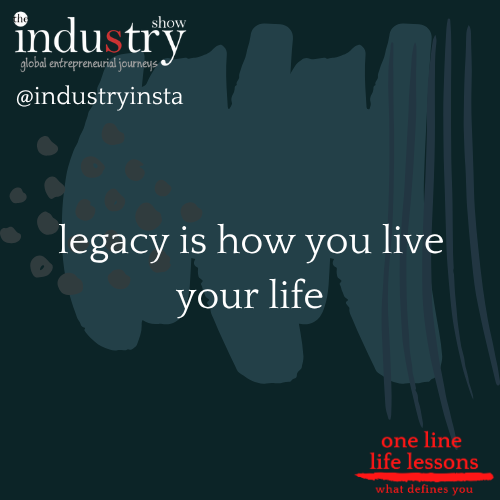
- 21:19-22:03: Anurag Bist states that how you live your life is your legacy, and that you should respect others’ views while still making your own judgments.
- 22:07-22:52: Anurag Bist advises being true to who you are, giving back selflessly, and chasing change in lives rather than fame.
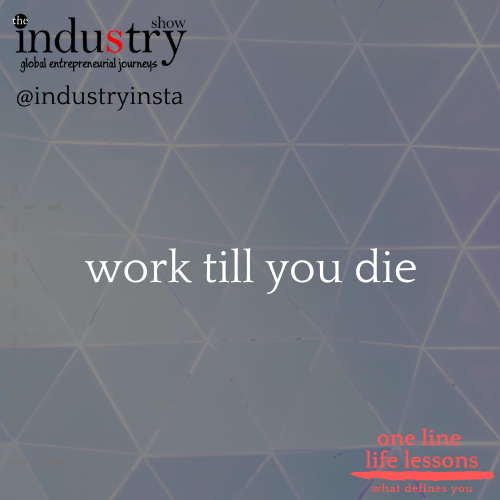
- 22:55-23:04: Anurag Bist says he plans to work until he dies rather than retire.
Show Transcript
Transcript - Full Episode
00:00:00 – 00:00:08 Nitin Bajaj
Welcome to The INDUStry Show. I’m your host, Nitin Bajaj, and joining me today is Anurag Bist. Anurag, welcome on the show.
00:00:08 – 00:00:12 Anurag Bist
Thank you, Nitin. Glad to be here, and thank you for the invite.
00:00:13 – 00:00:16 Nitin Bajaj
Great to have you here. Let’s start with who is Anurag.
00:00:17 – 00:00:50 Anurag Bist
I think. I think if I look back through my life, like, one thing that stands out is consistency. And some, some people also say, including my wife, that it’s being a boring person. So the ability to repeat the same thing again and again, whether it’s my routine or whether the work ethics and things like that. So I think if I ask my closest people who know me, my kids, my family, that’s what stands out.
00:00:50 – 00:01:06 Anurag Bist
And I think how it’s manifested in what I’ve done over my life is that has become my asset, besides knowing that I know some things better than many other people. So I think so. I think that’s what I how I define myself.
00:01:06 – 00:01:47 Anurag Bist
The other thing which has been consistent is looking to solve new problems. So whatever I’ve done, the common theme is that I’m an engineer, so I’m solving a problem which I am able to solve. But even within that sort of guardrails, I’ve solved different problems for different people over a course of 30 years. So I’m not stuck to one, just one thing, like designing just hardware or designing just software or treating service issues, service solutions as a taboo. So that’s been my sort of another thing, that wherever I see a problem, I try to solve it.
00:01:47 – 00:02:21 Anurag Bist
And the last thing is, which I think I view as my strength, that I can work with a very diverse set of people, which has manifested itself with one of my closest colleagues, somebody who lives in Barcelona, who I’ve met very few times. And I’ve met creatives in the last 7, 8 years who have nothing, nothing in common with the left-brained person that I was. So having the ability to work with such diverse set of people, as well as a different range of people.
00:02:21 – 00:02:51 Anurag Bist
So I looked at a quote of a very famous athlete, and he said he cycled with a person who was 80 years old, and he asked his secret of success. And he says, “I always work with some people who are 20, 30 years younger than me because they always teach me something.” So that has also been a consistent theme. Like, whatever I’m doing, I’m working with diverse ethnicities, diverse in terms of geography, as well as my ability to work with people.
00:02:51 – 00:03:02 Anurag Bist
And that also makes that I don’t have ego, so I know that there are much more smarter, richer people in the world than who I am, but I’m confident in who I am.
00:03:03 – 00:03:08 Nitin Bajaj
Love that. And I can testify to that, having known you now for 10 plus years.
00:03:08 – 00:03:08 Anurag Bist
Thank you.
00:03:09 – 00:03:27 Nitin Bajaj
Very humble, very down-to-earth, but extremely curious and looking to solve for some of the biggest problems we’ve had. Now, which brings me to the next question. Tell us about Monet Networks, and more importantly, why did you start this?
00:03:28 – 00:03:55 Anurag Bist
Yeah, so I think so. Basically, why I started this was, I think, the first was a curiosity. Like, so basically looking at some things when I first started looking at the problem, like, how do you quantify human response? And so initially I started with emotions and sentiments, but it has expanded into knowing how people respond, why people respond. So that was the curiosity.
00:03:55 – 00:04:15 Anurag Bist
The connection, again, from my education was that my I have a PhD in electrical engineering, which is, even in that, it’s in signal processing. So I’ve dealt with audio and video signals since, since I got my PhD or even before that. So that’s where I’ve been trained, and I’ve applied it in many different ways.
00:04:15 – 00:04:46 Anurag Bist
So as about 5, 10, 12 years back, it was getting more and more advanced in looking at faces and decoding sentiments in real time, which really attracted me as, as a problem. And how it’s evolved is that we in Monet basically view it as capturing human response intelligence and now applying that in an agentic framework to solve enterprise problems.
00:04:46 – 00:04:58 Anurag Bist
The other way, which I like to say, is that our modern ZKIS, so basically the how society is behaving, is undergoing a rapid transformation.
00:04:58 – 00:04:59 Nitin Bajaj
Mm-hmm.
00:04:59 – 00:05:08 Anurag Bist
Monet helps capture and influence it, and in some cases also define it. So that’s what we do in terms of our mission and vision.
00:05:09 – 00:05:17 Nitin Bajaj
Give us a sense for the size and scale, more importantly, the impact of the work you do at Monet.
00:05:18 – 00:05:50 Anurag Bist
Yeah, so we are not a very large company, so initially I’ve bootstrapped it, taken some seed money, but and obviously it takes a while in some cases for you to hit the right tone and so on. So in the last 2 years, I feel that we’ve hit that critical juncture where, based on whatever we learned and based on how technology has evolved, it has helped us do things at a pace, at a scale which any large company would do.
00:05:51 – 00:06:18 Anurag Bist
And so just in terms of pure scale, we have about 30 people in the company in 3 different continents. Some people are in Europe, some people a large fraction of our team is in India, which are doing software development, some analytics, and so on. But in terms of our customers and stakeholders for which we are making helping make decisions, some of it is the who’s who’s of the world.
00:06:19 – 00:07:08 Anurag Bist
So, for example, in the entertainment space, we are working with the top 5 theatrical studios in Hollywood, the top streamers in, in US, and we are helping them make decisions week after week as to how their content is relating to people, not just in the US, but around the world. And in the process, we are collecting very rich and unique sets of data where we are tagging how people are getting responding to different kinds of content from different ethnicities in a very granular fashion, and how it affects the outcomes of some of these 100 to 200 million dollar movies. So that’s a very important decision in terms of just economic value for one, one segment of our customer.
00:07:09 – 00:07:44 Anurag Bist
The second segment could be a brand deciding, like a world, worldwide brand launching a new campaign where they want to position themselves in front of, say, younger audience. So how do they use their reason to believe, value propositions, or what kind of imagery should they use? How do you use people’s emotions into that decision and make a decision which can impact millions or sometimes hundreds of millions of dollars of decisions down the road? We are helping them make those decisions as well.
00:07:44 – 00:08:23 Anurag Bist
And finally, the last, but not the very least, is, at least in the US, we are working with some of the largest political consulting firms. We are, we don’t have a political affiliation in what we do. We can work with both red and blue things, but the fact is that we have, and we are helping influence decisive senatorial races, decisive presidential races in US and outside. So these are big decisions on how societies could perform. We are having some influence on that based on the rich data and the workflows that we are creating.
00:08:24 – 00:09:00 Nitin Bajaj
That is super fascinating. And as you said, myriad of applications, huge impact on pretty much all kinds of economic and civic decisions. That’s really exciting, and kudos and congratulations to you and the team on what you’ve been able to accomplish in such a relatively short time. Now, amongst the many things, with the technological changes and the many dynamic and moving parts, there are many challenges. What’s the one you would like to call out?
00:09:00 – 00:09:11 Anurag Bist
Yeah, so I think so there are 2 aspects of it. I think I looked at this question, and it was a very unique question, and I can say some boilerplate stuff which would relate.
00:09:11 – 00:09:37 Anurag Bist
I think the best way I because I think you do the work and you solve the challenges on a day-to-day basis, but if I really look at answering that from my perspective, the biggest challenge I have right now is, which may not make sense to many people, but I’m actually trying to manage personal life with professional life in the sense that our kids are getting out of college.
00:09:37 – 00:09:50 Anurag Bist
They need some kind of support, and my dad passed away last year. He was, he lived to 90. He had a very fulfilling life, but I have to take care of my mom and have to do that in 2 different regions of the world.
00:09:50 – 00:10:05 Anurag Bist
So to travel, to manage that, along with keeping an eye on where the tech is moving at a fast pace, it’s a challenge. So basically you have to not let the eye go off from both the things because both are really important.
00:10:06 – 00:10:26 Nitin Bajaj
No, I think it’s very relevant to people as we move in and through those phases and stages where we need to not divide, but pay equal attention because neither of these things can get any secondary perspective.
00:10:26 – 00:10:34 Anurag Bist
Yeah. And I think a 20-year entrepreneur may not appreciate that, but I think that’s the circle of life that everybody has to go through at some point.
00:10:34 – 00:10:35 Nitin Bajaj
So true.
00:10:35 – 00:10:36 Anurag Bist
Yeah.
00:10:36 – 00:10:42 Nitin Bajaj
Now, on the flip side of challenges come opportunities. What’s the one you’re most excited about?
00:10:42 – 00:10:48 Anurag Bist
Yeah, I think so. I think as an entrepreneur, you always see glass half full.
00:10:48 – 00:10:48 Nitin Bajaj
Yes.
00:10:49 – 00:11:17 Anurag Bist
Even though I’ve been working in this field for several years now, but with the advent of AI and using cheaper tokens from the open source models and open weights and so on, I think the level, the playing field has become so level, and you’re seeing at one end, you’re seeing companies raising 50 to 100 million dollars are basically being frowned upon because that’s nothing.
00:11:18 – 00:11:44 Anurag Bist
But where I am in the journey at Monet, I certainly feel that I’m sitting on a very important data set, which is a human response data set. If I can find a way to apply it to an application, especially with physical AI and many real-time applications which are coming up, there are plenty of opportunities that we will encounter which are still unsolved.
00:11:45 – 00:11:45 Nitin Bajaj
Yes.
00:11:45 – 00:12:07 Anurag Bist
And that’s just, we are just basically touching the surface. I think so whatever we have built, a way to abstract out that information and apply in real-life situations is a big opportunity from our lens. Obviously, there are a lot of other people solving different kinds of problems, but whatever we have built, that’s a big opportunity which can unlock a lot of enterprise value in future.
00:12:08 – 00:12:37 Nitin Bajaj
That’s super exciting, and I’d love to stay on track and see how that continues to evolve. Now, as we look into the future, I like to take this moment to pause and reflect, and I would love for you to share 2 moments, one where things did not work out as you had expected. There was disappointment, failure, lessons, and another where things exceeded your expectations and became a success beyond your imagination.
00:12:39 – 00:12:59 Anurag Bist
Yeah, so I think I’ll start with the, the lesson, and I think so it was like my second company we were doing. So my first company was a relatively big success, but second company was with very smart people, probably as smart or smarter than other people, and also some people I knew much longer and much closer.
00:13:00 – 00:13:16 Anurag Bist
So these were a very diverse set of 4, 5 PhDs, and we were trying to solve some problem. We also had a really good problem we were solving, which is, I think the LCDs were just come out, but they were basically a very big power hog. This was mid-2000s.
00:13:16 – 00:13:39 Anurag Bist
We were trying to solve the problem, and mobile phones, the smartphones were just coming out, so we just had flip phones at that time, and there was no iPhone. So this was like 2005, 2006 timeframe. And we built a technology where we could reduce the power of the LCDs and run the whole device at 1/3 power.
00:13:39 – 00:13:40 Nitin Bajaj
Wow.
00:13:40 – 00:14:03 Anurag Bist
And everybody was looking for a solution, including people from Korea, Samsung, LG. Apple was just starting to do iPods at that time. We actually got in into Apple and into, and they gave us unreleased iPods. We didn’t realize the magnitude of that. You had to write your life off. But we worked with them, and it didn’t work out with Apple.
00:14:03 – 00:14:31 Anurag Bist
With some other companies, we actually had some good solutions, but then for various reasons, it not related to what we were doing, but we couldn’t make that a big success. And it also happened, you know what happened in 2008, like basically the whole world came crashing down. So for startups, it was not a very good idea. We actually had a deal with an Irish company to for an acquisition, which actually fell off because their financing didn’t work through.
00:14:31 – 00:15:04 Anurag Bist
So I think the looking back, I think, which it was a big personal kind of disappointment. We couldn’t monetize that technology to the extent we wanted, but the learning from that was sometimes you can only control what’s controllable. Sometimes the outcomes are beyond your control, so you shouldn’t be judging your value based on a few such events because life is more than just 1 failure. So I think so that’s what I learned from that experience.
00:15:05 – 00:15:16 Anurag Bist
The people and the technology I’m still very proud of. We had 4 patents, which are still very early patents on that technology. And so that’s, so that’s 1. The second is success story.
00:15:16 – 00:15:54 Anurag Bist
So I think the biggest success I’ve had is in 1983. In the, in terms of the magnitude, even today, it stands out because so I really studied hard for our 10th grade exam, which used to be like the board exam, like CBSE at that time, which is a hundreds of thousands of people in India take that, and it’s 1 exam. It’s 2 years’ worth of content tested in 2 weeks. And so I was actually doing taekwondo in the mornings, and then I would study the most. Like that’s the most I have put effort on single event.
00:15:55 – 00:16:15 Anurag Bist
And it was a 2-week period, and then I was basically taking a vacation at my grandparents’ town in Manitou, where there was no connectivity. At that time, there were no phones also, very few and far between, and there was no TV there in my grandparents’ house. So India just had 1 television station.
00:16:15 – 00:16:16 Nitin Bajaj
Television.
00:16:16 – 00:16:21 Anurag Bist
Yep. And that 8:30 PM news, my name was announced, and I stood 2nd in India.
00:16:22 – 00:16:23 Nitin Bajaj
Wow.
00:16:23 – 00:16:49 Anurag Bist
Yes, see, with 2, with the highest in math, 150 out of 150, and social sciences, 144 out of 150. The guy who came 1st had 6 marks more than me, but he took Sanskrit, and he got full, very high marks in Sanskrit than I had taken Hindi. So that was a big accomplishment, and we had a very, very flamboyant principal who wanted to basically flaunt his.
00:16:49 – 00:16:49 Nitin Bajaj
Yeah.
00:16:50 – 00:17:08 Anurag Bist
School success. And he actually, the next year, he had a big 1st day celebration where he brought an elephant and put me on top of an elephant and took me around the field. So that was a big thing because your name was announced. I was asked to come to Delhi to receive the award and so on.
00:17:09 – 00:17:34 Anurag Bist
So that was 1, and the 2nd was obviously in my 1st company when we were acquired by Intel. So a bunch of 4 engineers building a company, 4 engineers and a business guy building a company out of Orange County, and within 2 years, we got acquired for more than half a billion dollars. So that was, I think those were 2 standouts in terms of just the magnitude.
00:17:34 – 00:18:04 Anurag Bist
But I think I also had, what I’m proud of is, which not too many people know, actually I worked on, right out of my PhD, I worked in Rockville, semiconductor systems, and so they were killing it in terms of making modems. The internet was just coming out. But I was working in their division, which was making the next generation products in audio and video, and I got involved from Rockville in the making the next generation video coding standard.
00:18:04 – 00:18:35 Anurag Bist
So I was traveling the world, working with the smartest people out of Norway, Germany, US, or Europe, all over the place, and we worked on the next generation video coding standards in mid-90s, College Dock 263, and I worked on a specific code for that which was adopted into the standard, and that is, the variations of that is still true, like H.264 and MPEG-4 is the default.
00:18:35 – 00:18:35 Nitin Bajaj
Yeah.
00:18:35 – 00:18:40 Anurag Bist
Video coding standard that the files we play with. So that’s kind of something for eternity.
00:18:41 – 00:18:54 Nitin Bajaj
That is so cool. That is amazing. And what is fascinating to me is every time I get to spend time with you, I learn something new. So for sure, the, the elephant ride was something I had not known before.
00:18:56 – 00:18:59 Anurag Bist
I think my school friends still remember and make fun of it.
00:19:02 – 00:19:03 Nitin Bajaj
That is so amazing.
00:19:03 – 00:19:03 Anurag Bist
Yeah.
00:19:04 – 00:19:14 Nitin Bajaj
Now, amongst the many things you do and enjoy, what’s the one that is not related to work that is a, a de-stress for you?
00:19:14 – 00:19:26 Anurag Bist
I think spending time with family, like twin girls and my wife, I think we like to do things together, but as a personal thing, like you probably already know, so I like to run. So.
00:19:26 – 00:19:26 Nitin Bajaj
Yes.
00:19:26 – 00:19:42 Anurag Bist
That’s something I’ve done for 40-plus years. So I run, I do yoga, and I’m crazy about fitness and longevity. That’s kind of a pastime, and I’m a follow cricket as a fanatic.
00:19:45 – 00:19:53 Nitin Bajaj
Now, in terms of books and podcasts, is there a favorite one that you would like to share?
00:19:54 – 00:19:58 Anurag Bist
So I think I’ve actually listened to Malcolm Gladwell.
00:19:58 – 00:19:58 Nitin Bajaj
Yeah.
00:19:58 – 00:20:00 Anurag Bist
In person. So I like what he writes.
00:20:00 – 00:20:01 Nitin Bajaj
Yeah.
00:20:01 – 00:20:06 Anurag Bist
Outliers, a book I, I would highly recommend, and some other books by Malcolm Gladwell.
00:20:06 – 00:20:06 Nitin Bajaj
Yeah.
00:20:07 – 00:20:19 Anurag Bist
And also I’ve read recently a book by Think Fast, Think Slow by Daniel Cunningham. I think that’s a very good book in terms of what I’m doing in terms of behavioral economics.
00:20:19 – 00:20:46 Anurag Bist
In terms of podcasts, my recent favorite is Acquired, so I love those guys, and I’ve become probably, interestingly, not so much of their tech, but I’ve become fan of their, like, luxury coverage. So their episodes on Hermes and Rolex is fascinating, like how people have built hundreds of billion dollars’ worth of company over generations, which have created so much value.
00:20:47 – 00:20:50 Nitin Bajaj
True. Yeah, I love how they bring these to life.
00:20:51 – 00:20:51 Anurag Bist
Yeah.
00:20:52 – 00:21:01 Nitin Bajaj
Now, onto my favorite part of the show. We call this the one-line life lessons, and Anurag, I would love for you to share your life lessons with us.
00:21:02 – 00:21:44 Anurag Bist
Yeah, so actually, since you sent me some of the things, this was something actually I put some thought to it before we talked today. So in no particular order, I think, and I covered this in some of the earlier questions also. The first thing I feel is your legacy is how you live your life. So it’s not very different from leaving too many, too much money or doing, putting your name in buildings and so on. I truly believe that how you live your life is your legacy. The scale of it may be different, but people who know you, I think that’s how they remember you. So that’s the first.
00:21:44 – 00:22:02 Anurag Bist
And second is something which I believe and try to follow, but it’s not always possible, but it’s basically, it’s like respect everybody in terms of their views, but you still make your own judgments. So that’s the second one.
00:22:03 – 00:22:23 Anurag Bist
The third one is related to the first one, be true to who you are. So you can’t be, I tell this to our girls, like you have your own personality, and you will shine when you try to be who you are instead of trying to portray something who you’re not. So that’s the third thing.
00:22:24 – 00:22:51 Anurag Bist
And I think fourth is, which I try to do, it’s you can never do enough. Like it’s basically give back selflessly and chase changing life, not fame, because at the end of the day, that’s what matters. Like we are all in this planet for a small amount of time. Nobody will judge us with how many zeros you left with when you died, but people will remember even if you changed 1 life or the other.
00:22:52 – 00:22:56 Anurag Bist
And the last is work till you die. So I don’t want to be retiring.
00:22:59 – 00:23:03 Nitin Bajaj
Love that. And knowing you, I know that’s not in your vocabulary anyways.
00:23:04 – 00:23:04 Anurag Bist
Yeah.
00:23:05 – 00:23:07 Nitin Bajaj
Anurag, thank you so much for making time —
00:23:07 – 00:23:17 Anurag Bist
Oh, thank you. It was fun covering some of these because you don’t think about these things unless you are put in a spot. So thank you for asking these questions.
00:23:18 – 00:23:37 Nitin Bajaj
Love that, and love what you do and how you help the community, help the next generation, and have been diligently and boringly doing that for so many years. So please keep doing what you are and keep impacting more and more lives, more power to you, and thank you for being you.
00:23:38 – 00:23:44 Anurag Bist
No, thank you, and I think same to you as well. So you’re doing a lot for the community, and keep doing that.
Subscribe!