Dec 13, 2025
Dr. Abhay
Dandekar
Dr. Abhay Dandekar is a Physician at The Permanente Medical Group and founder, host of Trust Me I Know What I’m Doing – a podcast featuring interesting and talented people linked to the global Indian and South Asian community.
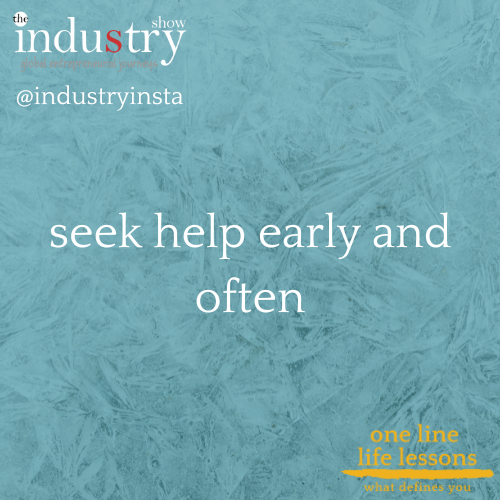
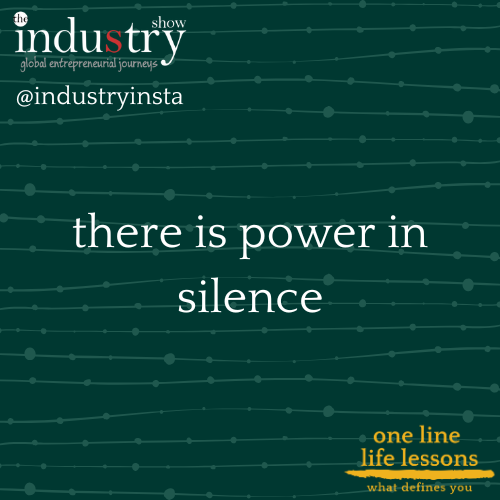
One Line Life Lessons from Dr. Abhay


Episode Highlights
- 00:30-02:17: Abhay Dandekar introduces himself beyond his professional titles. He describes himself as a physician, dad, husband, and friend, continually exploring different facets of his identity and striving to be a better human. He is also an admirer of Nitin Bajaj’s Industry Show.
- 03:03-06:22: Abhay Dandekar explains the origin of his podcast, “Trust Me.” It stemmed from a childhood dream of writing “Conversations with Myself.” As a doctor, he recognized the crucial role of trust in patient interactions and how listening and fostering conversation builds that trust. This led him to share stories of change agents and leaders, titled “Trust Me, I Know What I’m Doing.”
- 06:47-07:36: Abhay Dandekar has hosted over 300 guests in five years for his podcast while still practicing medicine full-time. He notes there’s no shortage of amazing individuals doing impactful work, and he aims to capture as many of these stories as possible.
- 08:23-10:17: Abhay Dandekar identifies loneliness as a major global challenge, exacerbated by digital connectivity. He links this to the concept of trust, emphasizing that relationships are built on trust. He believes that while AI can augment human connection, it should not replace it, and deep human connections are vital for combating loneliness.
- 11:14-12:53: Reflecting on professional setbacks, Abhay Dandekar shares a key lesson: “the grass is simply greener where it’s being watered.” He stresses the importance of nurturing professional and personal spaces and building community.
- 12:55-13:51: Abhay Dandekar identifies his greatest success as his blossoming family, helping raise four adults. He uses the analogy of knowledge versus wisdom, stating that parenting and sharing conversations has generated wisdom, which keeps him curious and life vibrant.
- 14:25-15:51: Abhay Dandekar recommends books like “James” by Percival Everett and podcasts such as “Life Hacks,” and those from NPR and The New York Times, highlighting the value of literature and audio content in expressing current times.
- 16:12-17:25: Abhay Dandekar offers several one-line life lessons: pay attention to your inner child, seek and deliver help early, spend time with seniors, and embrace the power of silence and being comfortable alone.
Show Transcript
Transcript - Full Episode
[00:00:00 – 00:00:09] Nitin Bajaj
Hey everyone, welcome to the Industry Show. I’m your host, Nitin Bajaj. And joining me today is Dr. Abhay Dandekar. Abhay, welcome on the show.
[00:00:10 – 00:00:15] Abhay Dandekar
Nitin, thank you so much for being such a warm and gracious host. Thank you for tolerating me.
[00:00:16 – 00:00:33] Nitin Bajaj
We haven’t started yet, but I know I’ll be more than tolerating. I’ll be enjoying this conversation and we are I guess turning sides for a moment, you host a lot of these shows yourself. So let’s start with who is Abhay?
[00:00:35 – 00:02:20] Abhay Dandekar
Yeah, first off, I’ll share that thought on who is Abhay by not only just thanking you for allowing me to come on your show, but absolutely I’m an admirer of the industry show and all the work you do. So thank you again so much for that. The who is Abhay question has an ongoing answer. And I think if I had to try and pin down who is Abhay, there are so many different facets of that person that I’m both proud of and also still exploring. And I do believe that the march towards being a better human is really what defines that answer of who is Abhay. So I’m certainly a I’m a human. I’m a Californian. I’m an Indian. I’m an American. I’m a physician. I’m a dad. I’m a husband. I’m a family member. I’m a friend. I can say I’m not an enemy. I’m not a very good enemy of anyone. So I wouldn’t say that there’s that aspect of me. Over the last several years, I have really enjoyed being a conversationalist. And I would say that’s the latest, I think, incarnation of who I am. And I think also I’m someone who I feel is growing to be a more self-aware listener and an observer of the world around me. And so if I have future aspirations on who Abhay is, I hope all those things actually shine even more, but I’m hoping to advance and accelerate my skills in really engaging because of the observations that I make of the people and the world around me.
[00:02:22 – 00:02:26] Nitin Bajaj
Curious and on an eternal quest for continuous improvement.
[00:02:27 – 00:03:01] Abhay Dandekar
Yeah, stepwise growth and rapid learnings, letting go of as much as you can and shed that negativity. And just keep marching forward with as much positive information as you can. That’s the only, I think, best resource we have and hopefully sharing that with others as best as possible. There’s an equal, I think, attraction to accumulating that growth, accumulating that knowledge, accumulating that peace, but then also giving as much as possible too.
[00:03:02 – 00:03:20] Nitin Bajaj
So true. And on that note, tell us about what is Trust Me? What inspired you to start that conversation and give us a sense for through your journey up to now, what has been the impact of this work?
[00:03:22 – 00:06:38] Abhay Dandekar
Yeah, when I was about 15 years old, I’m born, I’m a native Californian. And I remember being born and brought up here as a Indian American, but with very strong anchors and roots in many different communities across a few continents. And then a great community here in California. I remember having a conversation with a few of my buddies that we were just joking around, but I said, you know what? One day I’m going to write a book and I’m going to call it Conversations with Myself. And they were laughing because they said, that’s great because the only person who’s going to read it is probably you. And I just went with that for a second. Years later, I found that as I had been with the ongoing kind of journey and experience of all the different identities that I mentioned previously, I found myself as a doctor, in fact, knowing that I, like many doctors, I had set out to do something. I wanted to help people and I wanted to actually, in every encounter that I had, I actually wanted to try and either do something or fix something or enable some sort of positive change. I also found myself in situations where practically every 10 to 15 minutes, I had to develop trust with a new family, a new patient. And that became an iterative journey to both cultivating more and more trust with people. But I also found that a good portion of my job and a good portion of my professional life was in fact not so much doing things, but in fact listening and enabling conversation. The more and more conversation that I found I was enabling and steering, the more and more trust not only I was building in the patients and families that I was actually working with, But I found that those parents and families and teens, I work in pediatrics. And so all of those members that I was in fact interacting with, they were actually subsequently building more trust in themselves. And I found that the real antidote for apathy and the real accelerator of all of this was conversation. And so tethering that back to the I want to write a book called conversations with myself. I thought that really the next step would be to start sharing some of the conversations of those people who are really change agents and activists and leaders and those who are quite up and coming or those who are established across generations and languages and different disciplines of professional and personal work, including the entire diaspora, but also even our subcontinent to share some of those conversations about the work that people were doing. And I aptly decided to call it Trust Me, I Know What I’m Doing. And I think that’s the current story and that’s the current version of how that came about. It really was designed and with that mantra in mind of conversation being the antidote to apathy and really being able to share those stories and share those journeys among people in our community and beyond.
[00:06:39 – 00:06:45] Nitin Bajaj
Love that. How many of these conversations have you had so far and over a span of how many years?
[00:06:47 – 00:07:40] Abhay Dandekar
I’ve been doing this for about five plus years now. Officially, I’ve had about 300 plus guests to share conversations with. And it’s been a steady journey. I still practice full time in medicine. And so I think I see it less as a I do this on the side and more it’s quite integrated into the conversations that I’m having every single day. So I’m very proud of the fact that there are so many guests that I’ve hosted, but to be 100% honest, I think that if I really had to share conversations and publish them as podcasts or publish them as episodes, you could have a conversation every minute with somebody who’s doing something amazing out there. So there’s no shortage of people who are doing some sensational things. And I want to make sure that I’m at least capturing as many of those moments as I can.
[00:07:41 – 00:08:18] Nitin Bajaj
And again, thank you for what you do. Extremely important work. And I want to transition this to we live in interesting times. There is From all perspectives, from being South Asians to being immigrants to also, in your case, being in the healthcare space, there is a lot of challenges that we as a community, we as a humanity are facing. If I asked you to call out the one big challenge you want to highlight, what would that be?
[00:08:23 – 00:09:11] Abhay Dandekar
This is not a new challenge, but I will link these two words together. And one of them is loneliness. You could call it isolation in this incredibly digitally connected world that we’re in, which I celebrate. And I’m very proud of sharing that. The thing that’s making this particular conversation that we’re having right now quite possible. But connectivity, we can get seduced by how digitally connected we are and still be quite isolated and lonely. So I would say that’s a major challenge. And people across our globe are combating this. And many have called it out, including the former Surgeon General, Vivek Murthy, many others across so many different ecosystems are pointing this out that we really need.
[00:09:11 – 00:09:11] Nitin Bajaj
To be mindful of this.
[00:09:16 – 00:10:27] Abhay Dandekar
The parallel to that or the kind of, I think, adjoining conversation, especially in this era of real amazing and brilliant creativity with artificial intelligence, is this notion of trust. Relationships are developed with trust in mind. And that can happen in every single arena of our society, whether that is Finances and tech, whether that is the social capital that we’ve talked about, whether it is just family and friendships, connections, but trust is at the center of this. We definitely see this in healthcare, where trust is built on longitudinal relationships and really deep human connection. AI can certainly augment that, but it should not replace it in any way. And we really need to highlight that trust and those deep human connections as being a great accelerator for connectivity and combating loneliness. So I don’t know if that’s a summarized answer to what you talked or what you asked about, but I think it’s an ongoing conversation with priorities that we really need to focus on.
[00:10:28 – 00:10:33] Nitin Bajaj
It is. In many ways, you also answered my other question, which is about what’s the.
[00:10:33 – 00:10:33] Abhay Dandekar
Biggest opportunity we see. And as you said, it’s as we.
[00:10:33 – 00:11:12] Nitin Bajaj
Build that trust and as we augment that trust using technology, it allows us to do more for the people involved. And, you know, I want to have you reflect since we were having this conversation just a few minutes ago. I would love for you to share two moments from your life and career. One where things did not work out as you had expected. There was disappointment, failure, lessons. And another where things exceeded your expectations and there was success beyond your imagination.
[00:11:14 – 00:13:57] Abhay Dandekar
Yeah, I would say that I’ve had a few of those, like most people, the, I would say failures or parallel sidesteps or things that didn’t go as planned. They definitely are all growth opportunities, some that definitely speak out in the professional realm. I definitely have been very proud of in many ways constantly thinking about reinvention and what is my role professionally. And oftentimes that can come because you are seeking new pastures and other times it comes because the motivation is stagnancy and you feel like you’re not growing as much. I would say that one of the best ways, one of the best lessons perhaps from thinking about that and having gone through many of those professional side steps or even professional failures, is to remind myself that of course the grass is not necessarily greener in some other location, whether that be the other side or across the fence or whatever version of the analogy you want to make, but the grass is simply greener where it’s being watered, where it’s being nurtured, where it’s actually being cared for. And building community around your professional spaces, around your personal spaces to make sure that grass is green and tended to and mowed and manicured. And those kinds of things absolutely is important. And those, I think, instances where I’ve had a job opportunity that didn’t pan out or a project that didn’t necessarily go as planned, I think that lesson is very much something that I’ve appreciated. The part of the success story. I think there’s been so many just having a, I will say my greatest successes so far has have been really being very grateful for having a blossoming family. We’re now a family of four adults in our house. And I would say that’s probably my proudest and deepest and most sincere success in life has been being able to in a way help parents to great adults. And it’s that the reflection that I have maybe on that is that great saying that knowledge is knowing that a tomato is a fruit. And of course wisdom is knowing that tomatoes don’t belong in fruit salad. And so parenting and sharing conversations and doing what I do both personally and professionally, in and out of my family and my friends and community has really generated all of that wisdom. And I hope that wisdom is what keeps me active, keeps me curious, and keeps life vibrant.
[00:13:58 – 00:14:06] Nitin Bajaj
Love that. Very beautifully and eloquently said. I’m going to ask you a biased question, and maybe I’ll answer it on your behalf.
[00:14:06 – 00:14:09] Abhay Dandekar
This is great, right? That’s even better. I can learn from you.
[00:14:09 – 00:14:09] Nitin Bajaj
The question is there a book or.
[00:14:09 – 00:14:10] Abhay Dandekar
A podcast you would like to recommend?
[00:14:12 – 00:14:22] Nitin Bajaj
The answer is yes. It’s trust me and come on.
[00:14:22 – 00:16:00] Abhay Dandekar
What’s better than the industry show? Let’s be real here, right? No, no, there are so many actually out there. I’ve really become a voracious reader recently and I most recently read a book by Percival Everett called James. And that’s a real reimagination of the Huck Finn’s Mark Twain story from his lens. And it’s a very American book. I know that I haven’t read it yet, but I know that Giridhar Dasgupta has a wonderful book out right now, which I’m hoping to read soon, but I haven’t gotten to it yet. I think books and works of writing and poetry and literature are great artistic expressions of the times. So any and all are fantastic. Podcasts, boy, there’s way, way too many that I love out there and probably ones that are relevant to the work that is going on in the, I would say, diasporic realm. Certainly the ones that we work on for sure, South Asian Trailblazers, they do a great job with this as well. Lots and lots of other, I think, personal growth podcasts are out there. The one that I really do is the, I think it’s called Life Hacks. That’s a good one. Any of the ones from NPR or New York Times I’ve enjoyed. There used to be a podcast. I know that the Hindu American Foundation used to do something called that’s so Hindu. That was a good one for a little bit. But I do think that there’s many out there for people to choose from. And I will say that I enjoy almost all of them, mostly because I wish I had more time to just simply listen and engage as best as possible.
[00:16:01 – 00:16:10] Nitin Bajaj
Thanks for sharing those. Now, on to my favorite part of the show. We call this the one line life lessons. And I’m all ears to listen to yours.
[00:16:12 – 00:17:36] Abhay Dandekar
Yeah, boy, the one line life lessons, I think that if I had a few to deliver, it would be pay attention to your inner child as much as possible. Make sure that that you seek help early and often when you’re a novice and make sure that you deliver assistance and help and mentorship when you are on your way to being an expert at something. Another one definitely is spending time with seniors, grandparents, elderly. Those connections are so precious. And we underestimate the lasting power of those. So any opportunity to spend time with grandparents, other seniors who are close to you, or even the ones you don’t know, I think are excellent. And gosh, last one I would say is there’s a real power, and maybe this is as I age more, but there’s a real power to silence. Being comfortable with silence, being comfortable with not loneliness, but being comfortable with being alone. Having that sort of peace with yourself and in a way embracing and enjoying silence is a growing skill that I’m hoping to have.
[00:17:39 – 00:18:04] Nitin Bajaj
Abhay, thank you so much for sharing those one-line life lessons, but also for sharing your journey, most importantly for doing what you do. Serving the community, helping children, and also bringing a voice to all of these journeys and stories through your podcast. Really appreciate it. We’ve had many conversations and I know there’s many more to come. So really looking forward to this partnership. And thank you for all you do.
[00:18:05 – 00:18:20] Abhay Dandekar
Nitin, thank you so much. Thanks to everything that you’re doing. Enjoy all of your work. I know that there’s so much more to come and really value our friendship. Thanks so much for inviting me. And allowing me to share some thoughts.
Subscribe!