July 18, 2026
Dr. Ian
Williamson
Dr. Ian O. Williamson is the Dean of Paul Merage School of Business at the UC Irvine. He is an Award winning expert and researcher in human resource management with impact across public, private and not-for-profit executives in over 20 countries.
One Line Life Lessons from Dean Williamson

Episode Highlights
- 00:15-01:12: Ian Williamson describes his background as a native of the south side of Chicago and defines his professional mission as an educator who increases access to world-class education for others.
- 01:32-03:39: Ian Williamson recounts his career trajectory, starting with his college education in Ohio, followed by corporate work and a PhD from the University of North Carolina. He spent 15 years working abroad, including 10 years in Australia and time in Indonesia and New Zealand, before accepting his current role as Dean of the Paul Merage School of Business at UC Irvine.
- 06:47-07:56: Ian Williamson identifies the disruption in higher education as his primary professional challenge, comparing it to the media industry’s shift toward streaming services. He notes the need to update business models and foundational assumptions within the field.
- 08:06-09:30: Ian Williamson discusses the potential of artificial intelligence to personalize educational experiences for learners, emphasizing the need for ethical implementation to ensure equitable access and positive societal impact.
- 10:51-12:40: Ian Williamson shares a professional challenge from his early career in retail, where an attempt to mentor and hire an individual from a lower-income background resulted in failure, leading to a difficult termination. This experience motivated his decision to study human resource management.
- 12:47-14:52: Ian Williamson highlights the success of a high school program he initiated to connect students from Santa Ana with business and technology careers. The program grew from 40 initial participants to over 800 applicants in recent years, serving as a model for community impact.
Show Transcript
Transcript - Full Episode
00:00:00 – 00:00:09 Nitin Bajaj
Hey everyone, welcome to the industry show. I’m your host, Nitin Bajaj, and joining me today is Dean Ian Williamson. Dean, welcome on the show.
00:00:09 – 00:00:10 Ian Williamson
Thank you very much for having me.
00:00:11 – 00:00:14 Nitin Bajaj
Great to have you here. Let’s start with a big question: who is Ian?
00:00:15 – 00:00:33 Ian Williamson
Ooh, well probably the easiest way to say it is I’m a kid from the south side of Chicago. That will tell you a lot about all of my quirks and personalities and what I like and don’t like and what I eat and cheer for. So that’s a big part of who I am. A lot of my story is tied up into those experiences. That’s… that will always be home.
00:00:34 – 00:00:50 Ian Williamson
But if you kind of ask me my why, I saw a bumper sticker once that said, “I help people get what they want.” And I’m an educator, and I couldn’t think of a better description of an educator than a person who helps someone get to be where they’re trying to go.
00:00:50 – 00:01:12 Ian Williamson
And my big focus here in this role, or really throughout my career as an educator, is: how do I use education as a way to do that? Which means, how do I increase access to a world-class education? That’s my big why. That’s the thing that gets me out of the bed every day. That’s the one very clear thread that sort of weaves together across my entire career.
00:01:12 – 00:01:15 Nitin Bajaj
Love that. You’re the quintessential enabler.
00:01:16 – 00:01:23 Ian Williamson
That’s exactly right. You live vicariously as an educator. You sit back and you take pride in what your students are able to accomplish.
00:01:24 – 00:01:31 Nitin Bajaj
How did you get here? I mean, clearly the inspiration was that sticker, but what was the route to this place?
00:01:32 – 00:02:03 Ian Williamson
You know, I went to college from… I grew up in the south side of Chicago, went to college at Miami University of Ohio. That was a big… a big break for me to go there. We did not grow up with a lot of money. It was a pretty modest existence. I had an opportunity through a scholarship to go to the school in Ohio. Went there, kind of jumped in. Knew college was good. People told me it was good. Didn’t exactly know why, but I fell in love with the idea of education. I just saw this as being something that was changing my life.
00:02:03 – 00:02:30 Ian Williamson
And at that moment, I really wanted to become an educator. So I didn’t know what a professor was or what it meant. I didn’t know what a PhD was. I’d never heard of that thing. Ultimately, I had a good mentor who kind of talked to me about these things, and that sort of set the aspiration. I worked in corporate for a while after graduating, which I think was a great experience for me. But eventually went back to get my PhD at the University of North Carolina at Chapel Hill. Then started my career at the University of Maryland.
00:02:30 – 00:02:59 Ian Williamson
And to be honest, I thought that was it. Like, I couldn’t imagine that this had worked out as well as it did. At some point in time, I started to think, maybe there’s a little bit bigger world out there. And had an opportunity to move to Australia, which I’d never been to before. And to be honest, before I interviewed for the job, I didn’t have a passport. So this was not an aspirational goal of my life, but it was an opportunity that I took advantage of, thinking I’d do it for a year or two.
00:02:59 – 00:03:23 Ian Williamson
Ended up being there for 10 years. I became an Australian citizen, actually. My son was born in Australia, so it became really home, away from home for us. That led to me doing a lot of work across Asia as the associate dean. Spent some time living in Indonesia, working at a university there, and then transitioned to being the provice chancellor and dean at Victoria University of Wellington in New Zealand, where I lived for a while.
00:03:24 – 00:03:38 Ian Williamson
And after about 15 years of being outside the United States, thinking I was probably never coming back, I got recruited to come join the University of California Irvine to become the dean of the Paul Merage School of Business. So it’s been a really interesting journey thus far to get to this point.
00:03:39 – 00:03:40 Nitin Bajaj
Man, what a journey.
00:03:40 – 00:03:40 Ian Williamson
Yes.
00:03:41 – 00:03:52 Nitin Bajaj
Fascinating. The experiences, but also the culture, the people that you’ve had to… the opportunity to be with and meet and live with and truly belong. Just amazing.
00:03:53 – 00:04:12 Ian Williamson
I think it was a blessing. I could never have imagined I’d have those opportunities. The ability to kind of come into a society, develop relationships, and really be embraced by individuals from a wide variety of cultures. That was something that was really, really reaffirming about our humanity, to be honest.
00:04:13 – 00:04:24 Ian Williamson
And then also just challenging. It really forced me to think about how do you relate to people? What are the things that you use as a mechanism of relationship? And it amazed me how that varied based on where you were.
00:04:24 – 00:04:41 Ian Williamson
Sometimes it was issues around like your faith or your religion. In other cases, it was your profession. Maybe it becomes something around just your values, more basically. So, you know, you just become to understand that you can connect with people around the world in a wide variety of ways, and that’s really important to do.
00:04:42 – 00:05:05 Nitin Bajaj
So true. And when you look back and you have a lot ahead of you, when you look back at what you have accomplished so far and measure the impact in terms of the lives you have touched and improved, what’s your sense of how you would evaluate it?
00:05:05 – 00:05:31 Ian Williamson
Well, you know, if you ask me, I think I’m doing a great job. But, you know, I actually don’t think that’s the question I should ever answer. I think it’s, you know, if somebody wants to take the time to do an evaluation, let them do so. I feel as if I feel proud that I gave myself appropriately in that situation. That, that to me is the big test, right? Do I feel as if I got the most out of that situation?
00:05:32 – 00:06:00 Ian Williamson
I remember getting a comment from a person I met, and they said, you know, “I think you’re going to be a good educator.” Now, I just met this person, so I don’t know why they said that about me. But they said, “You give freely.” And I thought that that’s actually something that I would want to hold on to, that if you’re trying to support people, one of the things you pick up on is when someone’s giving freely. Are you present? Are you engaged in that situation? And so I try to hold myself to that standard.
00:06:00 – 00:06:11 Ian Williamson
Now, whether or not what I give you is useful, that’s a whole nother story. You know, we’ll let others retrospectively make sense of that. But I think I gave freely. I think I was present. So that’s a good thing.
00:06:11 – 00:06:12 Nitin Bajaj
Love that.
00:06:12 – 00:06:12 Ian Williamson
Yeah.
00:06:12 – 00:06:20 Nitin Bajaj
That’s the best way to measure, “Am I showing up? Am I giving it my 100%?” And then, of course, it’s also up to the student.
00:06:20 – 00:06:31 Ian Williamson
Yeah. You know, outcomes vary. It’s various variables that can impact that. I’m not going to take credit for all the wins. But I’m not going to take credit for all the losses either. So it goes both ways.
00:06:32 – 00:06:46 Nitin Bajaj
Now, amongst the many things you work on, there are hurdles, there are issues, challenges. What’s the one big challenge you would like to call out?
00:06:47 – 00:07:10 Ian Williamson
I think right now I’m in an industry, higher education, that is probably going through one of the most dramatic periods of disruption we’ve ever seen. And it’s not unlike the media organizations when online came on and streaming and how that disrupted things like television and newspapers. It is our big moment. And I refer to it as like the Netflix moment for higher education.
00:07:11 – 00:07:29 Ian Williamson
So we have to rethink our business model. We have to think our proposition to society. We have to rethink the operations. So in every aspect of how we run and operate, there are major questions or maybe foundational assumptions that we need to go back and check to see if they’re still true.
00:07:30 – 00:07:55 Ian Williamson
On one hand, that’s very daunting. On the other hand, as a person who’s leading the organization through that, it’s actually very exciting because I believe it also opens up doors of opportunities that we never could have conceived of before, that we can reach people in ways we never thought we can maybe educate people in ways we didn’t think was possible. So there’s an upside to it as well, but it definitely is attention at this moment within our space.
00:07:56 – 00:08:06 Nitin Bajaj
True. You may have hinted at this, but I’m going to ask you this question specifically anyways. On the flip side of challenges come opportunities. What’s the one you’re most excited about?
00:08:06 – 00:08:42 Ian Williamson
I’m actually excited about artificial intelligence. I think this is something that will be a very important tool for us. Now, I am, I think, very conservative in the way in which I think AI more broadly will impact society. I think it is transformative in the way that many of the technologies we’ve seen over the last 50 years have been transformative. But I don’t think it’s going to change who we are. Like, we’re still people. It’s still going to be a servant to our desires, our wills, our passions, our preferences. But it will allow us to act upon them more effectively if done appropriately.
00:08:42 – 00:09:05 Ian Williamson
I’m also someone who understands it’s something that comes from people. So as a result, it can be used for good and it can be used for bad. And that we have a lot of things we need to figure out in this particular space about this technology to ensure that net sum it’s positive for society. That there are many, many other things about this that we, if we’re not careful, can create negative outcomes to society.
00:09:06 – 00:09:29 Ian Williamson
But, you know, if I look at the ability perhaps to customize educational experiences for each learner, something that we know will make people more effective in their educational outcomes, something that was not feasible for us before. We just simply didn’t have the tools. This holds some promise for us to be able to do that. And I’m excited about how we can integrate that into the way we train and develop individuals in our educational processes.
00:09:30 – 00:09:42 Nitin Bajaj
Love that. I’m with you. There’s a lot to be excited about. As long as we do it the right way and we manage the expectations and the negatives, it’s only up and up. It’s a great time to be alive.
00:09:42 – 00:10:03 Ian Williamson
Yeah. I, you know, I don’t think it’s necessarily terminator. I don’t think it’s going to be that per se. I think it could be something that is negative. I also don’t think it’s the end of all challenges on the world. Like, you know, that’s… we have a good job as human beings of creating new challenges whenever we solve the last one. But I think it will be part of our repertoire.
00:10:03 – 00:10:28 Ian Williamson
And I would like to have a situation where as many people as possible have access to that. And that’s another big thing that I think we need to think hard about. Is it going to be designed in a way that is accessible? Will it exacerbate the divides or the inequalities we already have in society? I think there’s a very just important moral question around any technology, but particularly this one that we’ll have to spend time focusing on.
00:10:28 – 00:10:50 Nitin Bajaj
So true. Now, as we look forward into the future, I’d love for you to take a peek in the past and share two moments. One where things did not work out as you had expected. There was failure, lessons, disappointment. And another moment where things exceeded your expectations and became a success beyond your imagination.
00:10:51 – 00:11:07 Ian Williamson
Yeah, I could think of a very clear failure early in my career. I mentioned I worked in corporate for a while. So I used to run retail outlets all across the state of Indiana. So I, at a very relatively young age, had a pretty big job. And in that job, I had to hire individuals. I hired a lot of people.
00:11:08 – 00:11:38 Ian Williamson
In one case, I hired an individual who, you know, I took a particular interest in. This was someone who needed the job. You know, I know that they were coming from a lower income situation. This was a pretty important job for them. They were a little rough around the edges, but I wanted to give them a chance. I felt like we should be an organization that does that. And it did not work out at all. The person was not good at the job. Created a lot of challenges with the team that I put the person in.
00:11:38 – 00:11:59 Ian Williamson
And ultimately, I ended up having to fire the person. And that was probably was and is the hardest decision I’ve ever made. Because I appreciated that, you know, it’s not like this person came in on the street and said, “I’m working here.” I invited them in. I was the one that brought them there. And in doing so, it did not work. I ended up being extremely disruptive for that person’s life.
00:11:59 – 00:12:25 Ian Williamson
You know, in one way, I gave them hope. Another way, I took it away because they lost that job. It created strain and stress on the team of people that were already there and who were looking to me going, “Why are you making our life harder?” Like, you know, you didn’t… I have to go home and to my family too. Like, and I want to have a sense of accomplishment. And so it just really instilled in me the importance of that, the responsibility you have in a situation like that and how important it is to get that right.
00:12:25 – 00:12:40 Ian Williamson
In some ways, it was also an inspiration for me to go back and get a PhD in human resource management. So that was… I take that very seriously. I feel like when I hire someone, it is a really important responsibility in that decision. And so I want to make sure I do right by that.
00:12:40 – 00:13:08 Ian Williamson
If you ask me about a recent or a success story, you know, I’ll share a story about when I got here. One of the things that I focused on was how do we increase the pool of talent that this community has that will help drive the success of our companies? How do we have a diverse, resilient workforce? And I went and I talked to a lot of company leaders and they sort of talked about what they needed. And I went to go talk to high schools and grammar schools to talk about that experience.
00:13:08 – 00:13:42 Ian Williamson
And what it showed me was you have a lot of technology companies here in Southern California who are desperate for talent. Yet, you know, I could go to a city like Santa Ana, which is not even 20 minutes from where we are. You’d have a whole segment of people, largely Hispanic, who would have very little connection to that ecosystem. And, you know, it was a huge divide. So I kind of recognized that that’s not sustainable for us as a community. It’s not sustainable for the companies. It doesn’t generate the wealth that those communities have the opportunity to make.
00:13:42 – 00:14:00 Ian Williamson
So we created a high school program. We partnered with the Santa Ana schools initially to expose high school students to business careers in technology sectors. We had 40 students. We were fortunate to get some support from the mayor of Santa Ana at the time and some other philanthropic entities. And I was excited. We got 40. Like, wow, that was great.
00:14:01 – 00:14:25 Ian Williamson
The next year we got 80. The year after that, we got 120. The year after that, we got 150. This past year, we had over 800 students apply to this program. We’re going to probably have 160. We’re exceeding any and all expectations. And when we started this, I said, you know, my goal is to get 3,000 kids in 10 years. And everyone was like, well, you got 40. So like, I don’t think you can pull that off. And now today I’m going, no, we’re actually going to pull that off.
00:14:26 – 00:14:52 Ian Williamson
And, you know, the goal was this will expose a group of people, a cohort that will fundamentally change the way they consider options. And they’re going to go back to their communities and their families. And this becomes their dinner conversation. It’s now possible for them. So I’m really proud of that. It’s amazing to see how it’s kind of taken on a life of itself. And I really think that’s a great example of how a university, how a business school can have a meaningful change in the community.
00:14:52 – 00:15:17 Nitin Bajaj
That’s amazing. Congratulations and kudos to you and the team. This is real change. And to your point of, you know, each life that changes brings around their network, their group, people close to them, and they give that hope and inspire a whole new generation of people. So yeah, you may directly touch 3,000 lives, but that’ll impact 300,000.
00:15:17 – 00:15:20 Ian Williamson
Well, if I get the older brother, I got the younger sibling.
00:15:20 – 00:15:20 Nitin Bajaj
Exactly.
00:15:20 – 00:15:31 Ian Williamson
You know, if I get the older sibling to talk to their uncle, I got the uncle. Like, it’s just all about moving. Education, when it’s at its best, changes the horizon that a person has for themselves.
00:15:32 – 00:15:35 Nitin Bajaj
Love that. Now onto some different topics.
00:15:35 – 00:15:36 Ian Williamson
Yeah.
00:15:36 – 00:15:38 Nitin Bajaj
What do you like to de-stress with?
00:15:39 – 00:15:50 Ian Williamson
I… so I was an athlete in college. I ran track. And I’ve always been involved in sports in some way. I don’t do a lot of running. I kind of do it more now just to stay in shape.
00:15:50 – 00:16:02 Ian Williamson
I play a lot of basketball. That was always my first love. So that’s an important one. So something physical, I have to do that to kind of keep this thing working. Those people going from crazy.
00:16:03 – 00:16:13 Ian Williamson
I like traveling. I’m a big… I like learning new cultures. I’ve enjoyed living in Southern California because you don’t have to go far to get a very different experience.
00:16:14 – 00:16:22 Ian Williamson
My latest recent discovery is that we have one of the largest Cambodian populations in the nation is in Long Beach. I had no idea.
00:16:22 – 00:16:22 Nitin Bajaj
Interesting.
00:16:23 – 00:16:34 Ian Williamson
I was in an Uber of all places. And the taxi driver mentioned to me that the Cambodian New Year’s celebration, which is in April, the first weekend in April, by the way, is one of the coolest parties you can go to.
00:16:34 – 00:16:50 Ian Williamson
So I got up and went and sat there and enjoyed the Cambodian New Year’s celebration parade and went and got some great food. And I love that stuff. I love… I’m a social scientist. So, you know, all things human is always going to be interesting to me.
00:16:50 – 00:16:52 Nitin Bajaj
True. And this is the true melting pot.
00:16:52 – 00:16:54 Ian Williamson
It is. You got everything you want here.
00:16:55 – 00:16:59 Nitin Bajaj
Any book or a podcast that’s a favorite that you’d like to share with us?
00:17:00 – 00:17:21 Ian Williamson
You know, one of the books I’ve read that was very transformative for me. It’s not a very long book. It’s not like a big bestseller, perhaps, but “Man’s Search for Meaning” by Viktor Frankl. I read that book when I was in college. And for whatever reason, you know, I think it’s all about time and place. For me at that time, it was a phenomenal introspection.
00:17:21 – 00:17:44 Ian Williamson
And there’s a phrase in that book, “Suffering ceases to be suffering when it has meaning. At that point, it becomes sacrifice.” And that, to me, spoke volumes. And the logic was that when we have purpose, we can sacrifice. No one wants to suffer, but everyone can sacrifice if they have purpose. So what is the purpose? So that, to me, has been a great book. I still use that as a foundational point for me.
00:17:45 – 00:17:50 Nitin Bajaj
Thank you for sharing that. Now onto my favorite part of the show. We call this the one-line life lessons.
00:17:50 – 00:17:51 Ian Williamson
Oh, yeah.
00:17:51 – 00:17:54 Nitin Bajaj
And I would love for you to share your life lessons with us.
00:17:55 – 00:18:09 Ian Williamson
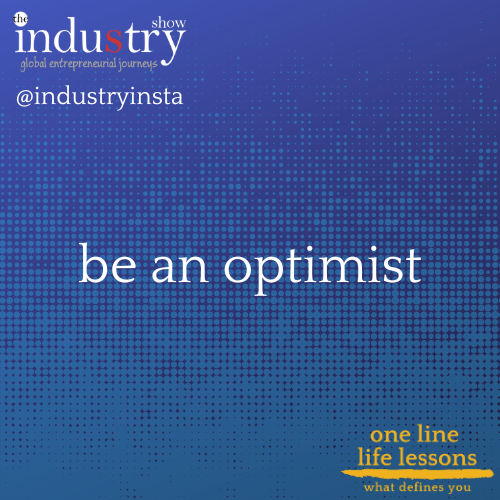
Oh, I have a lot of isms. You know, the greatest compliment in the world is to be called an optimist. Anybody can be a pessimist. So I try to always think about what’s possible, not get obsessed over what didn’t happen.
00:18:11 – 00:18:25 Ian Williamson
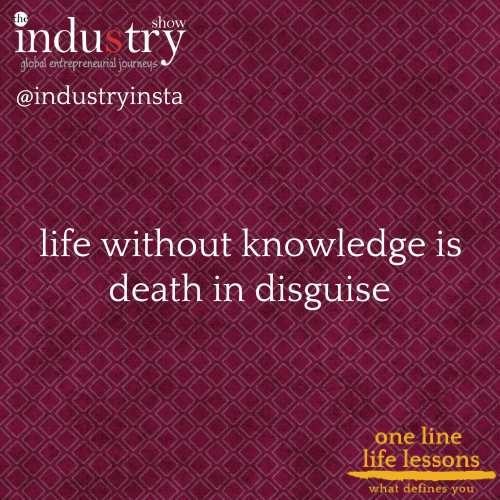
Life without knowledge is death in disguise. I think that’s a really important one. I think it’s very appropriate if you’re an educator. So that one’s out of one of my favorite rap songs. I’m a big hip-hop fan. So “Knowledge Yourself” is the name of the song.
00:18:26 – 00:18:39 Ian Williamson
What’s another one that I like? “Everyone had a plan. Everyone has a plan till they get hit in the mouth.” I love that one from Mike Tyson. You know, it just makes you realize it was just a plan, man. You’re going to have to adjust. So I use that a lot.
00:18:40 – 00:19:14 Ian Williamson
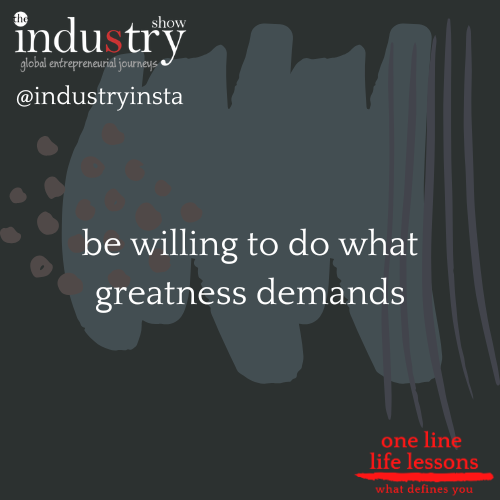
Another one that I kind of hold myself to, the question is not whether or not you’re great. The question is whether or not you’re willing to do the things necessary to be great. And I think for me, that’s just a reminder that greatness is just a process and that you can’t focus on the outcome. Do you understand what it takes to be great? And then do you… are you willing to commit to do that? That’s something I think we decide every day for each person. You know, and you just have to go along. And the first step is really the job of the educator to help a person understand what it takes to be great. And then they can decide on their own whether or not that’s something they want to do.
00:19:15 – 00:19:32 Ian Williamson
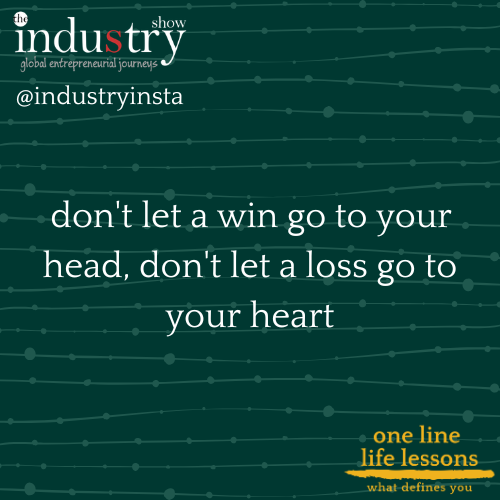
So don’t let a win go to your head. Don’t let a loss go to your heart. That’s a good one. That’s another one from a favorite rap song of mine, “Public Enemy.” I think that just reminds you, you know, you’re going to have ups and downs. Keep it moving. So those are some of the ones that I hold onto on a day-to-day basis.
00:19:32 – 00:19:33 Nitin Bajaj
Love those.
00:19:33 – 00:19:33 Ian Williamson
Yeah.
00:19:33 – 00:19:34 Nitin Bajaj
They speak to my heart.
00:19:34 – 00:19:34 Ian Williamson
Yeah.
00:19:35 – 00:19:56 Nitin Bajaj
Well, Ian, thank you so much. We really appreciate you making the time and sharing your journey and story, but more importantly, for what you’re doing for the community and entire generations. And I agree with you. Education is that spark that truly changes lives. I’ve been a beneficiary of that and really appreciate everything you do.
00:19:56 – 00:19:57 Ian Williamson
Thank you very much. My pleasure.
Subscribe!