July 25, 2026
Dr. Pradip
K. Skukla
Dr. Pradip K. Shukla is the Shah Family Endowed Chair in Innovativeness at Chapman University. He is an award winning expert and a leading business advisor, helping organizations and individuals to optimize results across a diverse range of phases and stages. He is a community leader, philanthropist, and Board Member at several global, for-profit and nonprofits organizations.
One Line Life Lessons from Dr. Shukla




Episode Highlights
- 00:20-02:42: Dr. Pradip Shukla discusses his 42-year career as an endowed professor at Chapman University, his role on various corporate and nonprofit boards, and his background moving to the United States from India at age four. He attributes his focus on efficiency and goal-oriented habits to early lessons from his father.
- 03:12-05:17: Dr. Pradip Shukla highlights his academic impact, noting he holds a record for the highest number of students taught in Chapman University’s 165-year history. He reflects on his time as director of the Leatherbee Center for Entrepreneurship, where he mentored students from initial concepts to successful business growth and IPOs.
- 06:05-06:36: Dr. Pradip Shukla explains his practical approach to teaching by bringing real-world business challenges into the classroom. Students in his consulting courses often provide strategic recommendations directly to corporate boards, offering them experience rarely found in traditional academic settings.
- 08:44-09:51: Dr. Pradip Shukla describes his work with artificial intelligence, including hosting an AI summit at Chapman University. He emphasizes the importance of understanding AI tools for research and teaching while cautioning students about the necessity of staying informed about technological shifts.
- 10:19-13:12: Dr. Pradip Shukla recounts two defining moments: a financial loss during the 1987 stock market crash that taught him the value of long-term investment strategies, and the unique experience of co-teaching with his father and later with his own daughter, representing three generations of educators.
- 15:29-17:45: Dr. Pradip Shukla shares his creative process, which includes assigning students the book “How to Think Like Da Vinci.” He uses this exercise to help students apply seven principles of innovation over 14 days to improve their creative thinking and problem-solving abilities.
- 17:58-21:14: Dr. Pradip Shukla outlines his key life lessons, emphasizing autonomy and the importance of disregarding limiting labels from others. He advises students to prioritize long-term strategic growth over short-term gains and to remain humble, noting that even industry leaders can fail if they do not continue to innovate.
Show Transcript
Transcript - Full Episode
00:00:00 – 00:00:09 Nitin Bajaj
Hey everyone, welcome to the industry show. I’m your host, Nitin Bajaj, and joining me today is Dr. Pradip Shukla. Dr. Shukla, welcome on the show.
00:00:10 – 00:00:13 Dr. Pradip Shukla
Thank you for the invitation, Nitin, and I look forward to the interview.
00:00:14 – 00:00:18 Nitin Bajaj
Great to have you here. Let’s start with a big question: who is Pradip?
00:00:20 – 00:00:30 Dr. Pradip Shukla
I’m a endowed professor at Chapman University, where I’ve been there for 42 years, and I hold the position the Shah family endowed chair in innovativeness.
00:00:30 – 00:00:43 Dr. Pradip Shukla
In addition to teaching MBA students, undergraduate students, I do business consulting, management consulting, I serve on board of directors and advisory boards for profit firms, startups, and also for nonprofit organizations.
00:00:44 – 00:00:51 Dr. Pradip Shukla
I was born in India and came to the United States in 1960 when I was only 4 years old, so, brief intro.
00:00:53 – 00:01:13 Nitin Bajaj
You have had an illustrious career, and at the same time you’ve been a very integral part of our community, especially in Southern California. I am very curious to know—obviously having seen your work and having known you for several years—I’m curious to know how you got started and why you do what you do.
00:01:14 – 00:01:41 Dr. Pradip Shukla
Well, I think at a young age my father taught me that, you know, if you want to be successful in any endeavor or any field, you have to do two things: you have to value your time, not waste your time, and you have to value your money, your limited resources. And I think at a young age I began to be interested in efficiency, optimization, and basically reaching full potential, self-actualization.
00:01:41 – 00:02:05 Dr. Pradip Shukla
So I graduated from elementary school, I was skipped 2 grades, and then I graduated from high school at age 16, and I think by around age 21 I’d already started teaching at Cal State Long Beach and had completed an MBA degree. And I think my father was my sort of mentor, inspiration. He was a professor, he had multiple degrees from India and the United States, USC.
00:02:06 – 00:02:29 Dr. Pradip Shukla
And I was fortunate as an MBA student at Cal State Long Beach, I was a graduate assistant, and I saw professors, and many of them had a good sort of career balance where they could teach, they could influence the future generation of managers, but they were also doing consulting, having an impact in the real world, serving on corporate boards and nonprofit boards, and that’s where I became interested.
00:02:30 – 00:02:40 Dr. Pradip Shukla
Later I finished my PhD at UCLA and a master’s at USC, but it was really teaching was sort of a calling where I felt that, you know, I could make a difference.
00:02:42 – 00:02:54 Nitin Bajaj
That’s amazing, and I’m glad you have been able to shape so many careers and multiple generations of people through the knowledge, the expertise, the wisdom you’ve brought to them.
00:02:54 – 00:02:55 Dr. Pradip Shukla
Thank you.
00:02:55 – 00:03:11 Nitin Bajaj
Now, give us a sense, in the past 40-some years, of the impact your work has created. You’ve touched so many lives, and I’m curious to hear how you’ve measured the impact of the work and how you’ve kind of seen things evolve.
00:03:12 – 00:03:36 Dr. Pradip Shukla
Right. Well, I think, you know, the main thing what I try to do with my students and associates and business clients is I set a role model and an example of efficiency and effectiveness, and not wasting resources. So I’ve been fortunate at Chapman University, I taught 42 years, so I set a record recently for the greatest number of students taught in Chapman’s 165-year history.
00:03:36 – 00:04:11 Dr. Pradip Shukla
And the reason I was able to achieve that was that I teach every summer, I teach every interterm, and most faculty members, they sort of feel like, okay, I’m going to teach in the fall and spring and take, you know, 4 months off in the year. But I feel it’s more efficient to continue instead of having downtime, idle time, and also getting research done, also getting consulting done. And I’ve been fortunate because now some of my students who I’ve kept in touch with, they’re CEOs of corporations, and they’re able to make social impact, positive impact on society.
00:04:11 – 00:04:43 Dr. Pradip Shukla
Also, I’ve had students who have done startups. I was the vice chancellor for entrepreneurship at Chapman University. I was the director of our Leatherbee Center for Entrepreneurship. So I’ve helped a lot of students with startups and growth, and it’s really rewarding to see someone take an idea which is just, you know, literally on a napkin, you know, one or two words or a little illustration, and then see how they’re able to hire individuals, grow the company, scale it, eventually sell out or do an IPO. So those are the accomplishments I’m proud of.
00:04:43 – 00:05:15 Dr. Pradip Shukla
What I’m also proud of are many of our students, they give back to society. So not only do they become financially successful, they’re a manager, a corporate executive, a successful entrepreneur, but they come back and they mentor our students. They come in as guest speakers, like yourself. We appreciate at Chapman University you’re coming in and sharing your wisdom with our students. So that’s what I’m proud of, is that they have sort of like a good moral compass. They’re interested in personal gains, but also interested in returning back to society.
00:05:17 – 00:05:24 Nitin Bajaj
Well, first of all, congratulations on that milestone. That’s a huge one. But kudos to you for.
00:05:24 – 00:05:24 Dr. Pradip Shukla
Thank you.
00:05:25 – 00:05:59 Nitin Bajaj
Lighting that fire and kindling that flame. I’ve had the experience to see that firsthand, how you encourage the students, how you nudge them and push them in the right direction, and therefore them as a guide and a mentor, but also connecting them with experiences from the real world. So it’s not academic. Your classes are very hands-on, very practical, realistic, and you bring the outside world in to prepare them for what’s out there for them.
00:05:59 – 00:06:10 Dr. Pradip Shukla
One example of that is I was teaching an MBA class in consulting and also an undergraduate class in consulting. So students appreciated that. They get real hands-on real-world experience.
00:06:11 – 00:06:27 Dr. Pradip Shukla
And it was interesting because our Chapman University president would go to the board of trustees who are very successful, multi-millionaire, billionaires, and they’ve grown their companies. And sometimes our students would go in, undergraduates, and they would offer meaningful insights for changes and recommendations.
00:06:27 – 00:06:35 Dr. Pradip Shukla
So that was gratifying both for the students because it’s an opportunity they wouldn’t get, you know, in many other universities.
00:06:36 – 00:06:46 Nitin Bajaj
So true. Now, as you bring all of these different worlds and people together, I’m curious to know what’s the biggest challenge you’re facing.
00:06:48 – 00:06:55 Dr. Pradip Shukla
Right. I think, you know, the biggest challenge like most individuals like yourself is you have several demands on your time, several requests.
00:06:56 – 00:07:15 Dr. Pradip Shukla
And I use the Pareto 80/20 rule. I think you’ve all heard of the 80/20 rule in marketing. 80% of your sales come from 20% of your customers or from your products. But similarly, in operations we have 80/20 rule. 80% of your results come from 20% of your efforts.
00:07:15 – 00:07:29 Dr. Pradip Shukla
So I think the greatest challenge is I could do a lot more helping different organizations, different startups, different nonprofits, you know, reaching out community events. But you have only 24 hours in a day, you only have 7 days a week.
00:07:29 – 00:07:44 Dr. Pradip Shukla
So prioritizing is a challenge, and you have to try to explain to individuals. Unfortunately, I’m committed to some other more pressing engagements. And I think most individuals understand and appreciate that, you know, you can’t be everywhere doing everything.
00:07:44 – 00:08:01 Nitin Bajaj
Well, that’s coming from someone who I know is everywhere. You’re omnipresent, and the effort you put in and the results you’re able to bring in to get this community together is amazing. You’re a role model by every definition of the word.
00:08:02 – 00:08:16 Dr. Pradip Shukla
Oh, thank you. And I think the important thing I feel is to really make an impact. What can I do to reach out to college students, high school students, high school juniors, seniors, middle school students? Because they’re the future.
00:08:16 – 00:08:35 Dr. Pradip Shukla
And the individuals who are serving on many nonprofit organizations or community groups, you know, their lives are pretty much set. They’re successful or they’re retired. But to really change the world is going to be the next generation. They’re the ones who we have to reach and impact and inspire. So that’s what I try to focus on.
00:08:36 – 00:08:44 Nitin Bajaj
So true. Now, on the other side of challenges come opportunities. What’s the one you’re most excited about?
00:08:44 – 00:09:03 Dr. Pradip Shukla
Well, I think there’s a lot of opportunities with AI. And I actually hosted at Chapman University an AI summit where we invited speakers from Google, AI startup company executives. And we also had the Consulate General of India, Los Angeles. He was one of our panelists and speakers, keynote speaker.
00:09:04 – 00:09:24 Dr. Pradip Shukla
And it was organized at the request of the Government of India because we hosted this January 2026, and India was hosting a global AI summit in February. So they wanted our event to be sort of like a pre-summit event to build up excitement. But it was really engaging to talk about AI and the opportunities.
00:09:24 – 00:09:37 Dr. Pradip Shukla
And personally, I’ve used AI for assisting with teaching, research, advising. And it’s the type of tool where the more you learn, the more you explore, you realize its capabilities, but also its limitations.
00:09:38 – 00:09:51 Dr. Pradip Shukla
So it’s, you know, something some students are afraid of, that it’s going to replace their jobs. But I think AI is not going away. It’s not a fad. And it’s a great opportunity to learn and explore and be familiar with it.
00:09:51 – 00:10:18 Nitin Bajaj
So true. I agree 100%. Now, as we talk about the future, I’d like to pause and reflect. And I would love to invite you to share two moments from your past life, one where things did not work out as you had expected. There was disappointment, failure, lessons, and another where things exceeded your expectations and became a success beyond your imagination.
00:10:19 – 00:10:52 Dr. Pradip Shukla
Right. So, you know, one example of a failure, you know, lesson learned, was I started at Chapman in 1985, and we had a matching plan. If you contribute 6% towards your retirement, they’ll put in 9%, and it could go into a stock portfolio investment. And if you recall, some individuals in the audience are too young to remember, but October 1987, the Dow Jones Industrial Average dropped 22% in one day, and it was the largest one-day drop in the history of the Dow Jones.
00:10:52 – 00:11:21 Dr. Pradip Shukla
Now, I was a new sort of investor in the stock market. I had previous investments in real estate, but it was sort of like a panic knee-jerk reaction where I was thinking, okay, it dropped 22% in one day, that’s like almost a fourth of your contributions. So a knee-jerk reaction was, okay, I’m going to shift it to something safe and, you know, fixed or money market. Later I realized, you know, in researching about personal finance, that’s the worst decision I could have made.
00:11:21 – 00:11:45 Dr. Pradip Shukla
And what they say is that you wait and the market goes through corrections, sometimes 10, 20%, it dips, but it recovers. The fortunate thing is I didn’t have much of a base back then, so, you know, I lesson learned. But every other major downturn, I’ve kept the investments in the stock market, and in the long run it’s paid off that, you know, I’m much better off than putting it into something low yield, low risk.
00:11:46 – 00:12:23 Dr. Pradip Shukla
The other part of the question, yes, you know, what is sort of an accomplishment I’m proud of? And one example was my father, unfortunately, he was a professor and he was terminally ill. He was teaching at a community college, and the medical doctors told him he only had about 2 weeks left to live and pancreatic cancer. The college said, we’ll let you come back to teach in the classroom because that’s what he wanted to do. That was his sort of, you know, last wishes. But the insurance company and the risk management, they said, we won’t let him teach alone, but if you co-teach with him.
00:12:23 – 00:12:49 Dr. Pradip Shukla
I was already in the PhD program at UCLA. So back around 1980, ’81, I was co-teaching with my father at the community college in business classes. Then, unfortunately, he passed away, but about 40 years later, our daughter, Monica Shukla Belmontes, she was doing a PhD, and I got the opportunity to co-teach an MBA project management class with her.
00:12:49 – 00:13:12 Dr. Pradip Shukla
So I think there was a national, you know, media press release which went out from Chapman, and they covered it in major outlets where apparently, according to a Google search, I’m the only individual who’s co-taught with both my father and with a child, you know, our daughter. So three generations of teaching and co-teaching. So that, you know, I’m proud of.
00:13:12 – 00:13:22 Nitin Bajaj
That is so cool. That is amazing. Thank you again for everything you do. Now, switching gears for a bit, what do you do when you’re not teaching?
00:13:23 – 00:13:46 Dr. Pradip Shukla
Well, I enjoy reading. And, you know, one thing which is unusual, you know, different is I like to learn about different cultures. I’ve taught international business, international management, and I like to pick up magazines, newspapers, you know, even see movies where it’s in a foreign language without translation, without subcaptions, subtitles.
00:13:46 – 00:14:02 Dr. Pradip Shukla
And what I find interesting about that is that if I’m flipping through a newspaper which is in Chinese language, Korean, Vietnamese, I may not be able to read and understand what the content is of words, but when you look at the photos, the sort of caption, you get a sense as to the story.
00:14:03 – 00:14:22 Dr. Pradip Shukla
And I think the more I do that, I realize, you know, we have similarities. We have our Asian Indian community, but we have a lot of similarities with other immigrant groups, ethnic groups that came in from Europe, came in from other parts of Asia, Africa, South America. So I enjoy reading just to enhance my own sort of understanding.
00:14:22 – 00:14:36 Dr. Pradip Shukla
Now, the good thing is nowadays, I’m sure Google will invent where you just take a screenshot of the photo and it’ll automatically translate what I’m reading. But even without knowing the translation, it’s still educational and informative.
00:14:37 – 00:14:50 Nitin Bajaj
I love that. And the other part that we were talking about just even yesterday was the space we live in, in Southern California. We get exposed to all of these different cultures, and I love to do the same.
00:14:50 – 00:15:05 Nitin Bajaj
I love to watch people as they’re talking, not understanding a word of what is being said, but at the same time trying to get a gist of what could be happening. And sometimes I’ll go and ask them, hey, is this what was going on? And sometimes I’m right, sometimes I’m way off.
00:15:06 – 00:15:21 Dr. Pradip Shukla
And it’s interesting to watch conversations where you see the body language, the hand gestures, and, you know, some cultures they’re very expressive, loud, others are more quiet, introverted, timid. But you still see, you know, sort of the nuances of what they’re trying to communicate.
00:15:22 – 00:15:29 Nitin Bajaj
So true. Now, is there a book or a podcast that’s a favorite of yours that you would like to share with us?
00:15:29 – 00:15:48 Dr. Pradip Shukla
Yeah. I teach a class in creativity and innovation undergraduate students as part of the Shaw family and Dow Churn Innovativeness. And some individuals believe that you can’t teach creativity. There’s this sort of false belief and myth that either you’re born to be a creative person or you’re born to be sort of boring or non-creative.
00:15:48 – 00:16:27 Dr. Pradip Shukla
And there’s a book I give the students, and the title of the book is called How to Think Like Da Vinci. And most individuals recognize Leonardo da Vinci. He was way ahead of his time, centuries ahead of his time, well-established creative individual, content creation and art, but also in science, medicine, in philosophy, values, ethics. And the book basically identifies seven steps they recommend that you implement to become sort of like a creative thinker like Da Vinci. And these are small things like asking a lot of questions, being curious like a young child, seeing interdisciplinary connections.
00:16:27 – 00:16:49 Dr. Pradip Shukla
So I give the students in my class an assignment. I say, for 14 consecutive days, I want you to apply these seven principles. And some of them are do things you haven’t done. So I tell them like, you know, read the Wall Street Journal or Businessweek, but then translate that into a poem as to what’s happening or do a haiku, things they haven’t, you know, naturally done.
00:16:50 – 00:17:21 Dr. Pradip Shukla
So they do this for 14 days. And then I ask them in the assignment, not so much, did you notice a difference in your thinking? Because they have a bias self-reflection. Oh, yeah, I changed. But what I do is I say, without telling your family and friends and associates, do these seven steps for 14 days. Then I want you to write, did anyone tell you that they notice a difference in your thinking? Did anyone tell you, an associate or family member or sibling, that they seem to think you’re different in thinking or more creative?
00:17:21 – 00:17:43 Dr. Pradip Shukla
And about 100% of the students who do this 14 days, they say, yes, everyone notices a difference. Some people may not say it, but if others are telling you, you know that it’s having an impact. So that’s a great book and it’s available, I think, on PDF. You could do a Google search, How to Think Like Da Vinci, and they have summaries of it where those are available in the public domain.
00:17:45 – 00:17:48 Nitin Bajaj
That’s amazing. Thank you for sharing that. I’m going to try it with my children for sure.
00:17:48 – 00:17:49 Dr. Pradip Shukla
Oh, thank you.
00:17:50 – 00:17:57 Nitin Bajaj
Now, on to my favorite part of the show. We call this the one-line life lessons. Dr. Shukla, I would love for you to share your life lessons with us.
00:17:58 – 00:18:50 Dr. Pradip Shukla
So actually, you know, I wrote down a couple of those thinking about this. So one of the life lessons is don’t let others decide what your limits are on your capabilities. And I like that one because when I was in high school, my high school counselor recommended I should not go to college or university. My high school counselor recommended I should become an auto mechanic. So to overcompensate for that, I went to Cal State Long Beach, got three degrees there, UCLA two degrees, USC, and a community college degree. So I ended up with seven college degrees where my high school counselor recommended I should have been an auto mechanic. And I set a record at Chapman for the most students taught in 165 years. So if I would have let someone else dictate or influence or tell me what I’m capable of, I never would be where I’m at. So that I think is a life lesson.
00:18:50 – 00:19:24 Dr. Pradip Shukla
The other one is I like this one where you can do anything you want, but you can also choose to do nothing. So one thing I like to do is when I’m giving advice or mentorship, I like to show pathways and say, look, you’re young, you have plenty of talent. You have four or five or six different pathways you could go. You could choose one or you could choose multiple or you could pivot or you could choose to do nothing. That gives them a sense of autonomy or freedom or self-control that I’m in control of my life.
00:19:24 – 00:19:49 Dr. Pradip Shukla
The worst thing that could happen is I see some individuals who wake up when it’s their 40th birthday and they say, I look in the mirror and I don’t like my life, I don’t like my job, my career, my path. And then they blame others. They blame their parents, they blame society, they blame the economy, blame their supervisor. So I like to point out that you could do anything you want. The only one who’s stopping you is yourself, but you could choose also to do nothing.
00:19:49 – 00:20:03 Dr. Pradip Shukla
Let me make, you know, a couple of others real quick. So one line I like is, if you don’t waste time and you don’t waste money, you will succeed in the long run. So, you know, that’s what my father taught me and I’ve seen it myself.
00:20:03 – 00:20:43 Dr. Pradip Shukla
I like this line because we always talk about rankings and, you know, top 10 list of corporations and various reviews, but I like this one where it says, those who are first will someday be last, and those who are slow will someday be fast. So what happens is that, yeah, you could be number one in your industry or in your rank, but you can’t just rest on your laurels. We saw that. I give the example to students of BlackBerry. Before Apple came out with the smartphone, BlackBerry had the number one smartphone in the US, 33% market share. And overnight, Apple just took them over. So just because you’re number one, you can’t rest.
00:20:43 – 00:21:12 Dr. Pradip Shukla
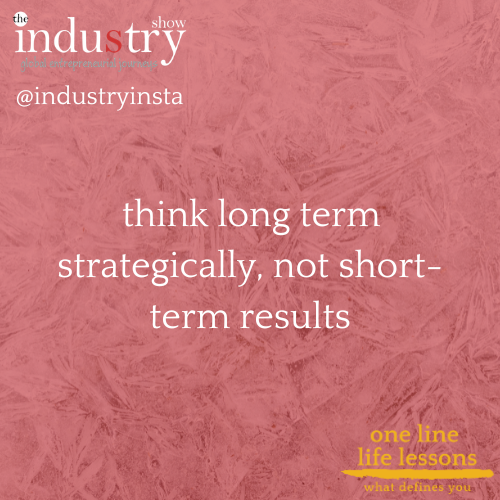
And the last one is think long-term strategically, not short-term results. And I think a lot of younger individuals sometimes they think when I’m choosing a career or a path, what’s immediately the reward in the next month, the next two, three months? Sometimes if you volunteer for something or you take a position which may have a lower salary starting, but it’s a better opportunity to showcase your talent. So think strategically, think long-term, not just short-term gain.
00:21:14 – 00:21:37 Nitin Bajaj
Dr. Shukla, thank you so much for making the time for sharing your story, your journey, and your life lessons. But more importantly, for doing what you do, you have been a hallmark in the community. You have shaped so many lives and careers. I really, really applaud and thank you for all your contributions. And I know there is a lot more coming from you.
00:21:38 – 00:21:56 Dr. Pradip Shukla
Well, thank you for the opportunity. And I look forward to collaborating with you and all of the viewers. Any way I could assist, you have my contact information, shukla@chapman.edu or innovate@chapman.edu. But I appreciate the conversation and the discussion, and I’ve always appreciated collaborating with you.
Subscribe!