Mar 14, 2026
Eunice
Yang
Eunice Yang is the Founder, CEO of OK2StandUP – enabling healthcare providers with AI-powered activity monitoring and real-time alerts that improve caregiver responsiveness and patient safety. Previously she was a 2x founder, and tenured professor at University of Pittsburgh.
One Line Life Lessons from Eunice



Episode Highlights
- 00:14-01:17: Eunice Yang introduces herself, sharing her background as the daughter of immigrant parents. She discusses her journey from studying mechanical engineering to earning a doctorate and eventually becoming a founder and CEO. Her driving force is a deep sense of purpose and a desire to make a meaningful impact.
- 02:07-03:09: Eunice Yang explains that OK2 PREDICT aims to make predictive intelligence usable and scalable. They embed this technology into existing healthcare tools to provide real-time insights from continuous vital data, enabling proactive care. Their focus is on predicting what’s about to happen, such as fall risks or mobility changes.
- 04:15-05:34: Eunice Yang details their current deployments in healthcare facilities across multiple states. She highlights that their work supports real clinical teams and integrates into their daily workflows. The impact is seen in proactive care, with nurses feeling more confident and fewer near-misses turning into incidents.
- 06:37-07:35: The biggest challenge identified is securing smart capital. Eunice Yang emphasizes the need for funding from strategic partners who can provide access to clinical environments for validation, refinement, and scaling. This capital is crucial for integrating into existing clinician tools for frictionless adoption.
- 07:52-08:31: Eunice Yang shares an exciting opportunity with a Memphis-based healthcare system to partner as co-developers. This collaboration allows for deeper clinical validation, faster iteration, and direct feedback from frontline nurses, moving beyond the lab into real-world application.
- 09:25-10:17: Eunice Yang discusses a past failure related to “feature creep,” where trying to build too much too soon slowed down shipping, increased complexity, and burned resources. This led to a new discipline of focusing on one outcome with minimal build for the fastest deployment.
- 10:19-11:53: Eunice Yang recounts a proud success story from their first patient deployment. An alert system signaled a potential issue with an elderly woman about to fall, allowing a nurse to intervene just in time. This moment made the mission real, demonstrating the immediate usefulness and impact of their work.
- 12:43-13:02: To relax and de-stress, Eunice Yang enjoys teaching tricks to her Havanese puppy. This non-tech activity provides a great social outlet and is a fun way to connect.
- 13:16-13:53: Eunice Yang highly recommends “The Seven Habits of Highly Effective People” by Stephen Covey. She notes that its applicability evolved over time, becoming transformative in her 40s, and encourages revisiting the book at different life stages.
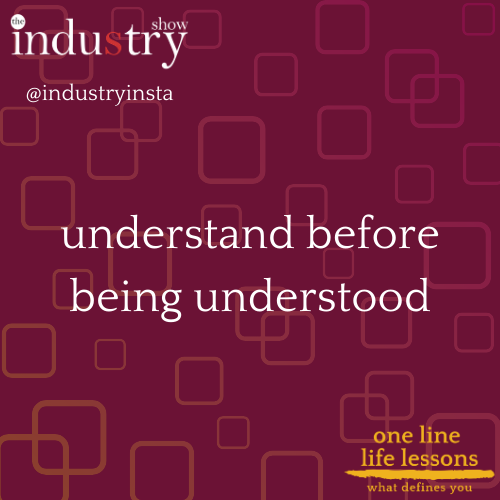
- 14:43-15:36: Eunice Yang shares her life lessons: “Understand before being understood,” “Show grace,” and “Let go and let God.” She also embraces the ups and downs of startup life with the mantra, “These two shall pass.”
Show Transcript
Transcript - Full Episode
00:00:00 – 00:00:08 Nitin Bajaj
Hey everyone, welcome to The Industry Show. I’m your host, Nitin Bajaj, and joining me today is Eunice Yang. Eunice, welcome on the show.
00:00:09 – 00:00:12 Eunice Yang
Thank you so much, Nitin. Pleasure to be here.
00:00:12 – 00:00:16 Nitin Bajaj
Great to have you here. Let’s start with the question: who is Eunice?
00:00:19 – 00:01:28 Eunice Yang
I’m the daughter of immigrant parents from South Korea. They gave up their own careers so my siblings and I could have opportunities that they never had, and that shaped how I see the world now. I come from very humble beginnings, and I don’t take access, education, or trust lightly. So I studied mechanical engineering, which surprisingly came very naturally to me, and I went on to earn my doctorate at Penn State. At the time, I thought that was the hardest thing that I would ever do. I was wrong. Becoming a founder and CEO building OK2StandUP has been far harder, but it’s also been far more rewarding. That’s because I get to work with such incredible people in the healthcare community. I get to learn directly from these clinicians and frontline care workers. And the rewarding part of it is building something that genuinely can change lives. And what makes me me is that I’m deeply driven by purpose, and I want to do work such that I can do things that matter to people.
00:01:29 – 00:02:01 Nitin Bajaj
I love that. And looking forward to sharing more of that in the next few minutes. Looking forward to learning and also sharing that with our audience. What I love the most about entrepreneurship is it tells us what we are made of, and it tells us things that we did not know as we go through that journey, as we go through that difficult journey. And most of the times, it’s looking out but also looking inside, and that’s the most fascinating part.
00:02:02 – 00:02:06 Nitin Bajaj
Tell us about what OK2 PREDICT is and why did you start it.
00:02:07 – 00:02:41 Eunice Yang
Yeah, so what OK2 PREDICT is, we have the goal of making predictive intelligence usable, scalable, and what we want to do is embedded into healthcare technologies that clinicians are already using and relying on. Our mission is to provide prediction as a service. It’s turning continuous vital data that healthcare facilities are already collecting and turning it into real-time insights that can help healthcare systems provide proactive care.
00:02:42 – 00:03:08 Eunice Yang
So Nitin, healthcare generates an enormous amount of continuous data. There’s estimates that range from tens of terabytes per second globally. But most of it is used to explain what has already happened. At OK2 PREDICT, what we do is we focus on what’s about to happen upstream of risk, and that’s whether it can be fall risk, mobility changes, or other time-sensitive patient events.
00:03:09 – 00:03:24 Eunice Yang
So our vision is a future where predictive intelligence becomes a standard layer of healthcare infrastructure, quietly powering safer care and better outcomes and more efficient operations across hospitals and into the homes.
00:03:25 – 00:03:58 Nitin Bajaj
And this is massive on multiple levels. It’s, one, the healthcare system, not just in this country but around the world, as we are aging and living longer. Some of the things you mentioned about predicting falls, which at older ages can be fatal but also can be debilitating on multiple levels. So it’s extremely important work, and I’m glad that you and your team are focusing on this.
00:03:59 – 00:04:15 Nitin Bajaj
Now, healthcare and any regulated industry can be extremely challenging. But before we get to that, give us a sense of the impact you and the team are expecting to make through the work you’re doing.
00:04:15 – 00:04:36 Eunice Yang
So we’ve deployed in healthcare facilities across Pennsylvania, New York, and Tennessee. And it’s a small deployment, but we are in those dates. And we’re currently in the final stages of an evaluation agreement with a major health system in Houston, Texas. And we’re also working actively with an innovative healthcare system in Memphis.
00:04:37 – 00:05:02 Eunice Yang
So what that means operationally is that we’re supporting real clinical teams in real-life environments. We’re working with real staff, integrating it into their day-to-day workflows. And in terms of impact, it’s consistent with the theme that we hear, that is proactive care is the hardest part, getting to those older adults in time to prevent the falls.
00:05:03 – 00:05:34 Eunice Yang
In hospitals, it’s especially around unassisted bed exits and falls. These healthcare clinicians don’t need more alarms. What they need are earlier signal and less workflow friction. So the stories that we hear are very practical. Nurses feel more confident when they can get there in time. Families feel reassured. And teams are describing fewer near-miss moments turning into incidents.
00:05:34 – 00:05:49 Eunice Yang
So our reach today is multi-state, real-world deployment, and focuses on scaling healthcare focuses on scaling through health systems that are prioritizing proactive, tech-enabled patient safety.
00:05:51 – 00:06:37 Nitin Bajaj
This is massive. And you know I want to emphasize on the importance of being able to be there to prevent a slip or a fall or someone hitting their head on the side of a bench or the bed. Again, it can be extremely challenging in the seniors and also someone that is facing an injury or going through therapy. So you’re doing extremely important work. So kudos to you and the team for focusing on this. Now, tell us about the challenges that you face. But you know amongst the many, the one big challenge that you would like to call out?
00:06:37 – 00:07:08 Eunice Yang
Yes, the biggest challenge right now is securing smart capital. So in the startup world, money is not just money. It’s actually smart money is the best. And what this means is trying to secure funding from the right strategic partners, partners who can open up doors to real clinical environments so we can validate, we can refine, and scale access to facilities, even access to nursing workflows and patient populations.
00:07:09 – 00:07:39 Eunice Yang
We know the pain is real. Falls are tremendously devastating. Every 11 seconds, a senior falls seriously enough such that they end up in the ER. So timing is key. So what we’re doing is we’re trying to integrate into systems and tools clinicians already use. So adoption is frictionless rather than asking hospitals to adapt to us. So the biggest challenge is finding that smart capital and the right strategic partners.
00:07:41 – 00:07:52 Nitin Bajaj
Now, on the flip side of challenges come opportunities. And you know even smart capital is looking for that. What is the one big opportunity you’re most excited about?
00:07:52 – 00:08:24 Eunice Yang
So one of the biggest opportunities that we have right now is with a Memphis-based healthcare system. They want to partner with us as co-developers. This is tremendous because that opens up the door to deeper clinical validation. It allows us to iterate faster. And the best of it is we get to speak with frontline nurses and get their feedback. So we’re no longer in the lab environment. We’re actually out in the real world. And this is what it takes.
00:08:24 – 00:08:42 Eunice Yang
It’s a pathway to scale across additional units and potentially beyond a single site. So it’s exciting because it confirms we’re solving a real operational pain, and we have the chance to build something that can become a repeatable model for other hospitals.
00:08:43 – 00:08:55 Nitin Bajaj
Yeah, and also doing it at scale in a way that this can be taken to any hospital or care facility around the world. That’s fascinating.
00:08:56 – 00:09:20 Nitin Bajaj
Now, as we look into the future, I’d like to invite people to pause and reflect and talk about two moments from your life, one where things did not work out as you had expected. There was disappointment, failure, lessons, and another where things exceeded your expectations and became a success beyond your imagination.
00:09:22 – 00:09:58 Eunice Yang
So we’ll start with the failure first. So the biggest lesson that I have learned as a CEO of a tech startup is be wary of feature creep. So early on, we tried to build too much. And that’s just me. I want to help people. I want to do the best. So we tried to build too much all at once. And what that did was it slowed the shipping. It slowed the productivity. It increased the complexity. It burned resources, which is the money that you know is hard to get. Feature creep was one of the failures.
00:09:59 – 00:10:19 Eunice Yang
Now we’re disciplined, one outcome, minimal build, fastest deployment. I tell everyone on my team, fail quickly so we can solve it, and we can move on. So feature creep doesn’t just delay product. It actually delays our learning. So we’ll put that aside.
00:10:19 – 00:11:26 Eunice Yang
So the success story, this is one of the most proudest moments that I have. And it may not sound big to everyone, but for me, it was so pivotal. It’s from our very first patient deployment. It was one older lady in a skilled nursing facility at one facility wearing one of our monitors, being tracked by one nurse. So it’s just all one, one, one, high fall risk senior. The reason why she ended up in the senior care facility was a fall that she had sustained in her home. So this was a night. She has a monitor on. She’s sleeping. It’s around 1:00 or 2:00 in the morning. I’m there. Her door is closed for privacy. Everyone’s asleep. Then our system sends an alert. The nurse looks at me, and I look at her, and we look at the door, and I say, let’s go. We go. We open the door. At that moment, the older woman is about to sit up. She hasn’t sat up yet.
00:11:26 – 00:11:27 Nitin Bajaj
Wow.
00:11:27 – 00:11:57 Eunice Yang
She sits up. I get goosebumps. And she says, how did you know to come into my room? I still get chills thinking about it because it made the mission real. So you know that instant, that success isn’t about dashboard metric or fall prevention reduction. It was just a true early signal that it was useful, and it mattered, and we helped that woman. So that’s one of my success stories in the proudest moment.
00:11:57 – 00:12:10 Nitin Bajaj
That’s amazing to have that validation, to have that vindication that what you have built works in the way you expect it to. And the best part is it surprises you.
00:12:11 – 00:12:19 Eunice Yang
I shout that. As much as it worked in the lab, to see it in the real world, it was amazing.
00:12:20 – 00:12:41 Nitin Bajaj
That is so cool. Now, amongst all of these things that you do, you know dealing with care facilities, your prospective customers, also the patients you serve, there’s a lot happening. What do you do to relax, de-stress, have fun?
00:12:41 – 00:13:07 Eunice Yang
Wow, OK. So I love little doggies. So I have a Havanese pup. She’s about 15 months old, and I teach her the tricks. It’s difficult, I mean, you know because I have to do the little puppy language, and you know I have to be the leader. So I have fun doing it, and I have friends who also do it. So it’s a real great social outlet for me that is non-tech.
00:13:08 – 00:13:15 Nitin Bajaj
That sounds like a lot of fun. Now, is there a book or a podcast that is a favorite that you want to share?
00:13:16 – 00:13:31 Eunice Yang
You know this is an old book, and there’s a story behind this. So it’s called “The Seven Habits of Highly Effective People.” I picked it up when I was like 21. And at 21, I’m thinking, I know everything. What do I need this book for? Didn’t read it.
00:13:31 – 00:13:40 Eunice Yang
Come into my 30s, and I read it, and I said, how dare they say I have deficits, that I’m not effective? I put it away.
00:13:41 – 00:13:56 Eunice Yang
I got it in my 40s, and it was transformative. And everyone should read it. If they don’t hit it in their 20s, pick it up again 10 years later. At some point, it’ll become applicable.
00:13:58 – 00:14:18 Nitin Bajaj
I 100% agree with you. So I had a similar experience. And you know I shared it with my daughters when they were, I think, eight or nine years old. And I said, just know that this book exists. And when it makes sense to you, it will. But at least you know it’s there. And yeah, you’re right.
00:14:18 – 00:14:28 Nitin Bajaj
It’s one of those things. The other saying that reminds me of is, when the student is ready, the master will appear.
00:14:28 – 00:14:29 Eunice Yang
Yes, yes, yes.
00:14:30 – 00:14:41 Nitin Bajaj
Speaking of which, I would love to transition into my favorite part of the show, which we call the one-line life lessons. And Eunice, I would love for you to share your life lessons with us.
00:14:43 – 00:15:17 Eunice Yang
So it comes out of Stephen Covey’s books. And this was very transformative. It changed my life. It’s understand before being understood. And I applied it to work, but it’s so applicable even in my personal life relationship with friends. The other one is show grace. You know everybody needs a little bit of grace. And the next one is let go and let God.
00:15:17 – 00:15:47 Eunice Yang
You know sometimes things are beyond our control. And to recognize what I have control over and what I don’t, I just have to let it go. And as it applies to my startup, these two shall pass. There will be ups and downs. I embrace those. And it does shape who I am and my outlook in life and how I conduct myself. I make mistakes. So if people can show grace to me, that’d be great.
00:15:51 – 00:16:23 Nitin Bajaj
Love that. Eunice, thank you for making the time to share your journey, your story, and your life lessons. And most importantly, I really appreciate what you’re doing to provide the protection, the layer of freedom that our seniors need to be able to make their life better and for them to be able to live healthier and longer. Really appreciate what you and the team are doing. Thank you again.
00:16:24 – 00:16:34 Eunice Yang
Thank you for this opportunity. It means a world to me to get the word out in terms of proactive care and providing safety for our elders. So thank you so much.
Subscribe!