Jan 10, 2026
Hardik
Jagda
Hardik Jagda is the Founder, CEO of Proximity Works: powering AI adoption for the biggest names in entertainment, media, and sports. He specializes in lean, fast, revenue-focused implementations of complex ideas at global scale.
One Line Life Lessons from Hardik
Episode Highlights
- 00:17-00:44: Hardik Jagda is a builder who developed a passion for coding from an early age, viewing it as an escape from the constraints of a lower-middle-class background. This early interest in technology would shape his entire career trajectory and entrepreneurial ambitions.
- 01:55-02:11: Hardik Jagda explains that Proximity operates as a hybrid AI platform and consulting firm that serves clients across the sports, media, entertainment, and select finance sectors. This diversified approach allows the company to apply AI solutions across multiple industries.
- 02:11-02:22: Hardik Jagda elaborates on Proximity’s core mission, describing how the company helps sports and media organizations leverage artificial intelligence to transition from chaotic, unorganized operations to clear, structured, and data-driven decision-making processes.
- 02:22-02:33: Hardik Jagda shares that he built their first AI product in 2021, which came after relocating to the United States and establishing a stronger foothold in the American market.
- 03:07-03:18: Hardik Jagda further clarifies that their strategic approach prioritizes implementing AI solutions that solve genuine operational challenges, rejecting the temptation to build impressive but ultimately useless showpieces that don’t contribute to business outcomes.
- 03:23-03:47: Hardik Jagda employs a factory floor analogy to explain his methodology for analyzing businesses, describing how he systematically examines organizational processes to identify opportunities where artificial intelligence can be strategically implemented to drive efficiency and innovation.
- 04:12-04:23: Hardik Jagda explains that Proximity’s goal is to build sophisticated AI tools and systems capable of achieving operational efficiencies ranging from 5x to 10x improvements, fundamentally transforming how organizations operate.
- 04:52-05:03: Hardik Jagda observed that major media houses were investing substantial capital into developing live streaming platforms specifically designed for sports content distribution and engagement.
- 05:17-05:35: Hardik Jagda discusses Proximity Works as a supplemental service offering designed to provide additional value and support to large enterprises that need specialized AI consulting and implementation services beyond their core offerings.
- 05:50-06:11: Hardik Jagda recounts how he took on his first major project in 2019 and successfully integrated Proximity’s solutions into existing platforms with remarkable speed and efficiency, demonstrating the company’s technical capabilities.
- 06:17-06:20: Hardik Jagda explains that his initial focus centered on audience advertising solutions, and since 2022, he has been working with several of the major professional sports leagues in the United States.
- 06:29-06:45: Hardik Jagda expresses genuine passion for the sports industry, appreciating sports’ unique ability to unite diverse populations, bridge cultural divides, and provide a common ground where conflicts can be resolved through shared enthusiasm and competition.
- 06:55-07:00: Hardik Jagda finds the sports industry environment particularly rewarding, noting its fast-paced nature and the constant stream of new challenges and opportunities.
- 07:29-07:45: Hardik Jagda identifies the shortage of skilled artificial intelligence professionals actively working on the front lines of sports technology as the most pressing challenge, limiting the industry’s ability to innovate and implement solutions effectively.
- 07:50-08:18: Hardik Jagda notes that beyond the talent shortage, poor communication between technical teams and business stakeholders, combined with a lack of operational understanding among many professionals, represents a significant hurdle to successful AI implementation in sports organizations.
- 08:29-08:42: Hardik Jagda emphasizes the critical importance of prioritizing customer needs and business factors over simply maximizing speed when designing and deploying AI systems, arguing that a balanced approach yields better long-term results.
- 09:34-09:53: Hardik Jagda describes artificial intelligence systems that create efficient connections while leveraging big data as a central organizing principle as particularly exciting and representative of the future of technology.
- 10:04-10:16: Hardik Jagda expresses genuine enthusiasm about the process of transforming raw data into actionable insights that drive real business value and competitive advantage.
- 10:16-10:29: Hardik Jagda uses streaming services as a concrete example of projects where his team has successfully applied these principles to deliver measurable results.
- 10:35-10:44: Hardik Jagda believes that the work Proximity does ultimately benefits all stakeholders involved, from clients to end users, creating a positive ecosystem of value creation.
- 10:45-10:50: Hardik Jagda emphasizes the importance of developing high-accuracy AI systems capable of operating reliably during live games and at elevated capacity levels.
- 10:58-11:00: Hardik Jagda confirms that such systems are currently operational and deployed in real-world environments.
- 11:00-11:13: Hardik Jagda asks whether the deployment of these systems is global in scope or limited to specific sports.
- 11:13-11:15: Hardik Jagda confirms that the system is currently live in cricket, with rollout plans progressing for implementation in other sports.
- 11:29-11:46: Hardik Jagda draws interesting parallels between sports analytics and the finance sector, expressing excitement about both industries’ potential for transforming data into meaningful insights and creating pivotal moments of decision-making.
- 12:45-13:01: Hardik Jagda recounts a harrowing near-death experience for his company in 2019 when the COVID-19 pandemic struck, leaving him managing a bootstrapped company with seven employees and no clear path forward.
- 13:08-13:18: Hardik Jagda explains the fundamental challenge of bootstrapped companies: they depend on billable hours from client work to sustain operations, and when the pandemic halted business activities, revenue streams dried up immediately.
- 13:30-13:44: Hardik Jagda shares that within a few months, five of his seven employees quit the company, forcing him to find creative ways to keep the organization alive during an unprecedented crisis.
- 13:49-13:58: Hardik Jagda had managed to sign a major American customer before the pandemic, but executing the project required him to manage everything remotely from Mumbai without a functional team in place.
- 14:24-14:46: Hardik Jagda notes that the Indian hiring market at that time was highly risk-averse, with talented engineers preferring to join established venture capital-funded companies rather than take chances on small, struggling startups.
- 14:48-14:52: Hardik Jagda emphasizes that convincing skilled professionals to join his small team during such uncertain times proved extraordinarily difficult.
- 14:52-15:02: Hardik Jagda advises other founders that they should dedicate 50-60% of their working time to hiring and recruitment, recognizing it as one of the most critical functions in building a sustainable organization.
- 15:10-15:25: Hardik Jagda describes the subsequent three months as operating on a “war footing,” with every decision and action focused on securing the client relationship and proving the company’s viability.
- 15:28-15:39: Hardik Jagda successfully convinced the sports customer to grant him additional time to rebuild his team, demonstrating the strength of their business relationship and trust.
- 16:01-16:17: Hardik Jagda attributes much of his company’s success to the deliberate strategy of focusing on difficult, complex problems that other companies actively avoided, positioning Proximity as a specialist in challenging domains.
- 16:24-16:33: Hardik Jagda emphasizes that by tackling genuinely hard problems rather than simply chasing revenue, his company attracted high-quality talent and created life-changing opportunities for employees.
- 16:42-16:53: Hardik Jagda explains Metavision, a proprietary product that automatically creates sports highlights from raw match footage and video clips.
- 16:55-17:18: Hardik Jagda describes a specific customer scenario where the marketing team was spending six to seven hours every week manually watching video clips and creating highlight reels for distribution.
- 17:34-17:44: Hardik Jagda identified that approximately 80% of this time was consumed by the labor-intensive tasks of watching footage and time-stamping key moments, representing a perfect opportunity for artificial intelligence intervention.
- 17:44-17:51: Hardik Jagda notes that vision models had become sophisticated enough to accurately detect key moments in sports footage when properly fine-tuned for specific sports and contexts.
- 17:56-18:03: Hardik Jagda created an advanced AI engine capable of automating the tagging process and highlight creation workflow, eliminating the need for manual intervention.
- 18:15-18:20: Hardik Jagda clarifies that this innovative product development occurred in 2023, representing relatively recent work.
- 18:23-18:31: Hardik Jagda succeeded in reducing the six to seven-hour weekly workflow down to just 15 minutes, achieving an extraordinary efficiency gain that freed up significant time for the customer’s team.
- 19:15-19:23: Hardik Jagda states that he prioritizes physical and mental health as foundational elements that support everything else in his life and work.
Show Transcript
Transcript - Full Episode
00:00:00 – 00:00:08 Nitin Bajaj
Hey everyone, welcome to The Industry Show. I’m your host, Nitin Bajaj, and joining me today is Hardik Jagda. Hardik, welcome on the show.
00:00:08 – 00:00:11 Hardik Jagda
Thank you, Nitin. Thank you. I’m incredibly honored to be on the show.
00:00:11 – 00:00:12 Nitin Bajaj
It’s great to have you.
00:00:12 – 00:00:12 Hardik Jagda
Thank you.
00:00:13 – 00:00:14 Nitin Bajaj
Let’s start with a big question.
00:00:14 – 00:00:14 Hardik Jagda
Yeah.
00:00:15 – 00:00:15 Nitin Bajaj
Who is Hardik?
00:00:17 – 00:00:48 Hardik Jagda
I’d say I’m a builder at heart. I love building things. I started coding at a very young age in school. Grew up in a lower-middle-class family, and coding was my escape route. And I would just sit on the computer for 15, 16 hours a day. I’d be the first one, as soon as the school opens up, I’d be the first one in the computer lab, opening the lab, and then spending the entire day there. Every teacher knew that I’m hardly sitting in the computer lab, so no one disturbs me at that point. I was the only one who was technically allowed to bunk classes because I was just sitting in the lab.
00:00:49 – 00:01:27 Hardik Jagda
And yeah, so I spent a lot of years building things and became incredibly lucky to have worked with so many great people in the industry. And I started my first job as a software engineer in Mumbai, earning $150 a month. But I was working like I was spending 15 hours a day in the office, just working incredibly hard to take the next step and the next step and the next step. Eventually, I took on some senior engineering leadership roles in various startups in Mumbai. And yeah, worked from 2012 to 2019 at a number of companies, and then in 2019, I started my first company.
00:01:27 – 00:01:53 Nitin Bajaj
That’s amazing. And we’ll talk more about this journey. As you were describing your experiences going up 15, 16 hours in the computer lab, it reminded me of Bill Gates and those stories. You’ve been on this journey now for a good five, six years. Tell us, what is Proximity? Why did you start this? And give us a sense of the size and scale of your operations today.
00:01:54 – 00:02:32 Hardik Jagda
I’ll start with what is Proximity. So we are an AI platform and consulting company, one of the few companies that do a hybrid for the largest sports, media, and entertainment customers in the world. We also have a few finance customers, but like 80% of our work is in sports and media. We help sports and media companies go from chaos to clarity in achieving a competitive edge using AI. And we’re pretty early in the AI space. I was building my first machine learning product in 2019, before I founded Proximity, and built our first AI product back in 2021. And that’s when I moved to the US.
00:02:33 – 00:03:21 Hardik Jagda
All of the early investments eventually gave us enough knowledge and skill acquisition to be able to do a lot of practical applications in AI. So there’s so much noise out there. The moment you open Twitter, the moment you open any social media app, you’ll see so many demos coming up. And those demos, like while the generative demos are very great to look at and they create so much hype, but there’s so much noise around it. I think the biggest challenge for most companies, medium or large, is to focus and make theright investments. So that’s what we help them do. We want to make sure that we work on integrations, we work on AI integrations that integrate in their daily workflows, their Monday morning workflows, and not just something which is like a demo or a proof of concept that they show in the company showing that.
00:03:21 – 00:03:21 Nitin Bajaj
Google.
00:03:22 – 00:03:46 Hardik Jagda
Yeah, that we use AI to do AI. Our job is to do all of the non-sexy work behind the scenes where we are—I usually take this analogy a lot. So any company, from a mental model perspective, you can look at any company as a factory floor with a conveyor belt, and you have multiple stations on that factory floor where if it’s an automobile factory, you’ll have an assembly line, you’ll have a painting line.
00:03:47 – 00:04:27 Hardik Jagda
As a business, you have to understand what does your conveyor belt look like? How does the moment that you have your first customer touchpoint to the last one, and how do you retain customers? So if you analyze all of these as stations, you have to look at which station is causing the most amount of time and energy expenditure, and is there something in that station that AI can do that will help speed things up? So that’s a simple first principles mental model to evaluate a business. And then we build AI tools at each of these stations and make sure that the companies that we’re working with achieve operational efficiencies, which are like 5x to 10x more than what they were doing earlier.
00:04:28 – 00:04:38 Nitin Bajaj
I love that you’re not just helping them think through this, but also then, as you’ve gotten them from chaos to clarity, you’re also helping with the execution.
00:04:38 – 00:04:38 Hardik Jagda
Yeah.
00:04:39 – 00:04:53 Nitin Bajaj
And as you said, that’s one very few companies that have been doing this, but also even less companies that have been doing it for as long as you’ve been doing it. You missed one small question there. Why did you start this?
00:04:53 – 00:05:16 Hardik Jagda
It’s more about timing and alignment. So in 2019, I found myself in these major media houses, and all of them were building their live streaming platforms for sports. And they had paid hundreds of millions of dollars for the rights to various kinds of sports tournaments coming up. I remember the IPL tournament as well,right? So IPL, the amount of money that people have paid for IPL rights versus the NBA rights.
00:05:17 – 00:05:41 Hardik Jagda
So I think if you take a step back and if you think towards the tech landscape that we’re in, Proximity Works is going on,right? And Proximity Works is going on, and Proximity Works is going to be a top-up for the big companies. So I found myself thinking to myself,
00:05:46 – 00:05:54 Hardik Jagda
we’re a software company that’s got a lot of capital to do, not even quantitized. We took our first major project back in 2019, and
00:05:58 – 00:06:03 Hardik Jagda
we were able to go into the platform at one time.
00:06:06 – 00:06:24 Hardik Jagda
That picked it up quite quickly. We were able to go to the average audience. So the idea was actually to do audience advertising for the best. That was the first one, and then we worked with the next one and the next one. And since 2022, we’ve been working with major sports leagues here in the US.
00:06:25 – 00:06:29 Nitin Bajaj
Yeah, that’s phenomenal. Talk about getting started on the speed board.
00:06:29 – 00:06:44 Hardik Jagda
Yeah, yeah. It’s incredibly—I love sports because just working in the sports industry, not just from a commercial sense, but it gives you such a nice sense of mission because I don’t think there’s any industry that brings people together the way sports does.
00:06:45 – 00:06:55 Hardik Jagda
And if you just go back in the history lessons, you’ll look at how sports or teams getting together has helped resolve so many conflicts between countries and so many wars.
00:06:55 – 00:07:03 Hardik Jagda
So yeah, it’s incredibly rewarding. So an incredibly fast-paced place to work in. And yeah, every day I’m very lucky to be working in that space.
00:07:04 – 00:07:25 Nitin Bajaj
That’s amazing. Amongst the many difficult things you work with, there’s a lot of emotion, passion, technology, and now with all the changes that are happening, also a lot of uncertainty. If you were to call out the one big challenge amongst all of the challenges, what would that be?
00:07:29 – 00:08:00 Hardik Jagda
The biggest one that we have struggled with is the focus that lack of people that are on the front lines of the AI space. It’s not that technically we might think that AI is going to work very efficiently. There are many other aspects of this that we need to focus on, but just not enough to help us achieve the expectations.
00:08:02 – 00:08:25 Hardik Jagda
So the lack of communication between people is a factor for just the changing time for the systems to understand the operational aspects and how to take care of the customers. And it’s hard. It’s very difficult to take care of the customers and keep the last generation taken care of.
00:08:25 – 00:08:28 Nitin Bajaj
Safety is key. Safety is key.
00:08:29 – 00:08:39 Hardik Jagda
Again, the most crucial. Yeah. You have to reimagine your business with how much information you work with and how much people. And it’s very much important.
00:08:42 – 00:09:13 Hardik Jagda
It’s not just the biggest problem that I think there is, but while there are so many problems that exist in the world, I think the AI system has to be investing in the AI to factor the customer out of the company and not just the customer. So it’s probably to make more of a change. AI support rather than just looking at how can we get this done faster.
00:09:15 – 00:09:30 Nitin Bajaj
On the flip side of challenges come opportunities. AI in itself is a huge opportunity. Is there anything specific within all of the opportunities that exist today that excites you the most?
00:09:34 – 00:09:40 Hardik Jagda
It’s something we’ve been building, actually. In the simplest term, the way I can describe it is AI that can really
00:09:48 – 00:09:57 Hardik Jagda
build a closer connection that is obviously highly efficient. You’ll see big data at the center of the correct process and
00:10:01 – 00:10:11 Hardik Jagda
scratching all of that data. The incredible part is looking at the data, looking at the data into the actual data manager.
00:10:16 – 00:10:43 Hardik Jagda
Take an example: the stream services. Very many of these are actually systems that we have to work with all of the different. Take an example: the fact that it’s a very important stage of the business. And I’m sure if we can do it, it’s actually going to be beneficial for everyone that we work with.
00:10:43 – 00:10:44 Nitin Bajaj
For sure.
00:10:44 – 00:10:57 Hardik Jagda
Exactly. And as the game is happening, as we know, there’s a high accuracy of the systems that are very good. And the hope is to build a system that does that where it does it at 40x capacity or what was possible before.
00:10:57 – 00:10:58 Nitin Bajaj
And this thing is live?
00:10:58 – 00:10:59 Hardik Jagda
This thing is live.
00:10:59 – 00:11:00 Nitin Bajaj
Wow.
00:11:00 – 00:11:01 Hardik Jagda
Major sports.
00:11:01 – 00:11:13 Nitin Bajaj
Yeah. And is this something because you work across the global spectrum, is this something that’s rolled out all over the globe? Is it specific to certain sports or reasons across the spectrum?
00:11:13 – 00:11:18 Hardik Jagda
Yeah, we have it liveright now in cricket. It will be—we are in the process of pushing it live.
00:11:19 – 00:11:22 Nitin Bajaj
Not that cricket in itself is not huge.
00:11:22 – 00:11:23 Hardik Jagda
Cricket is the fastest.
00:11:23 – 00:11:27 Nitin Bajaj
Yeah. That’s massive. That’s really amazing.
00:11:29 – 00:11:38 Hardik Jagda
I think the same with finance,right? There is so much data, but it takes so much time for anyone to read the reports and try to make sense of the data.
00:11:38 – 00:12:02 Hardik Jagda
The place where I’m most excited about is when you turn those data into insights and insights into stories, and those stories into moments. Those moments are whether you’re in wealth management, you created a one-of-a-kind moment for your client as the markets are shifting, or you are in sports and you created a one-of-a-kind moment as the emotions are high and the game is at a whole different level. So I think that’s something I’m very excited about.
00:12:02 – 00:12:03 Nitin Bajaj
That’s super cool. I want to check it out.
00:12:03 – 00:12:04 Hardik Jagda
I love it.
00:12:04 – 00:12:32 Nitin Bajaj
Both on the finance and the sports side. That’s amazing. Now, as we talk about the future, I’d love to take this moment and pause and reflect. I’d love for you to share two moments from your past life and career. One where things did not work out as you had expected. There was disappointment, failure, lessons. And another where things exceeded your own expectations and became a success beyond your imagination.
00:12:45 – 00:13:02 Hardik Jagda
I won’t necessarily call it a failure, but it was almost like a near-death experience for the company. So this is back in 2019. I started the company. In 2020, the pandemic hit. We were, I think, seven people in the company, out of which five were engineers. And we
00:13:06 – 00:13:29 Hardik Jagda
were bootstrapped since the beginning. We were quite profitable from the beginning. So we didn’t really take any VC dollars at that point. But when you’re a bootstrapped company, you’re working on billable hours, and you’re working on monthly execution. Anytime that execution stops, then you know the bills, the income stops. So those are the pros and cons of bootstrapping as well, while we had a lot of freedom to do a lot of things, but at the same time, we were limited by cash flow coming in.
00:13:30 – 00:14:02 Hardik Jagda
And so yeah, I think back in 2020 or 2021, where I think five out of the seven people suddenly quit. Yeah, within a couple of months we left. And this is during the pandemic, like everyone is going through so much with their families and all that. And I was left scrambling. I had to figure out a way to keep the company going at that point. We had signed a massive, big—a very huge American customer at that point. And I was trying to run that project from Mumbai by him. I tried to work remotely, and my team had quit. Trying to find new people to join.
00:14:02 – 00:14:23 Nitin Bajaj
This is unlike most of the experiences people had during COVID. Most people had no customers left because they shut down or having personal health-related issues. So their revenues had stopped. In your case, you have more revenue coming in, but you have no team to execute. That’s crazy.
00:14:24 – 00:15:05 Hardik Jagda
And in India, even when you’re going out in the hiring market, you are looking at the market is very risk-averse. No matter which engineering college you studied in or what you did, people are always looking at which VC have you raised money with and how profitable are you, all of those things. And unless you are at least a 100% company, even a 100% company, it’s not big enough for most engineers to work with. And we were like seven, eight people. Convincing people to join at that point just takes an incredible amount of effort. So I still tell most of the founders that I work with or advise as well, my job of a good founder is to spend at least 50% to 60% of their time on hiring. And that continues to still demand a big chunk of my time today.
00:15:05 – 00:15:51 Hardik Jagda
But anyway, that was a near-death experience for us back in 2020, 2021. And three months, I was just one day after the other, I was on war footing. I was trying to secure the client and make sure that the client doesn’t feel the burden of that because it’s a short-term—for me, it was a short-term problem. I knew it was a near-death experience, but it was a short-term problem. And I always play the long game. So I always want to do what’s best for the client. And the sports customer we were working with, I had to convince them to give me some bandwidth to replace the team and have new people join. And yeah, anyway, we ended up saving the company in that three-month period. And then we had some incredible people joining our team, which I’m very grateful for because they’ve stayed with the company for five, six years now.
00:15:52 – 00:15:52 Nitin Bajaj
That’s amazing.
00:15:53 – 00:16:17 Hardik Jagda
So yeah, that’s one experience. To answer your question, which the things were not necessarily a failure, but yeah, it was a near-death experience. And yeah, in terms of one good thing that happened, I think there were so many good things that happened. It’s just hard to pinpoint one because, like you said, we had customers, we had revenue coming in. We didn’t have execution bandwidth at that point.
00:16:17 – 00:16:42 Hardik Jagda
But the reason we had customers was because the work that we were doing was so good that people wanted to work with us. People wanted to pay us. And the main reason was not because we were trying to chase money or chase contracts, but we wanted to work on hard problems that nobody else was willing to work on. So when you work on one hard problem after the other, people want to work with you. Those turn into these life-changing moments like we were talking about earlier.
00:16:42 – 00:17:00 Hardik Jagda
So one of these things, actually, I’ll tell you how our product, Metavision, was born. So Metavision is used to create sports highlights from long-form match clips. But this is back a few years ago. We were working with one of the biggest sports customers in the world. They had hundreds of millions of fans worldwide.
00:17:01 – 00:17:33 Hardik Jagda
But after every match, their marketing and content team would burn the midnight oil. Every week, as soon as the match is done, they would watch the four to five-hour match clip. They would time-stamp it. They would find key moments, and they would sing commentary. They would create thumbnails. And then they would eventually, after six to seven hours of work, they’ll create one highlights package that they would then release on social media for fans to—25 fans and mostly do spend time on social media. It would take them six to seven hours and a lot of human grind every single week.
00:17:34 – 00:17:56 Hardik Jagda
And again, I was evaluating it from a first principle. Where does most amount of time go? Most amount of time, 80% of the time actually goes into looking at the match clip and time-stamping it. And vision models were just coming up in a way where they had become incredibly sophisticated in finding these key moments really well. So with a little bit of fine-tuning, they were able to detect key moments. So that became a great starting point.
00:17:56 – 00:18:15 Hardik Jagda
So we started using AI. We created an AI engine that would watch the entire clip for you. Eventually, we automated the whole thing. So the AI engine would watch the clip, watch the match, tag key moments, create highlights, create thumbnails, and crop it for different social media platforms, whether it’s YouTube Shorts, Instagram Reels.
00:18:15 – 00:18:17 Nitin Bajaj
This is 21, 22?
00:18:17 – 00:18:20 Hardik Jagda
No, this is last. It’s 23, I think.
00:18:20 – 00:18:20 Nitin Bajaj
Wow.
00:18:20 – 00:18:21 Hardik Jagda
Yeah, still 23.
00:18:21 – 00:18:22 Nitin Bajaj
Pretty ahead of the curve.
00:18:22 – 00:18:31 Hardik Jagda
Yeah. And yeah, the whole workflow for six to seven hours that we would take them, every single week, was cut down to just 15 minutes.
00:18:31 – 00:18:49 Nitin Bajaj
Wow. That’s crazy. This reminds me of how did people travel before maps? Using paper maps or what have you? It’s almost that kind of an impact in this space. That’s amazing. Kudos and congratulations to you and the team. This is huge.
00:18:49 – 00:18:49 Hardik Jagda
Thank you.
00:18:50 – 00:19:14 Nitin Bajaj
Now, in terms of as you’ve gone through this journey, as you’ve scaled things, gone from being an employee to becoming an employer and entrepreneur, if we step away from all of this and we talk about this, what do you do to de-stress, to relax, to have fun? And you can lie, it’s okay. We just talked about you don’t have any time to do any of these things. But what’s your definition of de-stressing?
00:19:15 – 00:19:33 Hardik Jagda
No, I absolutely 100% do de-stress. It’s even when I’m working six, seven days a week, there are pockets of time where I find time for myself. So I say this all the time. When you’re running a company, you have to make sure that your foundation, your own physical and mental health, is prioritized first before anything else.
00:19:34 – 00:19:57 Hardik Jagda
Yeah, I work out pretty much every day. I don’t take days off because there are things that happen which are outside of your control that force you to take some days off. So I usually don’t plan the days off. I’m going to work out like seven days a week, and then maybe after 10 days or 15 days, I’ll take one day off because I was called into a meeting at my gym hour or something. So for me, I call my gym time my therapy session.
00:19:57 – 00:19:58 Nitin Bajaj
That’s it.
00:19:58 – 00:20:12 Hardik Jagda
Yeah. So that’s where I really align. And my best ideas come in as soon as my workout is done. So I usually plan my days in a way where I wake up in the morning around 4:00, and the first three hours I’m spending on myself, working on the business and working on myself.
00:20:13 – 00:20:29 Hardik Jagda
And in the afternoon, I work out. And the first three hours of my day and the next, the two hours following my workout, those are my most high-impact, high-value time. So I usually plan most of my planning work at that point so that I’m in my best mental state to do it.
00:20:29 – 00:20:37 Hardik Jagda
So strength training, a lot of running. And when I do get time once in six months, I go scuba diving. That’s my way to de-stress.
00:20:37 – 00:20:47 Nitin Bajaj
Nice. Love that. I resonate with pretty much all of those except the scuba diving part, which I can’t swim. So that’s something I’m working on. At least that’s what I say.
00:20:47 – 00:20:55 Hardik Jagda
But yeah, with scuba diving, yeah, unless you are getting certified, you don’t really need to know. So yeah, with the Discover Scuba program, you can go without swimming.
00:20:55 – 00:21:16 Nitin Bajaj
I was actually talking to someone who is based in India who said they never asked us if we could swim. They just took us. So that’s going to be my cheat sheet. I’m going to go out of the US so I can get to scuba dive because then I don’t need to show I can swim. What’s a book or a podcast that’s a favorite and that you want to share with others?
00:21:19 – 00:21:45 Hardik Jagda
A couple of books come to mind. I think Shoe Talk by Phil Knight is one of my all-time favorites. Just looking at what each company goes through makes your problems feel so small. So it’s good to put things in perspective using those stories. And the other one is Hard Things About Hard Things by Ben Hargo. So that one as well, it’s been incredibly helpful and useful and very relatable in terms of what every company goes through.
00:21:46 – 00:21:57 Hardik Jagda
Podcasts? A big fan of Tim Ferriss always. I’ve been listening to him since college. I don’t think there’s anyone who doesn’t love Tim Ferriss. Lex Friedman.
00:21:57 – 00:21:58 Nitin Bajaj
He’s pretty good.
00:21:59 – 00:22:11 Hardik Jagda
Very informational, very extremely intelligent person, such great questions, such a great—anyone wanting to be a podcast host, like just the quality of questions that I ask is very good.
00:22:11 – 00:22:11 Nitin Bajaj
Yes.
00:22:11 – 00:22:13 Hardik Jagda
And it’s killing itself in some way.
00:22:13 – 00:22:24 Nitin Bajaj
Love that. Thanks for sharing those. Now, on to my favorite part of the show. We call this the one-line life lessons. I would love for you to share a few of your life lessons with us.
00:22:30 – 00:23:06 Hardik Jagda
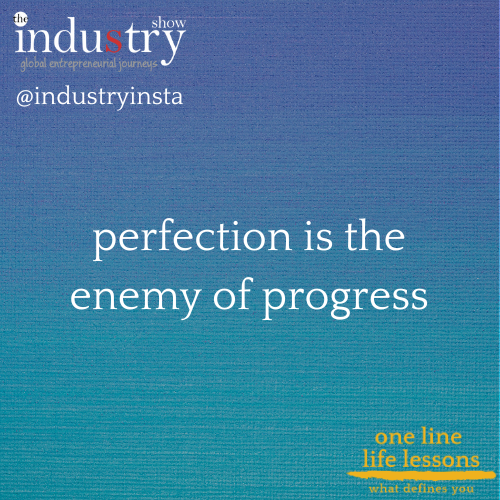
We were talking about OCD earlier, so I’m going to start with that. I think the one that took me a long time to realize and then implement in my life and in my business is perfection is the enemy of progress. As a business owner from a journey, when you’re starting the business to being a founder, then going from a founder to a CEO, you have to be very comfortable taking a step back and letting the team handle things and building systems where the systems eventually help you scale the company instead of you doing all the work. So going back to working on the business versus in business. So that’s an all-time favorite.
00:23:06 – 00:23:28 Hardik Jagda
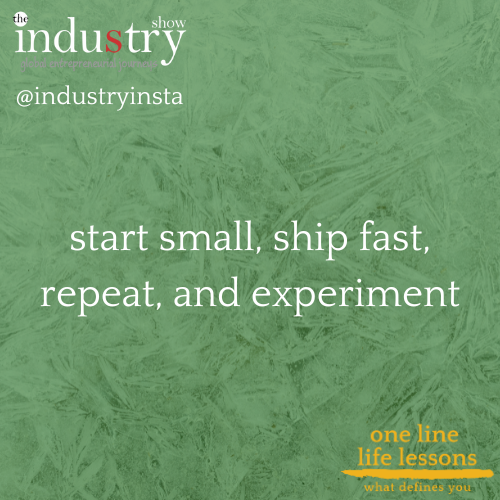
There are a few that come to my mindright now which are more AI-related. And I’m a strong believer in rapid experimentation. So if you want to figure anything out, you have to build small tests and iterate fast and learn from them. So start small, ship fast, and repeat experiments. So that’s one of the lines that I constantly use with all my clients and internally for our products as well.
00:23:32 – 00:23:49 Hardik Jagda
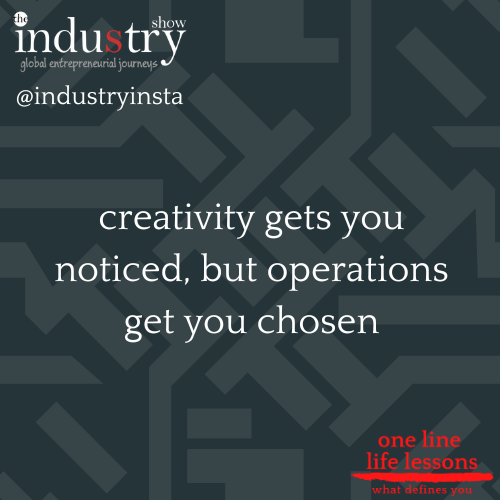
The other one is creativity gets you noticed, but operations gets you paid. So that’s the unsexy word I was talking about. Creativity is you can get people’s attention with all of your creativity, but eventually, you have to do the boring dull work to make money out of that.
00:23:49 – 00:23:50 Nitin Bajaj
Sure.
00:23:50 – 00:23:50 Hardik Jagda
Yeah.
00:23:51 – 00:23:58 Nitin Bajaj
Love that. Nadik, thank you so much for making the time to share your journey, your story, your life lessons with us.
00:23:59 – 00:23:59 Hardik Jagda
Thank you.
00:23:59 – 00:24:08 Nitin Bajaj
Again, congratulations for all of the successes. But I know you’re just getting started. So a lot more to come. And thank you. Really appreciate it.
00:24:08 – 00:24:10 Hardik Jagda
Thank you so much for having me on the show. Thank you.
Subscribe!