Feb 14, 2026
Pallavi
Pande
Pallavi Pande is the Founder of DTOCS – creating classy, compostable tableware for events. She is also the Founder of DTOCS Consulting – helping brands grow on Amazon. She is a Tory Burch Foundation Fellow, Inc honoree, serves on the board of Naturally Seattle.
One Line Life Lessons from Pallavi

Episode Highlights
- 00:15-00:52: Pallavi Pande introduces herself, explaining her name means “leaf” and that she is a builder of businesses, communities, and systems. She is a mompreneur who transforms palm leaves and bamboo fiber into tableware. Personally, she is a mom, a woman of color, an immigrant who loves Zumba and traveling.
- 01:04-01:15: Pallavi Pande shares that she hosts a radio show called “Voices of Vision” on KBOO community radio in Portland, Oregon.
- 01:36-02:16: Pallavi Pande explains the name DTOCS is a play on words, meaning “cleansing journey of the nasty single-use disposables.” DTOCS is a sustainable tableware brand that makes disposable tableware from palm leaves and bamboo fiber.
- 02:19-03:08: Pallavi Pande shares her cultural connection to eating on leaves in India and how her 10 years of experience in logistics, warehousing, and supply chain motivated her to start DTOCS. She found her supply chain in India and works with women artisans to handcraft the tableware.
- 03:35-04:06: Pallavi Pande believes sustainability should be celebrated daily and wanted to offer a break from doing dishes, especially during COVID. She aimed to provide an alternative to guilt-inducing paper and plastic disposables or regular chinaware.
- 04:13-04:48: DTOCS found a niche with event planners, wedding planners, caterers, restaurants, and hospitality businesses looking for convenience without environmental guilt. Their products are compostable in 90 days and are described as classy.
- 05:02-05:16: Pallavi Pande provides a staggering statistic: the annual waste created by single-use items at parties in the US is equivalent to the weight of 150,000 elephants, or 960,000 metric tons.
- 05:30-05:35: DTOCS has expanded from the US market into Canada and plans to expand into European markets in 2026.
- 06:10-07:59: Pallavi Pande identifies scaling sustainably as the biggest challenge. This includes navigating different sustainability standards in countries like France and Germany, balancing costs for sustainable products and packaging, and dealing with manufacturing tariffs in India and China. She emphasizes the need for responsible growth and intentional decisions.
- 08:26-09:30: Pallavi Pande is most excited about the social impact of DTOCS. This includes education scholarships for children in India, advocating for underrepresented children in Portland through a nonprofit called Greater Than, sweater drives for children in India, and donating sewing machines and providing vocational training for women.
- 09:33-10:20: Pallavi Pande shares a story about a woman in India who leased a shop to start a tailoring school after receiving a sewing machine, demonstrating the empowerment and business planning capabilities of these women.
- 10:31-11:16: Nitin Bajaj relates a story about two maids who partnered to hire a chauffeur and car, illustrating the micro-entrepreneurship and drive for independence in communities.
- 11:22-11:27: Pallavi Pande believes that brands with purpose grow faster because they have a community supporting their mission.
- 12:15-13:55: Pallavi Pande shares a disappointing moment: realizing she couldn’t do it all. She learned the importance of delegating at home and in business, creating systems, and practicing asking for help, viewing it as growth, not weakness.
- 14:02-14:40: Pallavi Pande’s success story is being recognized as America’s Top 100 Businesses. She also highlights her work running a group called Portland Brown Mommies, a community of 2,000 local South Asian women, for whom she curates events based on their feedback.
- 14:50-14:52: Nitin Bajaj agrees with Pallavi Pande’s philosophy of blending life rather than balancing it.
- 15:13-16:48: Pallavi Pande finds de-stressing and fun in family travel. She sees travel as a way to create memories and spend quality time together, which she struggles with due to her many roles, including running a product-based company and a full-service Amazon firm.
- 16:55-17:47: Pallavi Pande recommends the podcast “Acquired” for its deep dives into company histories and “Atomic Habits” by James Clear for its practical approach to growth through small, consistent improvements.
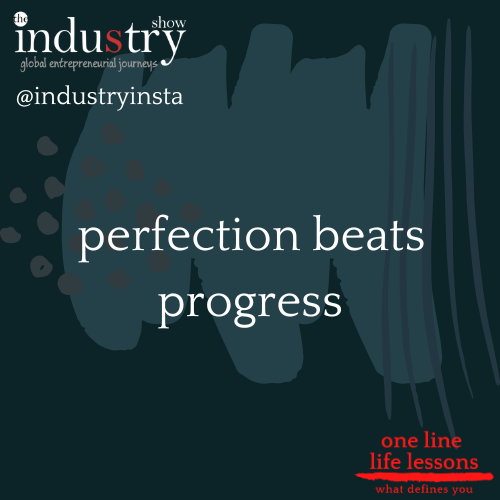
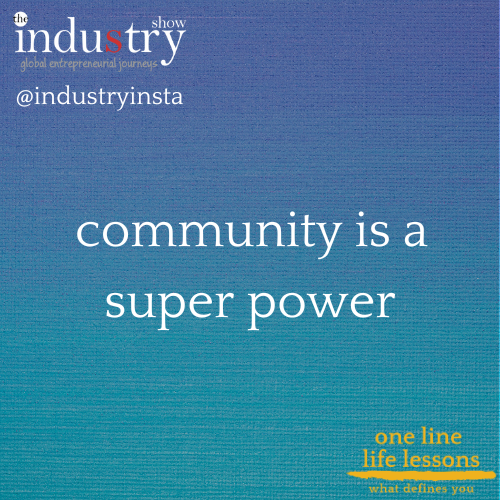
- 18:40-19:02: Pallavi Pande shares two life lessons: “Progress beats perfection” and “Community is a superpower.” She emphasizes starting with what you have and the importance of alignment for scaling and building what you wish existed.
Show Transcript
Transcript - Full Episode
00:00:00 – 00:00:07 Nitin Bajaj
Welcome to the Industry Show. I’m your host, Nitin Bajaj, and joining me today is Pallavi Pande. Pallavi, welcome on the show.
00:00:08 – 00:00:09 Pallavi Pande
Thank you for having me.
00:00:10 – 00:00:12 Nitin Bajaj
Great to have you here. Let’s start with who is Pallavi?
00:00:13 – 00:00:31 Pallavi Pande
Okay, great question. Fun fact: the meaning of Pallavi is leaf. So if you’re asking who’s Pallavi, she’s the leaf lady, and I’ll tell you why. Because I’m a builder at heart, builder of businesses, builder of community, and systems that make life a little better.
00:00:31 – 00:00:58 Pallavi Pande
So professionally, when I mention leaf, it is because notoriously I have become a mompreneur who rescues palm leaves and bamboo fiber leaves, and I transform them into your tableware. And personally speaking, I am a mom, a woman of color, immigrant who loves Zumba, who loves to travel around the world. I’ve been to 25 countries with my family, and I just like to bring people together.
00:00:58 – 00:01:02 Nitin Bajaj
That’s amazing. And as I recently learned, also a radio jockey.
00:01:04 – 00:01:19 Pallavi Pande
Yes, I recently started, almost one year ago, my own radio show called Voices of Vision on a community radio station which is called KBOO. And it is a 50-year-old radio station right here in Portland, Oregon.
00:01:19 – 00:01:35 Nitin Bajaj
That’s amazing. And I would love for our audience to tune into that. But tell us about DTOCS. Why did you start it? And give us a sense for what does it do, and what’s the impact of the work you and your team have created?
00:01:35 – 00:02:18 Pallavi Pande
Sure. So the word DTOCS, it is a play on the word. This is a five-letter cool word, DTOCS. But it echoes with the meaning, which means cleansing journey of the nasty single-use disposables. And again, it comes back for the reason, because I am the DTOCS lady, I am the leaf lady, I am Pallavi Pande, owner and founder of DTOCS, which is a sustainable tableware brand, where I make sustainable single-use disposable tableware like your plates, bowls, spoons, straws, charcuterie boards, to-go boxes, boxes with lids, etc., etc., out of palm leaves and out of bamboo fiber. So two raw materials.
00:02:19 – 00:02:43 Pallavi Pande
And the story goes back to I did grow up in India eating on banana leaves as a child. So that is a part of our culture that is even practiced today. So if you’ve ever visited India, don’t be surprised, you’ll be actually eating on leaves if you’re at restaurants in the southern part of India, or if you’re attending a South Indian wedding. So the cultural story comes from there.
00:02:43 – 00:03:12 Pallavi Pande
And then I was motivated to start a brand to not only represent my culture, but put my 10 years of experience in logistics, warehousing, supply chain into action. And that’s where I was so confident that I am going to start my own brand. I went down to India, found my supply chain, my raw material, started working with women artisans, where we handcraft the leaves into your tableware. So every piece is touched by hands, created with love and passion.
00:03:13 – 00:03:34 Nitin Bajaj
That’s amazing. And now you’re a few years into the journey. It gives a sense for where all are you supplying these materials, who is your typical customer? And more importantly, as you do this, you are making a big impact on saving our planet and bringing happiness around.
00:03:35 – 00:04:13 Pallavi Pande
I try to bring happiness because I believe sustainability should be celebrated every day. So going back to when I started my brand, I often thought, there are how many people are there like me who are busy parents, especially during COVID, when we were spending 24/7 in the kitchen doing dishes? So I thought, how many people want a break from these dishes? How many of us still want to host, but not feel guilty of using the cheap papers, the toxic plastics, and the regular chinaware? Because I hate doing dishes. And I thought it was the time to upgrade from a chief dishwashing officer to a chief executive officer of a brand.
00:04:13 – 00:04:58 Pallavi Pande
Like you said, we started in the United States. And then during COVID, we found the niche, like event planners, wedding planners, caterers, restaurants, food service, hospitality, boutique hotels. And they all were looking for, again, like I said, that sweet spot. Who didn’t want to use the regular paper and plastics? Who didn’t want to do the chinaware? Then we became the sweet spot for them because we were offering them convenience of using and throwing, not being guilty of creating landfill. Because at the end of the day, our products are compostable in 90 days, as well as classy. And it goes back to if you knew, every year in the United States, at parties, do you know how much of single-use waste is created? Do you have any idea?
00:05:00 – 00:05:01 Nitin Bajaj
A tremendous amount, a lot.
00:05:02 – 00:05:29 Pallavi Pande
Yeah. So to put that tremendous amount into perspective would be, imagine the weight of 150,000 elephants. That is equivalent to 960,000 metric tons. So that is the waste that is created annually. So that is what we’re trying to fight. It’s not just these little plastics or pieces that go into our marine, into our animals, but what stays in the landfill, in a piece of land for thousands of years. So that is what we’re trying to conquer here.
00:05:30 – 00:05:39 Pallavi Pande
And we scaled after the United States market into the Canadian markets. And this year, in 2026, we are expanding into the European markets.
00:05:39 – 00:06:09 Nitin Bajaj
That’s amazing. Congratulations to you on the continued success. You are a classic example of doing good while doing well. And I love those stories. Now, as you’re tackling some of the biggest challenges that we face as a humanity, landfills that are going to remain in perpetuity, and we are continuing to pollute as we continue to consume. If I asked you to call out the one big challenge you’re facing, what would that be?
00:06:10 – 00:06:53 Pallavi Pande
I will say now that we’ve scaled into so many countries, the biggest challenge I’m seeing is scaling sustainably. And I’ll give you a small example. Like when we had to go through our business compliance in countries like France and Germany, we found that sustainability is at a different level. As the demand grows, we have to balance costs, not just only for being a sustainable product, but also for the packaging. And that is what I’m seeing in the European countries, that they penalize you for every piece of bubble wrap you use, every plastic piece you use. So how do you find that sweet spot of being zero waste, sustainable, and at the same time scale?
00:06:53 – 00:07:25 Pallavi Pande
Because what we find in our case is, for four of our SKUs, we’ve been able to transition to 100% compostable wraps on our products. But beyond that, due to the size of our products, which is 22-inch charcuterie board, which is this huge, or let’s say, very random shapes with the corners and edges, we find these wraps or packaging to tear, to break. So how do you really find sustainable packaging and scale with that in terms of volumes, volumes, and in terms of geographical locations and countries?
00:07:25 – 00:07:59 Pallavi Pande
And also dealing with supply chain realities, which is talk about the tariffs in 2025. We manufacture our palm leaf tableware in India at a 50% manufacturing tariff cost, versus we had to quickly pivot into a different raw material, which was bamboo fiber from China, at still a slightly lower tariff, which was 35%, but it’s still there. So how do you really stay true to your values, to your mission of being zero waste, being sustainable, and at the same time fighting these constant challenges in your growth?
00:07:59 – 00:08:13 Pallavi Pande
So growth is very exciting. But responsible growth takes intentional decisions every step of the way. And even if it means taking one step at a time, slowing down, restrategizing, coming back, reflecting how to move forward.
00:08:14 – 00:08:25 Nitin Bajaj
I love that. Very thoughtful, very mindful, very intentional. That’s amazing. Now, on the flip side, the challenges come opportunities. What’s the one you’re most excited about?
00:08:26 – 00:08:41 Pallavi Pande
I think we are most excited about our social impact. Like in terms of our products, yes, we have a great environmental footprint. But how do we go beyond just being a commodity? What is that purpose behind our brand? What is that messaging behind our brand?
00:08:41 – 00:09:16 Pallavi Pande
And I think that really excites me, which is our education scholarships that we do for children in India, the monthly pledging of advocating for underrepresented children here in Portland, Oregon, through a nonprofit called Greater Than, where we make sure that these children in the underrepresented communities are coming to school. They have all the resources they need, whether it’s an iPad, whether it’s electricity in their homes, to have Wi-Fi, to have food. So all these basic resources are taken care of through this initiative.
00:09:16 – 00:09:33 Pallavi Pande
And then our partnerships, like we do a lot of sweater drives for children in India. We do a lot of donations of sewing machines and vocational training for women, because those are the stories that have empowered us to change the livelihoods of those women. And I’ll give you one quick story.
00:09:33 – 00:10:23 Pallavi Pande
When I was donating the sewing machine to these women in India, one of them, she leased a shop. And the price of that shop was maybe three times more expensive than the price of the sewing machine. And I asked her, so you can afford a brick-and-mortar shop to lease, which costs more than your sewing machine, but you couldn’t buy one? She said, yes, ma’am, because I was waiting for this person to buy me the sewing machine, which we did. But in terms of the other ahead plans, she had a business plan, which was she showed me a document where she said, my goal is that I’m going to start a tailoring school in this shop, which would mean I’m going to let 10 women use this sewing machine for 10 hours in a day, where those women will get to do their job. I will get paid, and I will be able to afford the lease for this shop.
00:10:24 – 00:10:41 Nitin Bajaj
Nice. That’s amazing. You know, we often talk about startups and venture scaling. And with the real stories are the ones that are happening in these towns and villages, where you have these micro-entrepreneurs.
00:10:41 – 00:11:04 Nitin Bajaj
One story that really touched me was when one of my uncles mentioned the maid that comes to their home partnered up with another maid. And they both figured out that if they can hire a chauffeur and get a car, they can pay that car off in three months, because they’ll be able to do a lot more and get there faster and easier.
00:11:04 – 00:11:20 Nitin Bajaj
So these are stories that bring joy to me. And I see hope in a large section of the community being able to become independent and have that true freedom. So kudos for you for supporting a lot of these initiatives.
00:11:21 – 00:11:35 Pallavi Pande
Thank you. And those are the stories how you start creating communities, even without knowing it. And that’s what brands with purpose, they grow faster because they have a purpose behind it and a community to support that purpose.
00:11:36 – 00:12:01 Nitin Bajaj
So true. Now, as we look into the future, I like to pause and have you reflect. I would love for you to share two moments from your past, one where things did not work out as you had expected. There was disappointment, failure, lessons. And another instance where things exceeded your expectations and became a success beyond what you had imagined.
00:12:01 – 00:12:22 Pallavi Pande
Sure. So I’ll say, let’s talk about the sad one first and get over with that. Because yes, you can find solutions. It’s not sugar coated. It’s life. Things will change. Things will not work out the way you want it. So let’s talk about one disappointing moment or a failure that became a teacher to me was the moment when I realized, I cannot do it all.
00:12:24 – 00:12:50 Pallavi Pande
I know people call me a super mom, but I’m not super mom. I am a human. And what that means is I shouldn’t try to do everything myself. And it can start at home, which is asking your family for help and support, which could be dividing responsibility. So I live in a household of six people, two teenagers, husband, thankfully, only one, and then two in-laws. That means a lot of things happen around me. And I cannot be doing it for everyone at the same time.
00:12:50 – 00:13:28 Pallavi Pande
Similarly, in business, there are a lot of factors. There are a lot of verticals that happen in a business: the marketing, the sales, the operations, logistics, the trade shows, being the front and working in the back, right? So when I was getting burnt out very fast at home, as a wife, as a mother, as a daughter-in-law, as a friend, it was all a burden to people around me. And at the same time, I was also burning out a lot in the business. So I had to figure out how to create systems, how to iterate them faster, how to see which system doesn’t work, how to fix it, which system works great, and how do we scale using it.
00:13:29 – 00:13:58 Pallavi Pande
Then I had to delegate, delegate at home, which is kids, you do this, you take this responsibility, in-laws do this. Whether it’s cooking lunch, I don’t do it because I’m working. Yes, I will feed everybody dinner happily, because I will have conserved my energy. And I’ll be fresh to go in the kitchen, right? So asking for help was a very hard thing. And that became my teacher. And it’s a practice. We have to practice asking for help. Don’t overdo it. Don’t underdo it. So finding that sweet spot is not a weakness. It’s growth, personally and professionally.
00:13:59 – 00:14:51 Pallavi Pande
And one success story, I would say, is being recognized as America’s Top 100 Businesses among all this chaos in my business, in my family, while raising kids, while doing a lot of community work, while building a community. Because I also run a group of local South Asian moms here. It’s called Portland Brown Mommies. It has 2,000 local women. And out of which 1,700 are active women. I put up events for them every month, a variety of events from what they need. I don’t guess what is it that they need. I do regular feedback. And I get the information from them that what it is they need. And I curate events. So I think this is what I’m deeply proud of, that I’m able to juggle, because I believe in blending. I really don’t believe in balancing life.
00:14:51 – 00:15:12 Nitin Bajaj
100% with you on that. Again, congratulations for the community you’ve been able to build and the value you bring to it. And that’s why it keeps growing and prospering. Now, amongst the many things you mentioned, the different hats you wear, which one is the one that allows you to de-stress, to kick it back and have fun?
00:15:13 – 00:15:36 Pallavi Pande
I love that question. So I’ll say we have a tradition, something we made into a family tradition, which is traveling. And that is one way for me to de-stress, because believe it or not, I still work when I’m traveling. But it’s a different kind of work, because it involves fun and family around. And we love traveling, me and my family.
00:15:36 – 00:16:00 Pallavi Pande
We’ve been to 25 countries around the world. And I think that’s the thing I tell my family, which is there’s one thing that money can buy: experiences and travel, not materialistic things, but memories, which you make out of your lived experiences when you’re traveling, because it brings all of us together. It makes us spend time, which I struggle to do.
00:16:00 – 00:16:49 Pallavi Pande
Like I said, I cannot balance. It’s not like it’s 9:00 to 5:00, and I turn off my laptop, and now I spend it with family. No, sometimes I get a call. Sometimes I get an order. Sometimes there’s a query, because now I’m not only running my product-based company, I also run a full-service Amazon firm, which requires an N number of hours to work with clients, because they have questions. And of course, I have a team I’ve delegated. But there are times when I have to monitor. There are times when I have to delegate. There are times when I have to jump in. So those travel moments are when it probably brings us all together. And it puts us in the space where we are sharing food, where we are sharing games, when we are sharing conversations. So that is going to be my de-stress, which is travel. If you want me to work less and enjoy more, take me on a traveling trip, even if it’s local. I don’t care. One hour to the beach will do it.
00:16:50 – 00:17:05 Nitin Bajaj
That’s amazing. I know how to get you to de-stress now. Now, as a radio jockey yourself, is there a podcast? Or if we go old school, is there a book that you would like to recommend?
00:17:05 – 00:17:36 Pallavi Pande
Sure. I’ll be happy to recommend both, because I’ve recently started listening to a podcast while I’m driving in my car. And I can absolutely say, I am in love with a podcast called Acquired. Acquired, it’s run by two men. And they’re here from Seattle. And they talk about companies all the way from how they started to where they are today. And these episodes, I’ll tell you, disclaimer, they’re long episodes. They come in like two to three hours, sometimes four-hour episodes. So listen to them when you have time.
00:17:36 – 00:17:49 Pallavi Pande
So I have a lot of time when I’m doing my laundry, when I’m doing the cooking. Yes, I do cook three meals in a day fresh. So I have a lot of time during those times when I’m doing those activities. So I listen to the podcast called Acquired.
00:17:49 – 00:18:28 Pallavi Pande
And the book that I’m really a big fan of is very practical in my life. It’s about growth. It’s called Atomic Habits by James Clear. And I do believe in 1% growth every day. I don’t believe in transformations. Like I woke up one day, and I did this, and this happened, because personally, I haven’t experienced it. I am very stubborn when it comes to habits and when it comes to systems. And it takes a lot of courage and time for me to open up and change and evolve. But I’ve intentionally put myself to do that. So that’s why I like the book, because it talks about how every human being has the potential to improve by 1% every day. So it’s called Atomic Habits by James Clear.
00:18:28 – 00:18:39 Nitin Bajaj
I love the book. Now, and thanks for sharing. Now, on to my favorite part of the show. We call it the one-line life lessons. I would love for you to share your life lessons with us.
00:18:40 – 00:19:12 Pallavi Pande
The first one I always iterate is perfection beats sorry, progress beats perfection. Or is it the vice versa? Perfection beats progress. Yes, do not try to be even perfect, because there’s nothing perfect. You just have to start with where you are. Community is a superpower. If you’re not aligned with something, you’re not going to scale, because you’re going to be seeing yourself fight with yourself and build what you wish existed.
00:19:14 – 00:19:37 Nitin Bajaj
I love that. Pallavi, thank you so much for making the time to share your journey, your story, and your life lessons. Congratulations again on all the different successes you’re experiencing, the community you’re building. And I know you’re just getting started. So kudos to you and the team. And thank you for helping save the planet.
00:19:37 – 00:19:46 Pallavi Pande
Thank you for having me. This was a pleasure. And it’s always fun to talk about the great things people are doing with their life and purposes. So thank you.
Subscribe!