Nov 01, 2025
Poonam
Goyal
Poonam Goyal is the Founder and CEO of AINAK Eyeglasses – a US-based 501c(3) nonprofit organization providing clear sight for every child so they can learn confidently and dream without limits.
One Line Life Lessons from Poonam

Episode Highlights
- 00:09-01:00: Poonam Goyal introduces herself as a humble, hardworking, and driven individual with a strong belief in the power of education and hard work for success. She is also the founder of a non-profit providing free vision care.
- 01:45-02:12: Poonam Goyal explains the meaning of AINAK and its connection to her heritage. She shares that eyeglasses help everyone see with clear vision.
- 02:21-04:54: Poonam Goyal recounts the inspiration behind starting AINAK. While volunteering at a school, she noticed children in the back were disengaged. She discovered they couldn’t see the board, leading her and her husband to start a non-profit for eye exams and glasses.
- 05:00-05:47: Poonam Goyal details the founding and launch of AINAK on August 15, 2020, India’s Independence Day, with the mission of giving children freedom from blurry vision and ensuring no child is left behind due to lack of vision care.
- 05:50-06:52: Poonam Goyal explains how the pandemic shifted AINAK’s focus to include adults and seniors who lost jobs and insurance, expanding their services to communities beyond just children. They aim to fill the gap for the 62 million Americans lacking vision insurance.
- 07:51-09:59: Poonam Goyal discusses the challenges faced by AINAK, including a shortage of optometrists, difficulties in reaching rural areas, transportation issues for patients, the rise of virtual optometry, and the need to educate people on the importance of eyeglasses.
- 10:07-10:40: Poonam Goyal highlights the challenge of serving a population that moves frequently, making it difficult to track them for follow-up vision care every two years.
- 11:49-12:34: Poonam Goyal shares an exciting opportunity: mass vision screenings using a spot vision screener donated by a Rotary Foundation. In just over a week, they screened over 4,000 people, identifying vision issues in 38%.
- 12:48-14:17: Poonam Goyal discusses further expansion with two more vision screeners funded by a city grant. She shares an anecdote about a child’s heartfelt gratitude, reinforcing the impact of their work, and notes that many seniors in the community have never seen an optometrist.
- 14:55-17:23: Poonam Goyal reflects on a career disappointment: wanting to be a professor but visa restrictions and a friend’s advice led her into the financial institution sector. She shares a success story where her guidance helped a client’s son get into an Ivy League school.
- 17:23-18:47: Poonam Goyal expresses immense satisfaction from her work with AINAK, driven by the daily rewards of helping others. She discusses expansion plans nationwide, the need for financing, and the growing prevalence of myopia in children, emphasizing that education and healthcare should be a right.
- 20:03-21:07: Poonam Goyal shares her hobbies, including gardening, which de-stresses her, stemming from her degree in botany. She mentions having a drought-resistant garden with fruit trees and four varieties of guavas.
- 21:18-21:55: Poonam Goyal talks about her and her husband’s travels, including Antarctica and the North Pole, and experiencing cold places like Iceland and the Harbin ice festival.
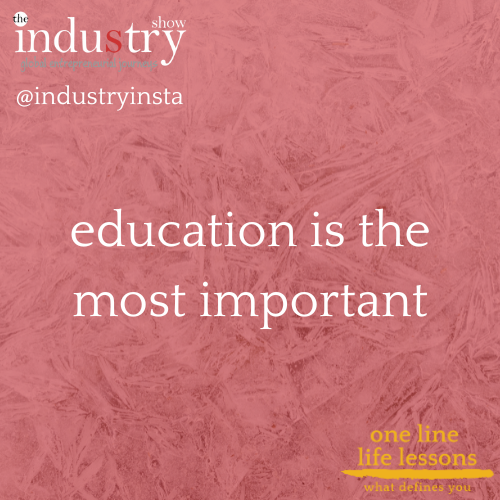
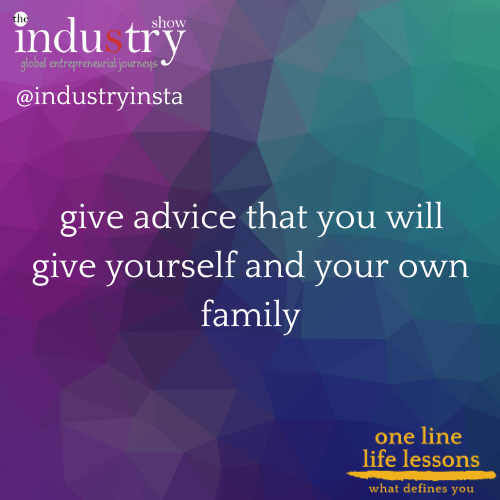
- 22:12-22:39: Poonam Goyal shares her life lessons: the importance of education, living with dignity, grace, and truthfulness, and offering advice to others as you would your own family.
Show Transcript
Transcript - Full Episode
[00:00:00 – 00:00:08] Nitin Bajaj
Hey everyone, welcome to the Industry Show. I’m your host, Nitin Bajaj. And joining me today is Poonam Goyal. Poonam, welcome on the show.
[00:00:09 – 00:00:10] Poonam Goyal
Thank you, Nitin.
[00:00:11 – 00:00:12] Nitin Bajaj
Let’s start with who is Poonam?
[00:00:13 – 00:01:15] Poonam Goyal
Who is Poonam and is a little bit tough to define, but Poonam is a genuinely nice person. What is what you get? And I’m very humble and I’m very industrial, very hardworking and driven. So most people will tell you that she loves her family quite a bit, but my mission is or my drive is that education helps everyone. Education and hard work helps everyone succeed in life with whatever they wish. To do. Poonam lives a very righteous life.
She is God fearing and abides by the law. That is very important for me. And you know that right now I’m running a non-profit foundation which provides free vision care to the underserved school children and communities all across California and then in North New Jersey.
[00:01:18 – 00:01:44] Nitin Bajaj
Great to know you, Poonam, and I agree with pretty much all the things you said and the little that I’ve gotten to know you. Tell us about AINAK. Tell us why you started it and what it does. You gave us a little bit of a sense of that. Tell us more about the impact you and the team at AINAK have been able to create. But most importantly, why you started this?
[00:01:45 – 00:06:58] Poonam Goyal
So, AINAK means eyeglasses, Hindi, in North India, across Pakistan, Afghanistan, Iran, and Iraq. A lot of people have raised the question, why did I name it AINAK? It was more to give credence to the country where I came here from. AINAK is eyeglasses, and eyeglasses help everybody see with a clear vision. So AINAK was started when I was working at a fintech company and volunteering in underserved schools in San Jose. One day, I went there. First, I used to do second harvest, but then my company started having us volunteer in the schools.
And education is very near and dear to me because I come from a family of educators, and I myself was an educator before I came to United States. So I took that challenge and I went to a school in underserved area of San Jose and I was working with second graders. Whatever the teacher had given us activity to do, the front sitters were doing an excellent job, but there was a group of children in the back who were disengaged, who were chatting among themselves. And my basic thought was maybe they are not following the language. The language is the barrier. Maybe they are speaking another language from their country where their parents have immigrated. But then a thought came to me, let’s send the front sitters who are raising their hands and doing very well.
Let’s send them in the back and bring the backbenchers in the front because we all know when the good students always want to sit in the front. But in my case, the opposite happened. A lot of those children who were disengaged when they were moved to the front, they were able to complete the activity that the teacher had assigned for us to do together. And so I asked them, why were you not answering when I was asking you when you were sitting in the back? And some of them said, because they couldn’t see what was happening on the board. And so I left the school and happily, safely made out of the area. And on my way home at night, I picked up my own new prescription eyeglasses.
And as we were done with dinner, I talked to my husband and I said, see, I got my new eyeglasses and the old ones still look pretty good. And today at the school, some of the children couldn’t see and could so they couldn’t do well in the activity. And right at that moment, my husband said, let’s keep some money aside and start a nonprofit where we will provide eye exams and eye glasses, we knew that we have to do the whole packet because if we miss one part of the whole process, this mission will not work. So, AINAK was founded and we registered as a 501 with the government. And then we launched it. We worked in 2019 and 2020, beginning to set up our website, come up with the mission statement and get everything ready. And we launched it on August 15, 2020.
And you know why we did it on August 15th. We all know it was India’s Independence Day. And that is what our mission was, that children should get freedom from blurry vision. So that’s how it was launched on August 2020 in the thick of COVID With a goal that no child should be left behind in the classroom because of the not possible for the parents to provide a full vision care. So that’s how it started. And then because of the COVID the direction changed a little bit because a lot of adults and seniors were out of job and they had lost their insurance. So the ask started coming from churches and other community organizations.
So we added that at that time we thought we are just starting. Let’s try everybody. And that’s how the program spread to the communities, not only the children, but to the communities. And the mission has always been that everyone should be able to see with clear vision. So there are about 62 million Americans who lack vision insurance, and that fills that gap by providing eyeglasses to those individuals. We are all the way from Contra Costa County to Kern County now.
East and West. And that’s basically what led Anak to be brought into existence. And we have done a great job of providing a large number of students see with clear vision.
[00:06:59 – 00:07:23] Nitin Bajaj
Fascinating. And also, congratulations for not just the impact, but also the recognition, including winning this year’s first Volunteer Excellence Award. So congratulations and kudos to you and the team for the amazing work you do in providing vision to those that can’t afford it. And 62 million Americans is a huge number.
[00:07:23 – 00:07:26] Poonam Goyal
It’s a large number for a country like the United States.
[00:07:27 – 00:07:50] Nitin Bajaj
Yes. So unfortunate, but glad that someone is working on that. And you made that a priority and a mission to help bring vision to people. Now, as you’re doing this important work, I’m sure there is a myriad of things that you come across. I would love for you to share the biggest challenge you’re facing.
[00:07:51 – 00:11:48] Poonam Goyal
The challenges are several, but we try to jump every bump. The main issue with Vision Care is that the number of optometrists available are very few. There are not many opportunities for vision care in rural and remote areas of California. When we schedule appointments, we are working with farm workers and other individuals who do not have means of transport. So bringing them 15-20 miles to a bigger city to get them to get eyeglasses is our biggest challenge. The other challenge that has popped up in last few years is the virtual doctor, virtual optometry. The virtual optometrist is sitting anywhere in America and taking care of eyes of people in California or wherever in the world because the very first doctor who we started with has herself become a virtual doctor.
So there are some franchises that we use for eyeglasses. They do not have any physical doctor sitting in their offices. The drawback with that is that the children under eight years of age require a physical doctor to be present in the office, which is not possible in the areas, in the rural areas where we have this service provider. So we have to send them to some somebody else because the people who we serve are usually under eight years of age, the first and the second graders. So that is one thing. The other is that the there are big stores that have vision providing in their stores, but there are no doctors. No one wants to fill in the the opportunities because they are very rural areas. So those are our basic problems.
The other is that people, they know that they cannot see, but they still don’t believe that there is a need of eyeglasses. They say, we can squint, we can do this, we can do that. So the teaching has become very important for us. And since we are a very small team of all volunteers, it’s a lot of hard work to get the word out that please do get vision care. The other drawback that we have is that the population we serve, we have in our charter that we will provide vision care every two years, but finding them is a challenge because they have moved on. Due to certain limitations, we sometimes don’t get their right email addresses or phone numbers, or those are also changed so frequently that reaching this group is our biggest challenge. We were looking for a girl who was maybe five or six years old.
Her principal knew about AINAK, so she called us to provide eyeglasses to this young girl, maybe six or seven years old. And she received an eye glasses. And when, and she, again, the parents didn’t drive, so then school nurse and school teachers took her to the optometry, both for AI exam and fitting of the eyeglasses. And when she came back to the school, she danced in the quad. So the when we had our first opportunity to host some of the school nurses and principals, the principal related the story of the little girl, how she danced and saying, I can see, I can see. So those things help us feel good, the little impact that we are making.
[00:11:49 – 00:12:02] Nitin Bajaj
That’s beautiful. And again, thank you for doing what you do. It’s really amazing work. Now, on the flip side of challenges come opportunities. What’s the one opportunity that you’re most excited about?
[00:12:03 – 00:13:59] Poonam Goyal
So we have last week, I think I talked to you when we met last year at TiECon this year at TiECon that we would be going into mass vision screenings. And one of our advisors is a pioneer in handheld device. So, a local Saritoga Rotary Foundation has donated a spot vision screener for us. And so we launched it last week. And in one and a half weeks, we have screened about 4,000 plus people, of which about 38% have vision issues. And the best in and then we are ready to do two more because we have another grant has come to us from a city. So we are not going to name it yet.
But one of the city districts has donated two vision screeners for us. We would be buying soon. At one of the events, it was a small event where seniors and mixed community people are living. And the community organizer asked me to come in. So we screened about 30 people and everybody had left and me and my fellow person were packing up the machine and in runs in a little girl, maybe eight, nine, ten years old, and she asked the organizer, can I hug her? And I said, of course you can. And she walked and she said, said slowly, whispering almost that you, what you are doing is you are doing a good job.
And as she was leaving, she blessed me and she has been wearing the same eyeglasses for more than three years, which for a growing child is not right.
[00:14:00 – 00:14:00] Nitin Bajaj
Yeah.
[00:14:00 – 00:14:24] Poonam Goyal
Out of that group, also about 30% of the people needed eyeglasses and most of the seniors had never, ever seen a doctor. So there are communities here. Who have people older than 60 who have never seen an optometrist. So we are there. We are filling these gap and people who are found to need eyeglasses are being given the glasses.
[00:14:24 – 00:14:53] Nitin Bajaj
Such a massive opportunity. And again, thank you for doing what you do. Now, as we talk about the future, I’d like to pause and reflect, and I would love for you to share two moments from your career and life where in one, things did not work out as you had expected. There was disappointment, failure, lessons, and another where things exceeded your expectations and became a success beyond your imagination.
[00:14:55 – 00:18:54] Poonam Goyal
Let’s go with the one that didn’t work out well. Because right from the time of maybe six or seven years old, I wanted to be a professor. I wanted to teach. That was the passion because I was growing up in an environment surrounded by professors and teachers and science and research, and that was the goal. The goal was still there when I moved to United States in 1981. But due to the when you come on visa and my visa was such that I couldn’t work. So by the time the green card showed up, it was little too late to fall followed that passion.
And a friend of mine told me, go work for financial institution. And we walked in together, we completed the application, and I got the job next very next day. And there has been no looking behind. I, there are a lot of things that I learned working with the people. One was patience, the art of listening. Defining the need and then guiding a person to the right decision, which would work for them, but giving them options and letting them make the final decision of what they would like. I’ll share with you, it just popped in my mind right now, a client of mine, he was talking to me and he wanted to buy a house.
And just talking to him, I figured out he may have already have little grown-up kids who may be in middle school or high school. He said, oh, my children are in next year my son is going to be a ninth grader. Just out of the blue, I knew he’s a IIT graduate and a topper of IIT Kanpur. So I asked him, what do you think? How is your son in education? He said, he’s the tops. So I told him, let’s not move you there.
Buy a smaller house if you and your wife decide and stay in this well performing zip code. And lo and behold, they bought the house in that same city and the student went in to study at an Ivy League and he’s doing very well. So that is the failure that turned into success. But the best part is working for an, like nothing can beat this, the reward that I feel every day and it’s keeping me healthy. I’m always thinking how we can bring our program to more people. There are, we are getting a lot of inquiries, especially since the changes in the policies. A lot of schools have lost vision and dental. And hearings.
We are getting inquiries both from coast to coast, Vermont, New Hampshire, Washington State, Oregon, and we will soon be in more states. We are working on that. But for that, we need a little bit more financing and to provide everyone with eyeglasses and eye exams. It’s a lot of work. It’s a lot of work and a lot of money is required because 20% of the population is having vision issues. And especially myopia is on the rise in the little kids. So we, if someone would like to donate or work or help us, we would be very happy to do that because education and health care should be the right of every citizen, no matter what country they are living in.
Once they are in United States or in their own countries, the health and education should be a priority.
[00:18:55 – 00:19:28] Nitin Bajaj
Very well said, and I agree with you. And again, it’s unfortunate that in this country where we have all the resources much more than most of the countries out there, a significant portion of the population is struggling with something as basic as vision. It’s unfortunate. But again, thank you for all the work you do. And I would love for more benefactors to join you so you can help more people that are in need. And, yeah, really rooting for you and the team at anuk.
[00:19:28 – 00:19:50] Poonam Goyal
And thank you so much. The team is the basis for the organization. We couldn’t be where we are without both Coast people helping us. And without any salary or anything, they’re volunteering their time. Some of them are very young, others and they are working full time, but still they give us take time out and help.
[00:19:53 – 00:20:02] Nitin Bajaj
Amazing. Now switching gears, outside of NITIN, which is your passion, your heart keeps you healthy. What do you do for fun?
[00:20:03 – 00:20:05] Poonam Goyal
For fun, I love gardening.
[00:20:06 – 00:20:06] Nitin Bajaj
Nice.
[00:20:07 – 00:20:14] Poonam Goyal
And I, it de-stresses me. I’ll tell you the truth. My degree is in botany.
[00:20:14 – 00:20:15] Nitin Bajaj
Nice.
[00:20:15 – 00:20:42] Poonam Goyal
Oh, it works well. And luckily I have a good sized yard in because it’s a corner lot. It’s for California. It is pretty big. And at one time I had over 200 roses, but that’s not happening anymore because of the drought. It’s more of a drought resistant garden now, but I have a lot of fruit trees. They require maintenance and it’s fun to see the fruit grow.
[00:20:42 – 00:20:42] Nitin Bajaj
Yes.
[00:20:42 – 00:21:09] Poonam Goyal
Different colors and we have four varieties of guavas. A strawberry guava, a Mexican guava and the two other guavas. One of them is more of a North Indian kind of guava, the soft and some fruit. Is even pink inside, so it’s doing well. And luckily, the squirrels don’t like those, the guavas. So they, we are able to eat all of them.
[00:21:10 – 00:21:14] Nitin Bajaj
I’m gonna take that as a invitation to come and enjoy those.
[00:21:14 – 00:21:57] Poonam Goyal
Absolutely. Maybe November, December, they should be ready. The other thing that what we are doing, me and my husband, is we are traveling. We have done the Antarctica. And this summer we went to North Pole at 81.2 degrees. So we were only few hundred miles from the pole in Norway. We traveled through Svalbard and then we have done all, all the cold places, Iceland.
And the very first cold place we did was Harbin in Northern China. So we did that there winter festival of ice carving. It’s the most beautiful experience for.
[00:21:58 – 00:22:11] Nitin Bajaj
Very nice. Now, on to my favorite part of the show. We call this the one line life lessons. Poonam, I would love for you to share your life lessons with us.
[00:22:12 – 00:22:42] Poonam Goyal
For me, education is the most important. If you have education, you can do very well. You should live your life. With dignity and grace and truthfulness. Always put your, if someone is asking, give them the advice that you will give yourself and your own family. So those are the few things that I believe in.
[00:22:44 – 00:23:11] Nitin Bajaj
Poonam, thank you so much for sharing your journey, your story, your life lessons, but most importantly, for doing what you do in providing vision to several thousands and soon several million people that need it. I personally really appreciate the work you do, the passion you bring to this. And I know the community at large thanks you for everything you and the team do at AINAK. Thank you.
[00:23:12 – 00:23:25] Poonam Goyal
Thank you and thank you for what you have given our volunteer. We are really excited about it. She is over the moon.
We are so happy. Thank you so much, Nitin.
Subscribe!